THE ADVENTURE COLLECTIVE® · Independent discovery and booking for outdoor travel

A single-day high-altitude hike from Mollepata to an ice-blue lake beneath the Salkantay ridges. Short but steep, this route pairs dramatic alpine views with local Quechua traditions.
A single-day high-altitude hike from Mollepata to an ice-blue lake beneath the Salkantay ridges. Short but steep, this route pairs dramatic alpine views with local Quechua traditions.
The path opens on thin air and cold light: mule-broken switchbacks cut across a scrubby slope, and the mountains seem to tighten their grip as you climb. By the time you crest the final ridge, Humantay Lagoon unrolls below — an electric pool cupped by snow-rock ridges, water catching the sky like a challenge.
Verified experiences and guided adventures in the surrounding area.
Operated by Abel junior Serrano Paucar · Cusco, Cusco Region
The path opens on thin air and cold light: mule-broken switchbacks cut across a scrubby slope, and the mountains seem to tighten their grip as you climb. By the time you crest the final ridge, Humantay Lagoon unrolls below — an electric pool cupped by snow-rock ridges, water catching the sky like a challenge.
This single-day route begins in Mollepata and rises from high valleys to Soraypampa before the steep 90-minute ascent to the lake at about 4,250 m. The landscape is defined by glacially scoured cirques and pale moraines; the surrounding peaks are part of the Vilcabamba-Salkantay range that played a role in Andean prehistory and remains sacred to local Quechua communities. Guides often perform an offering to the Apus (mountain spirits) at the lagoon — a cultural moment that connects walkers to centuries of mountain reverence.
Expect thin air, gravelly trail, and a quick, rewarding shoreline: winds that push at your jacket, clouds that gather and release rain, and alpaca grazing on lower slopes. Wildlife is sparse at altitude but persistent: Andean gulls and occasional vizcachas appear.
Practical guidance: acclimatize in Cusco for 48–72 hours, bring layered insulation and a windproof shell, and allow at least 10–12 hours for the round trip with transfers. Trekking poles reduce knee strain on the descent; sun and cold are both present—use broad-spectrum sunscreen and a warm hat. The site is reachable year-round, but weather shifts rapidly; plan for early starts, carry water and snacks, and respect local rituals and the fragile highland ecology.
From Soraypampa the trail takes roughly 60–90 minutes up to the lagoon; total door-to-door time including transfers is about 10–12 hours.
Physically fit beginners can complete it, but prior acclimatization and a moderate fitness level are important due to high altitude and steep sections.
The dry season (May–September) offers more stable weather and clearer views, though the lagoon is accessible year-round with variable conditions.
No formal permits are required, but most visitors go with licensed guides or small group tours that handle transport and local logistics.
Abel junior Serrano Paucar operates guided outdoor trips and adventures with an emphasis on safety, stewardship, and memorable experiences.
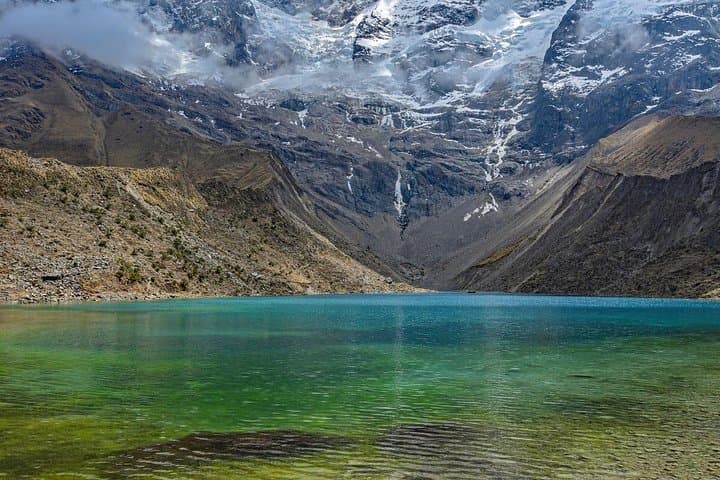
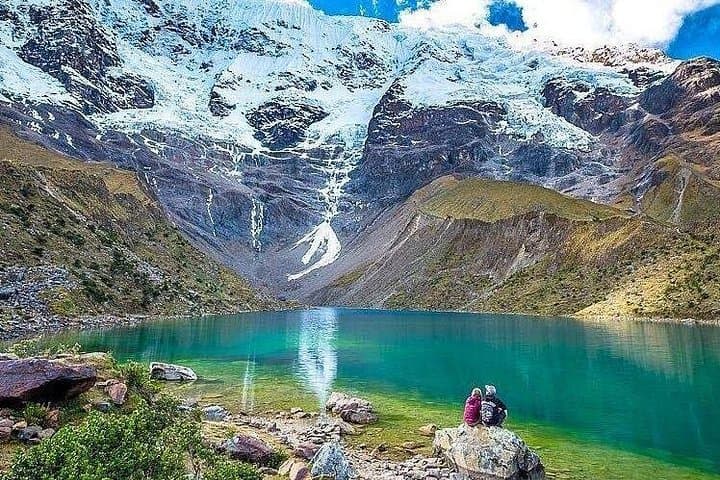
The path opens on thin air and cold light: mule-broken switchbacks cut across a scrubby slope, and the mountains seem to tighten their grip as you climb. By the time you crest the final ridge, Humantay Lagoon unrolls below — an electric pool cupped by snow-rock ridges, water catching the sky like a challenge.
The path opens on thin air and cold light: mule-broken switchbacks cut across a scrubby slope, and the mountains seem to tighten their grip as you climb. By the time you crest the final ridge, Humantay Lagoon unrolls below — an electric pool cupped by snow-rock ridges, water catching the sky like a challenge.
This single-day route begins in Mollepata and rises from high valleys to Soraypampa before the steep 90-minute ascent to the lake at about 4,250 m. The landscape is defined by glacially scoured cirques and pale moraines; the surrounding peaks are part of the Vilcabamba-Salkantay range that played a role in Andean prehistory and remains sacred to local Quechua communities. Guides often perform an offering to the Apus (mountain spirits) at the lagoon — a cultural moment that connects walkers to centuries of mountain reverence.
Expect thin air, gravelly trail, and a quick, rewarding shoreline: winds that push at your jacket, clouds that gather and release rain, and alpaca grazing on lower slopes. Wildlife is sparse at altitude but persistent: Andean gulls and occasional vizcachas appear.
Practical guidance: acclimatize in Cusco for 48–72 hours, bring layered insulation and a windproof shell, and allow at least 10–12 hours for the round trip with transfers. Trekking poles reduce knee strain on the descent; sun and cold are both present—use broad-spectrum sunscreen and a warm hat. The site is reachable year-round, but weather shifts rapidly; plan for early starts, carry water and snacks, and respect local rituals and the fragile highland ecology.