THE ADVENTURE COLLECTIVE® · Independent discovery and booking for outdoor travel

Spend a day chasing hummingbird jewels across Ecuador’s western cloud forest. From feeders at Alambi to reserves around Mindo, this full-day tour combines close-range birding, short hikes and photography opportunities for up to 15 hummingbird species.
Spend a day chasing hummingbird jewels across Ecuador’s western cloud forest. From feeders at Alambi to reserves around Mindo, this full-day tour combines close-range birding, short hikes and photography opportunities for up to 15 hummingbird species.
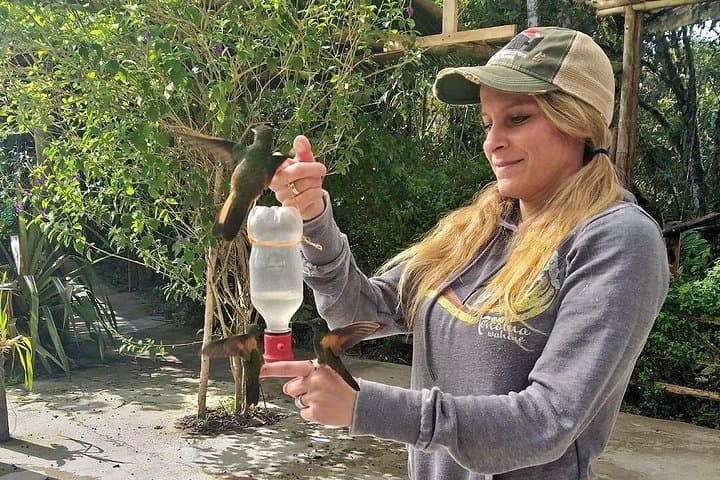
Dawn lifts along the western flank of the Andes and the cloud forest exhales: mist threads between ferns, feeders clink as tiny wings blur and jewel-toned hummingbirds stake their territories. On this full-day expedition you move from Quito’s high plateau down through changing vegetation belts, arriving at garden clearings where feeders and flowering bushes bring species within arm’s reach.
Verified experiences and guided adventures in the surrounding area.
Operated by Neotropical Nature and Birding Trips · Mindo, Pichincha
Dawn lifts along the western flank of the Andes and the cloud forest exhales: mist threads between ferns, feeders clink as tiny wings blur and jewel-toned hummingbirds stake their territories. On this full-day expedition you move from Quito’s high plateau down through changing vegetation belts, arriving at garden clearings where feeders and flowering bushes bring species within arm’s reach.
The western Andean cloud forest formed where humid Pacific air meets rising volcanic slopes, creating persistent fog banks that sustain orchids, bromeliads and an extraordinary bird community. Local towns like Mindo grew from small agricultural settlements into conservation-focused hubs; many reserves here are privately managed by families and cooperatives practicing eco-tourism and reforestation. Cultural notes: expect simple mountain hospitality, plant-based coffees, and menus influenced by Andean and coastal ingredients.
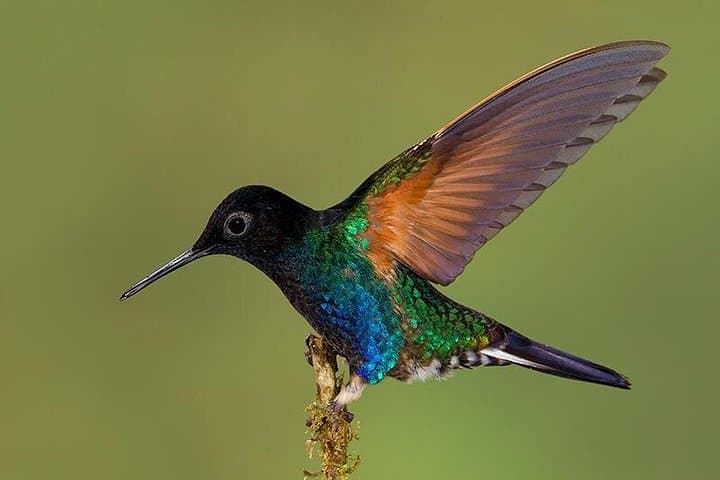
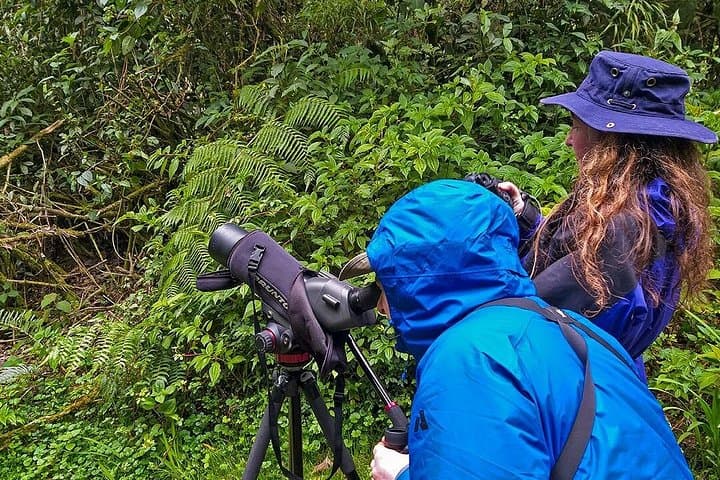
Practically, the day is a series of short hikes and hide-like viewing points at three reserves (Alambi, San Tadeo and reserves around Mindo). Elevations vary roughly 1,000–2,200 m, so temperatures feel cool and damp. Guides set feeders to attract species such as Velvet-purple Coronet, Purple-bibbed Whitetip and Empress Brilliant, optimizing photographic windows and minimizing disturbance. Bring a telephoto lens and fast shutter speeds; use quiet movements—the birds are curious but wary.
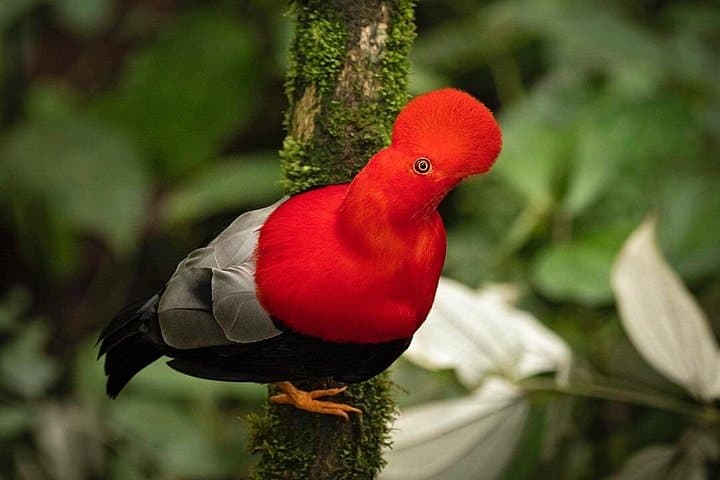
Expect 8–10 hours out with hotel pickup from Quito, a mix of gravel roads and paved driving, and the option to add an Andean Cock-of-the-Rock lek at the end. Stay hydrated, dress in breathable layers and plan for sudden showers; the cloud forest shifts moods faster than a shutter click.
You can see up to about 15 hummingbird species in a well-run day, with common standouts including Velvet-purple Coronet and Gorgeted Sunangel.
Yes—private pickup and drop-off from Quito are included in the full-day itinerary.
The tour is family-friendly but requires moderate mobility; short, uneven trails and an early start mean it’s best for children used to day hikes and older travelers comfortable with basic walking.
Tours operate in light rain—cloud forest conditions are often misty—so guides adjust stops accordingly; heavy weather may impact visibility but feeders still attract birds.
Neotropical Nature and Birding Trips operates guided outdoor trips and adventures with an emphasis on safety, stewardship, and memorable experiences.
Dawn lifts along the western flank of the Andes and the cloud forest exhales: mist threads between ferns, feeders clink as tiny wings blur and jewel-toned hummingbirds stake their territories. On this full-day expedition you move from Quito’s high plateau down through changing vegetation belts, arriving at garden clearings where feeders and flowering bushes bring species within arm’s reach.
Dawn lifts along the western flank of the Andes and the cloud forest exhales: mist threads between ferns, feeders clink as tiny wings blur and jewel-toned hummingbirds stake their territories. On this full-day expedition you move from Quito’s high plateau down through changing vegetation belts, arriving at garden clearings where feeders and flowering bushes bring species within arm’s reach.
The western Andean cloud forest formed where humid Pacific air meets rising volcanic slopes, creating persistent fog banks that sustain orchids, bromeliads and an extraordinary bird community. Local towns like Mindo grew from small agricultural settlements into conservation-focused hubs; many reserves here are privately managed by families and cooperatives practicing eco-tourism and reforestation. Cultural notes: expect simple mountain hospitality, plant-based coffees, and menus influenced by Andean and coastal ingredients.
Practically, the day is a series of short hikes and hide-like viewing points at three reserves (Alambi, San Tadeo and reserves around Mindo). Elevations vary roughly 1,000–2,200 m, so temperatures feel cool and damp. Guides set feeders to attract species such as Velvet-purple Coronet, Purple-bibbed Whitetip and Empress Brilliant, optimizing photographic windows and minimizing disturbance. Bring a telephoto lens and fast shutter speeds; use quiet movements—the birds are curious but wary.
Expect 8–10 hours out with hotel pickup from Quito, a mix of gravel roads and paved driving, and the option to add an Andean Cock-of-the-Rock lek at the end. Stay hydrated, dress in breathable layers and plan for sudden showers; the cloud forest shifts moods faster than a shutter click.