THE ADVENTURE COLLECTIVE® · Independent discovery and booking for outdoor travel

Head out of Reykjavík after dark with a local guide who chases the clearest skies and best vantage points for the Aurora Borealis. This private small-group tour prioritizes flexible routing, warm blankets, and photography-friendly stops—sightings dependent on weather.
Head out of Reykjavík after dark with a local guide who chases the clearest skies and best vantage points for the Aurora Borealis. This private small-group tour prioritizes flexible routing, warm blankets, and photography-friendly stops—sightings dependent on weather.
Night falls over Reykjavík and the city lights shrink behind you as the van slips onto a darker road. The aurora doesn't arrive on schedule; it teases the horizon and then unfurls in green ribbons over black lava fields. On this private hunt, a local guide reads sky forecasts and traffic-free routes, moving you out of town to places chosen for clarity and low light.
Verified experiences and guided adventures in the surrounding area.
Operated by Aurora tours · Reykjavík, Capital Region
Night falls over Reykjavík and the city lights shrink behind you as the van slips onto a darker road. The aurora doesn't arrive on schedule; it teases the horizon and then unfurls in green ribbons over black lava fields. On this private hunt, a local guide reads sky forecasts and traffic-free routes, moving you out of town to places chosen for clarity and low light.
Iceland sits on the Mid-Atlantic Ridge where volcanic rock and glacial sculpting shape stark, open landscapes — the same geology that makes long north–south sky views possible. The aurora is a solar wind phenomenon but local culture frames it with saga-era stories and modern photography rituals: hot chocolate, blankets, and patient skywatching. Guides often stop near coastal promontories or the Þingvellir area when conditions allow, giving you a front-row seat to northern lights and the black-sand shores that dare your camera to keep up.
Practically: tours run 2–4 hours and are weather dependent; sightings can't be guaranteed. Expect roadside stops, short walks to dark viewing spots, and friendly narration in English or Russian. Dress in insulated layers, bring a fully charged camera (tripod recommended), and plan for flexible return times. If conditions force a cancellation, operators typically rebook or refund. For photographers and night-sky seekers alike, this is a straightforward, low-effort way to chase the aurora while learning how Icelanders read the weather and the land.
No — sightings depend on solar activity and clear skies; reputable operators offer rebooking or refunds if the tour is canceled for weather.
Most departures arrange city pickup in central Reykjavík with a return to the same meeting point; pickup details are confirmed at booking.
Nighttime temperatures can drop well below freezing in winter; wear thermal layers, insulated boots, hat, and gloves and bring spare batteries for electronics.
Yes — the tour notes stroller access and infant seats; parents should consider cold tolerance for young children during outdoor waits.
Aurora tours operates guided outdoor trips and adventures with an emphasis on safety, stewardship, and memorable experiences.
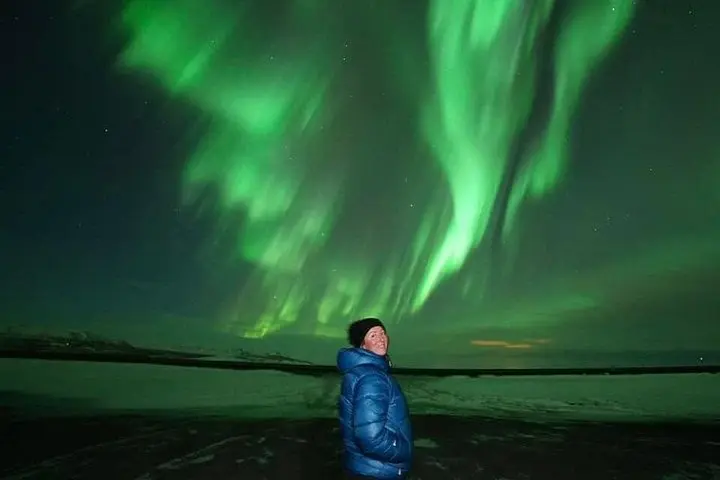
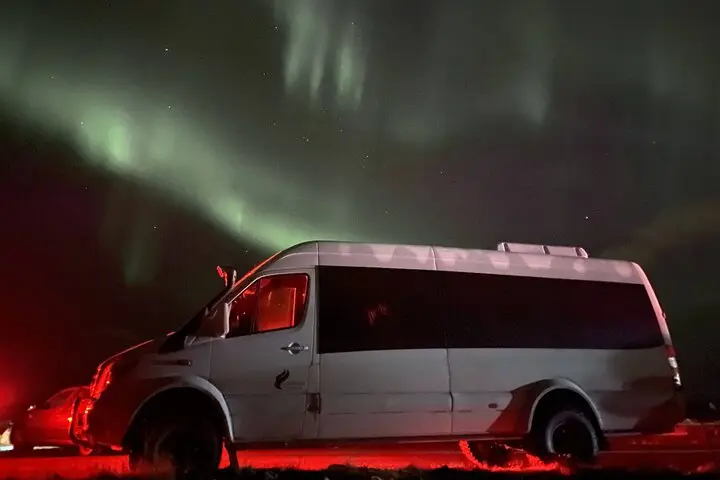
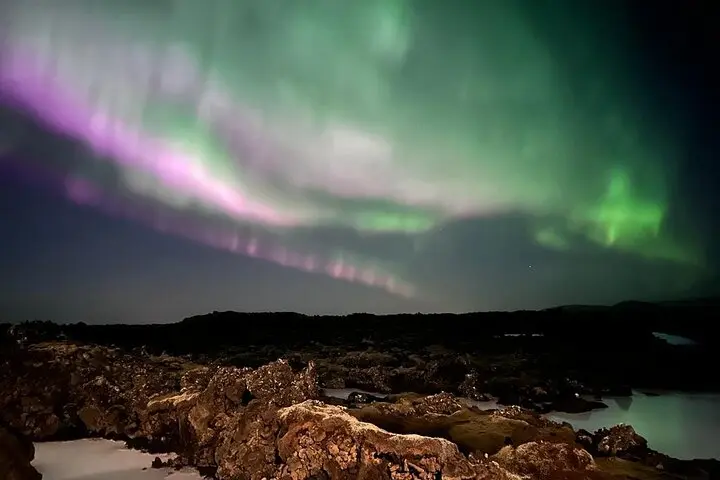
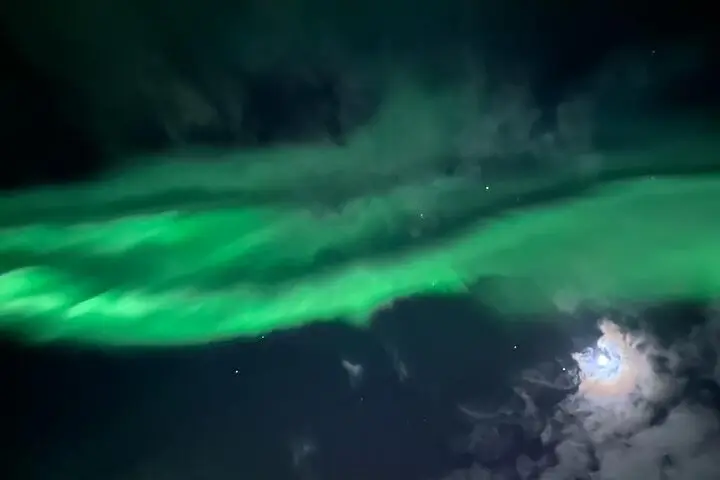
Night falls over Reykjavík and the city lights shrink behind you as the van slips onto a darker road. The aurora doesn't arrive on schedule; it teases the horizon and then unfurls in green ribbons over black lava fields. On this private hunt, a local guide reads sky forecasts and traffic-free routes, moving you out of town to places chosen for clarity and low light.
Night falls over Reykjavík and the city lights shrink behind you as the van slips onto a darker road. The aurora doesn't arrive on schedule; it teases the horizon and then unfurls in green ribbons over black lava fields. On this private hunt, a local guide reads sky forecasts and traffic-free routes, moving you out of town to places chosen for clarity and low light.
Iceland sits on the Mid-Atlantic Ridge where volcanic rock and glacial sculpting shape stark, open landscapes — the same geology that makes long north–south sky views possible. The aurora is a solar wind phenomenon but local culture frames it with saga-era stories and modern photography rituals: hot chocolate, blankets, and patient skywatching. Guides often stop near coastal promontories or the Þingvellir area when conditions allow, giving you a front-row seat to northern lights and the black-sand shores that dare your camera to keep up.
Practically: tours run 2–4 hours and are weather dependent; sightings can't be guaranteed. Expect roadside stops, short walks to dark viewing spots, and friendly narration in English or Russian. Dress in insulated layers, bring a fully charged camera (tripod recommended), and plan for flexible return times. If conditions force a cancellation, operators typically rebook or refund. For photographers and night-sky seekers alike, this is a straightforward, low-effort way to chase the aurora while learning how Icelanders read the weather and the land.