THE ADVENTURE COLLECTIVE® · Independent discovery and booking for outdoor travel

Launch into Hurghada’s Eastern Desert on a guided 3‑hour ATV quad safari that blends dune running with a stop at a traditional Bedouin village. Expect sandy trails, cultural exchange over tea, and short camel rides—ideal for travelers seeking quick, high-energy desert immersion.
Launch into Hurghada’s Eastern Desert on a guided 3‑hour ATV quad safari that blends dune running with a stop at a traditional Bedouin village. Expect sandy trails, cultural exchange over tea, and short camel rides—ideal for travelers seeking quick, high-energy desert immersion.
The engine thumps beneath your hands as the convoy peels away from Hurghada and the city’s heat gives way to an endless palette of sand and stone. Dunes roll like slow waves, daring you to pick a line; the wind etches ridgelines and the sun pushes forward, flattening long shadows. After about 25 km of tracks and sandy switchbacks the group pulls into a small Bedouin cluster, where steaming tea and the low chatter of daily life bring the ride down to human pace.
Verified experiences and guided adventures in the surrounding area.
Operated by Mohamed Rabea · Hurghada, Red Sea Governorate
The engine thumps beneath your hands as the convoy peels away from Hurghada and the city’s heat gives way to an endless palette of sand and stone. Dunes roll like slow waves, daring you to pick a line; the wind etches ridgelines and the sun pushes forward, flattening long shadows. After about 25 km of tracks and sandy switchbacks the group pulls into a small Bedouin cluster, where steaming tea and the low chatter of daily life bring the ride down to human pace.
This short safari blends modern adrenaline with deep-rooted desert culture. The Eastern Desert around Hurghada sits on sediments and igneous outcrops shaped by millennia of arid erosion; ancient caravan routes threaded these valleys before motorized travel. At the village drivers explain traditional livelihoods—camel herding, tent-making—and visitors can learn how Bedouin families adapted to scarce water and shifting sands.
Practical guidance: trips run about 3–4 hours including transfers. Machines are user-friendly but expect sandy, uneven terrain and occasional climbs over dune shoulders—basic ATV handling is required. Helmets are provided; bring goggles, closed-toe shoes, sun protection, and at least one liter of water per hour. Timing matters: morning and late-afternoon departures are cooler and offer better light for photos; midday is brutally hot in summer.
Safety and respect go hand in hand—follow the guide’s line choices to protect fragile desert crust and local grazing areas, and accept invitations to tea as part of the cultural exchange. The result is a compact, high-energy window into Hurghada’s wild open country.
Riders must be 16 or older to drive their own quad; younger children can ride as passengers with an adult.
No prior experience is necessary—guides provide a safety briefing and basic instruction, but riders should be comfortable with balance and following directions.
Helmets are provided; it’s recommended to bring your own goggles and closed-toe shoes for comfort and protection.
Transfer time varies by hotel location but is typically part of the 3–4 hour total duration and can be around 20–40 minutes each way.
Mohamed Rabea operates guided outdoor trips and adventures with an emphasis on safety, stewardship, and memorable experiences.
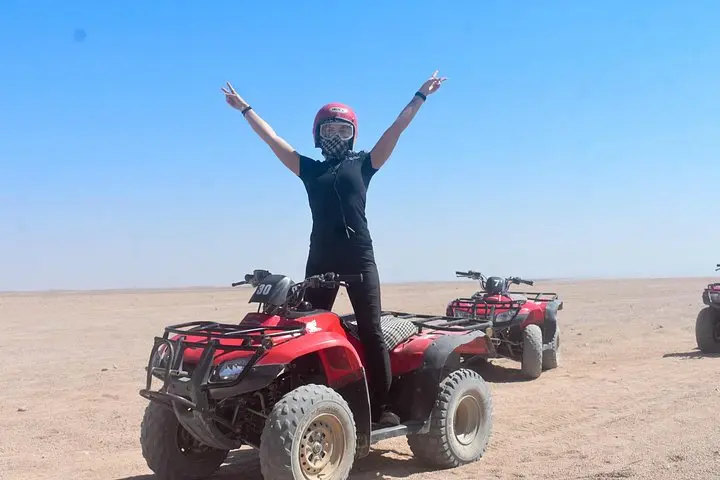
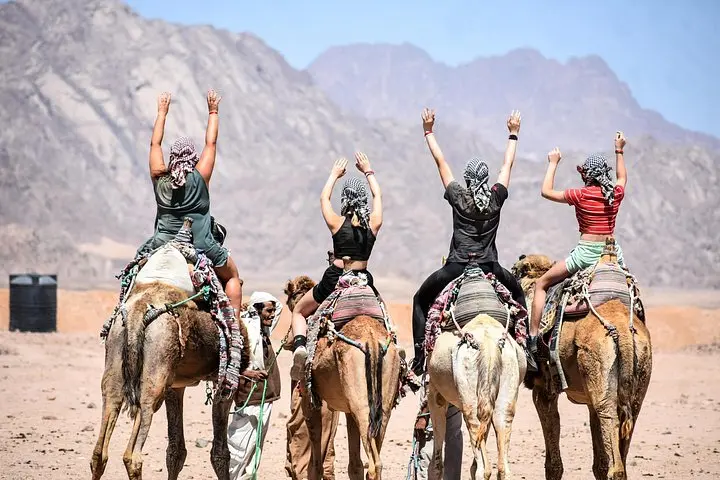
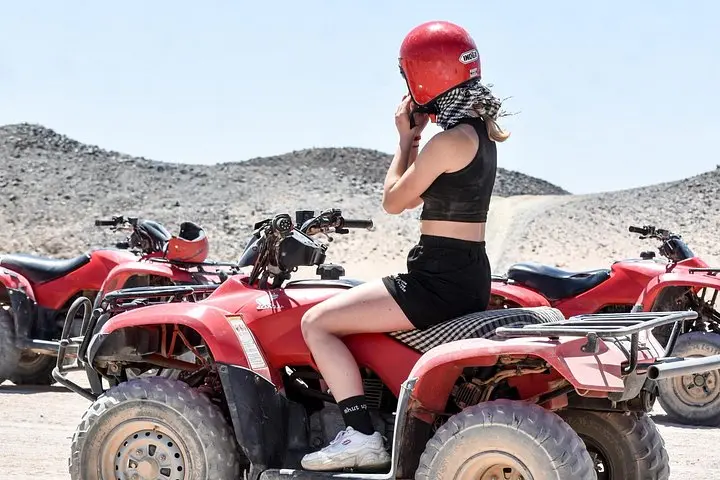
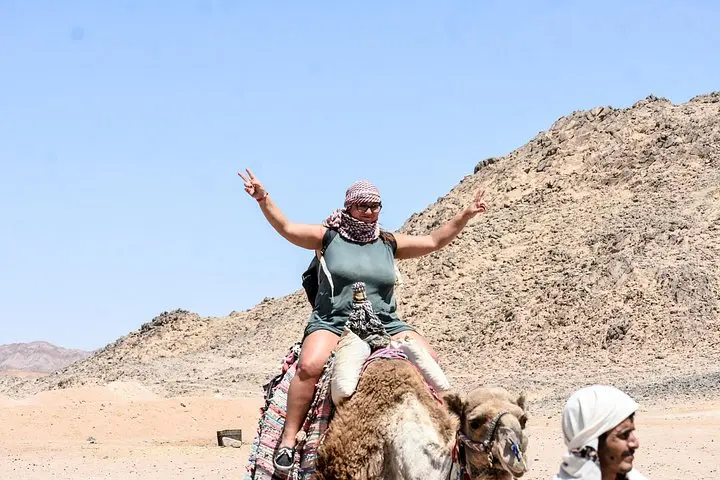
The engine thumps beneath your hands as the convoy peels away from Hurghada and the city’s heat gives way to an endless palette of sand and stone. Dunes roll like slow waves, daring you to pick a line; the wind etches ridgelines and the sun pushes forward, flattening long shadows. After about 25 km of tracks and sandy switchbacks the group pulls into a small Bedouin cluster, where steaming tea and the low chatter of daily life bring the ride down to human pace.
The engine thumps beneath your hands as the convoy peels away from Hurghada and the city’s heat gives way to an endless palette of sand and stone. Dunes roll like slow waves, daring you to pick a line; the wind etches ridgelines and the sun pushes forward, flattening long shadows. After about 25 km of tracks and sandy switchbacks the group pulls into a small Bedouin cluster, where steaming tea and the low chatter of daily life bring the ride down to human pace.
This short safari blends modern adrenaline with deep-rooted desert culture. The Eastern Desert around Hurghada sits on sediments and igneous outcrops shaped by millennia of arid erosion; ancient caravan routes threaded these valleys before motorized travel. At the village drivers explain traditional livelihoods—camel herding, tent-making—and visitors can learn how Bedouin families adapted to scarce water and shifting sands.
Practical guidance: trips run about 3–4 hours including transfers. Machines are user-friendly but expect sandy, uneven terrain and occasional climbs over dune shoulders—basic ATV handling is required. Helmets are provided; bring goggles, closed-toe shoes, sun protection, and at least one liter of water per hour. Timing matters: morning and late-afternoon departures are cooler and offer better light for photos; midday is brutally hot in summer.
Safety and respect go hand in hand—follow the guide’s line choices to protect fragile desert crust and local grazing areas, and accept invitations to tea as part of the cultural exchange. The result is a compact, high-energy window into Hurghada’s wild open country.