THE ADVENTURE COLLECTIVE® · Independent discovery and booking for outdoor travel

Swap Hurghada’s beach crowds for a three-hour desert circuit: quad biking over dunes, a tranquil camel ride and a visit to a real Bedouin village with tea and storytelling. Perfect for short-window travelers seeking both adrenaline and cultural insight.
Swap Hurghada’s beach crowds for a three-hour desert circuit: quad biking over dunes, a tranquil camel ride and a visit to a real Bedouin village with tea and storytelling. Perfect for short-window travelers seeking both adrenaline and cultural insight.
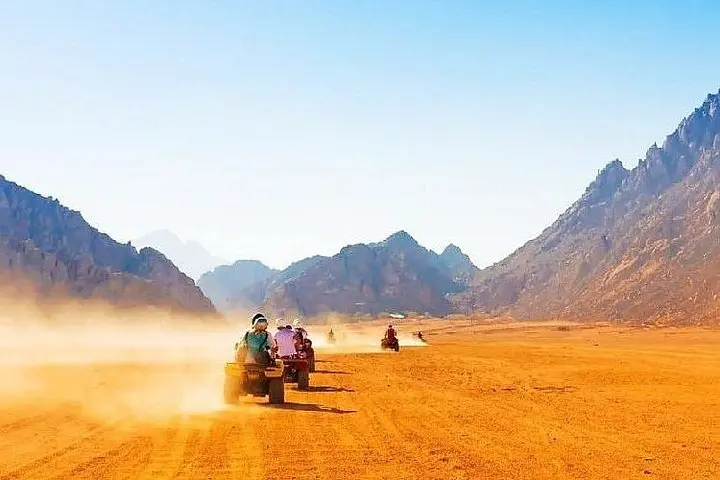
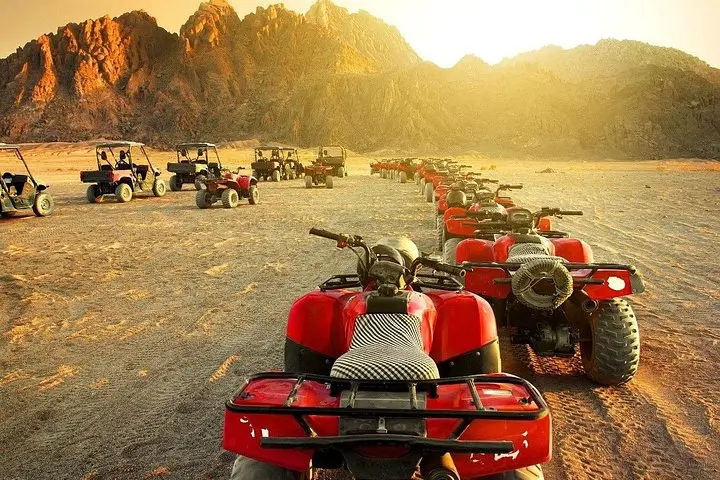
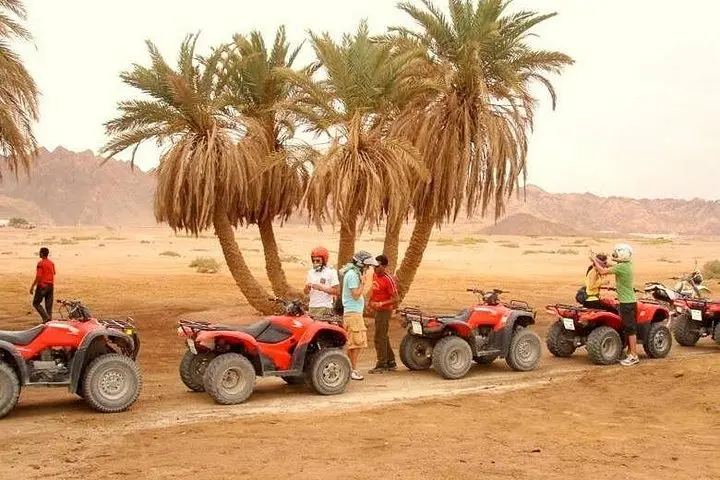
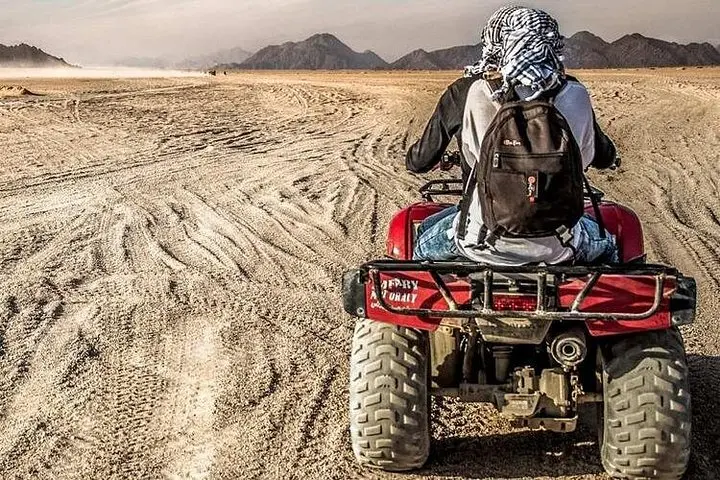
The sun sits low over endless sand as the convoy pulls up outside Hurghada — wind shaping the dunes into ridges that dare you forward. Riders swap hotel air for the dry, metallic tang of the desert; helmets click, engines fire, and the first run of quad bikes cuts arcs across golden slopes. Later the pace slows: camels sway through hummocks where Bedouin life has adapted to scarce water and relentless wind.
Verified experiences and guided adventures in the surrounding area.
Operated by Saray El-Nile · Hurghada, Red Sea Governorate
The sun sits low over endless sand as the convoy pulls up outside Hurghada — wind shaping the dunes into ridges that dare you forward. Riders swap hotel air for the dry, metallic tang of the desert; helmets click, engines fire, and the first run of quad bikes cuts arcs across golden slopes. Later the pace slows: camels sway through hummocks where Bedouin life has adapted to scarce water and relentless wind.
Geology here is simple and dramatic: wind-driven quartz sand forms mobile dunes on a broad coastal plain between the Red Sea and the Eastern Desert mountains. The Bedouin people have lived with that landscape for generations; the village visit shows practical craftsmanship, simple stone-and-fabric shelters, and a tradition of hospitality centered on brewed tea and storytelling.
Expect three hours that move from high-adrenaline rides to a gentle camel walk and a village stop. Terrain is mostly sand — soft, shifting, and occasionally steep on dune crests — so quads are guided by instructors and a safety briefing is standard. Cultural context matters: remove shoes when entering private spaces and accept tea with both hands.
Practical notes: wear closed-toe shoes, bring ample water and sun protection, and secure dust protection for eyes and camera. Morning or late-afternoon departures are best for cooler temperatures and stronger photos. Guides handle transfers from Hurghada hotels, but confirm pickup details in advance. The trip balances thrill with cultural exchange, offering a compact, well-supported way to experience Egypt’s coastal desert beyond the beaches.
No — instructors provide a safety briefing and basic riding instructions; tours are designed for beginners and intermediate riders.
Yes — standard packages include hotel pickup and drop-off; confirm your pickup point and time when you book.
Yes, but secure it with a neck strap or wrist strap; expect dust and vibration, so use protective cases or keep devices in a dry bag.
The tour is suitable for most children but infants must sit on laps; it’s not recommended for pregnant travelers due to riding and vibration.
Saray El-Nile operates guided outdoor trips and adventures with an emphasis on safety, stewardship, and memorable experiences.
The sun sits low over endless sand as the convoy pulls up outside Hurghada — wind shaping the dunes into ridges that dare you forward. Riders swap hotel air for the dry, metallic tang of the desert; helmets click, engines fire, and the first run of quad bikes cuts arcs across golden slopes. Later the pace slows: camels sway through hummocks where Bedouin life has adapted to scarce water and relentless wind.
The sun sits low over endless sand as the convoy pulls up outside Hurghada — wind shaping the dunes into ridges that dare you forward. Riders swap hotel air for the dry, metallic tang of the desert; helmets click, engines fire, and the first run of quad bikes cuts arcs across golden slopes. Later the pace slows: camels sway through hummocks where Bedouin life has adapted to scarce water and relentless wind.
Geology here is simple and dramatic: wind-driven quartz sand forms mobile dunes on a broad coastal plain between the Red Sea and the Eastern Desert mountains. The Bedouin people have lived with that landscape for generations; the village visit shows practical craftsmanship, simple stone-and-fabric shelters, and a tradition of hospitality centered on brewed tea and storytelling.
Expect three hours that move from high-adrenaline rides to a gentle camel walk and a village stop. Terrain is mostly sand — soft, shifting, and occasionally steep on dune crests — so quads are guided by instructors and a safety briefing is standard. Cultural context matters: remove shoes when entering private spaces and accept tea with both hands.
Practical notes: wear closed-toe shoes, bring ample water and sun protection, and secure dust protection for eyes and camera. Morning or late-afternoon departures are best for cooler temperatures and stronger photos. Guides handle transfers from Hurghada hotels, but confirm pickup details in advance. The trip balances thrill with cultural exchange, offering a compact, well-supported way to experience Egypt’s coastal desert beyond the beaches.