THE ADVENTURE COLLECTIVE® · Independent discovery and booking for outdoor travel

A single, long day transports you from Hurghada to Cairo’s heart: the Egyptian Museum and the Giza Plateau. This VIP private tour packs cultural depth and open‑air spectacle into a 14–16 hour itinerary with guide-led insights and practical options for entering attractions.
A single, long day transports you from Hurghada to Cairo’s heart: the Egyptian Museum and the Giza Plateau. This VIP private tour packs cultural depth and open‑air spectacle into a 14–16 hour itinerary with guide-led insights and practical options for entering attractions.
A long, purposeful day begins before sunrise in Hurghada as an air-conditioned vehicle eases onto the desert road, the Nile’s distant pull waiting ahead. By midmorning the city of Cairo expands into view: traffic, river, and the layered history that culminates at the Museum of Egyptian Antiquities and the Giza Plateau.
Verified experiences and guided adventures in the surrounding area.
Operated by Ramashka Tours · Cairo, Cairo Governorate
A long, purposeful day begins before sunrise in Hurghada as an air-conditioned vehicle eases onto the desert road, the Nile’s distant pull waiting ahead. By midmorning the city of Cairo expands into view: traffic, river, and the layered history that culminates at the Museum of Egyptian Antiquities and the Giza Plateau.
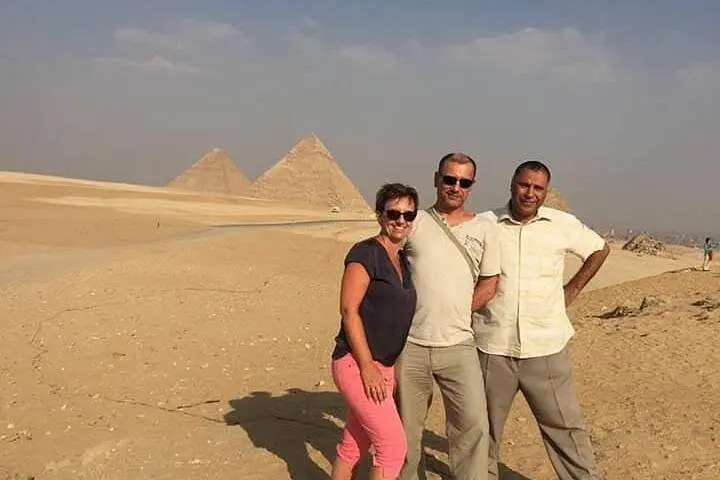
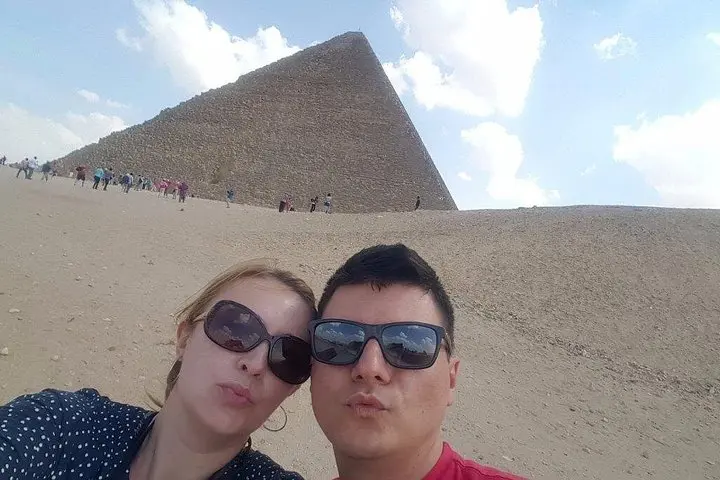
The Egyptian Museum in Tahrir holds millennia of material culture—mummified remains, gilded funerary masks, and the fragile lacquer of everyday objects—while the Giza complex presents raw geology and engineering: limestone blocks quarried and fitted into pyramids that date to the Fourth Dynasty (c. 2600–2500 BCE). Local guides typically frame the sites through social and political histories, and the long road from Hurghada foregrounds the Nile’s role as both lifeline and travel corridor.
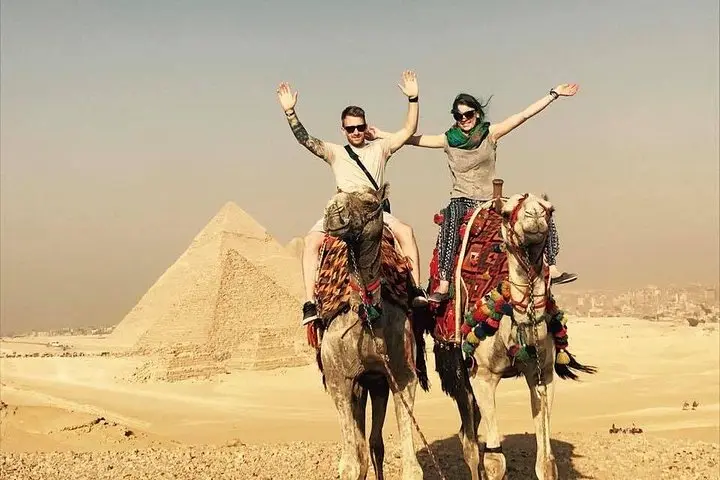
Expect a full 14–16 hour rhythm: long stretches of highway, brief rest stops, a guided museum walkthrough, a lunch break, then open-air time on the plateau with options to enter select pyramids for an extra fee. The plateau’s terrain is uneven sand, gravel and packed stone; camels, tourist vendors and stray cats are part of the scene.
Practical advice: bring sun protection, allow time for queues at ticketed entries, carry Egyptian pounds for tips and extras, and confirm pickup and return times with the operator. For accessibility or health concerns, note that much walking and some stairs are involved and the tour is best for travelers comfortable with long days and moderate walking.
Expect about 4–5 hours each way by private, air‑conditioned vehicle depending on traffic and rest stops.
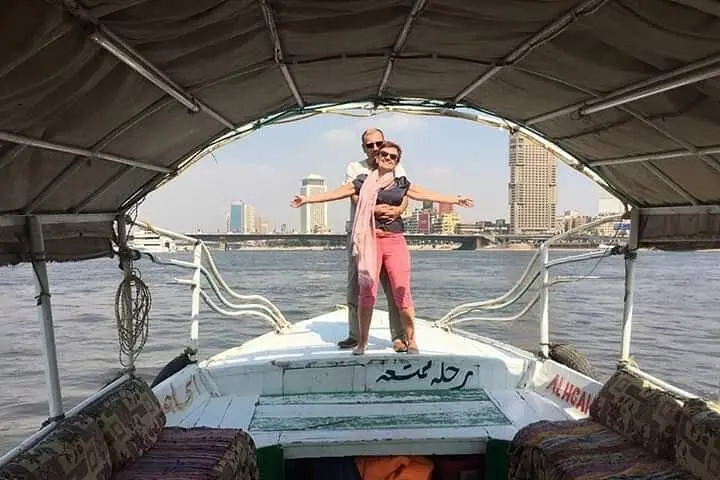
Museum and Giza Plateau admission are included per itinerary notes, but entry inside some pyramid chambers and optional activities (boat rides, camel rides) typically cost extra.
Yes for most, but it involves a long day of travel and some walking; those with back, heart, or pregnancy concerns are advised not to join.
Photography rules vary: exterior photography is allowed on the plateau; some museum halls allow photos while others may restrict flash or tripods—follow guide instructions.
Ramashka Tours operates guided outdoor trips and adventures with an emphasis on safety, stewardship, and memorable experiences.
A long, purposeful day begins before sunrise in Hurghada as an air-conditioned vehicle eases onto the desert road, the Nile’s distant pull waiting ahead. By midmorning the city of Cairo expands into view: traffic, river, and the layered history that culminates at the Museum of Egyptian Antiquities and the Giza Plateau.
A long, purposeful day begins before sunrise in Hurghada as an air-conditioned vehicle eases onto the desert road, the Nile’s distant pull waiting ahead. By midmorning the city of Cairo expands into view: traffic, river, and the layered history that culminates at the Museum of Egyptian Antiquities and the Giza Plateau.
The Egyptian Museum in Tahrir holds millennia of material culture—mummified remains, gilded funerary masks, and the fragile lacquer of everyday objects—while the Giza complex presents raw geology and engineering: limestone blocks quarried and fitted into pyramids that date to the Fourth Dynasty (c. 2600–2500 BCE). Local guides typically frame the sites through social and political histories, and the long road from Hurghada foregrounds the Nile’s role as both lifeline and travel corridor.
Expect a full 14–16 hour rhythm: long stretches of highway, brief rest stops, a guided museum walkthrough, a lunch break, then open-air time on the plateau with options to enter select pyramids for an extra fee. The plateau’s terrain is uneven sand, gravel and packed stone; camels, tourist vendors and stray cats are part of the scene.
Practical advice: bring sun protection, allow time for queues at ticketed entries, carry Egyptian pounds for tips and extras, and confirm pickup and return times with the operator. For accessibility or health concerns, note that much walking and some stairs are involved and the tour is best for travelers comfortable with long days and moderate walking.