THE ADVENTURE COLLECTIVE® · Independent discovery and booking for outdoor travel

Make the long journey from Hurghada to stand beneath the Great Pyramid and the Sphinx on a private, full-day guided tour. Expect deep historical context, close-up views, and a local Giza walk that turns monuments into living places.
Make the long journey from Hurghada to stand beneath the Great Pyramid and the Sphinx on a private, full-day guided tour. Expect deep historical context, close-up views, and a local Giza walk that turns monuments into living places.
You step from the air-conditioned vehicle into a broad, sunlit plain where stone arranges itself into impossible angles—massive faces of the Great Pyramid rising like a human-made mountain against the blue. Wind moves sand in slow ribbons; the plateau dares you to measure time differently.
Verified experiences and guided adventures in the surrounding area.
Operated by SunGo Tours · Giza, Giza Governorate
You step from the air-conditioned vehicle into a broad, sunlit plain where stone arranges itself into impossible angles—massive faces of the Great Pyramid rising like a human-made mountain against the blue. Wind moves sand in slow ribbons; the plateau dares you to measure time differently.
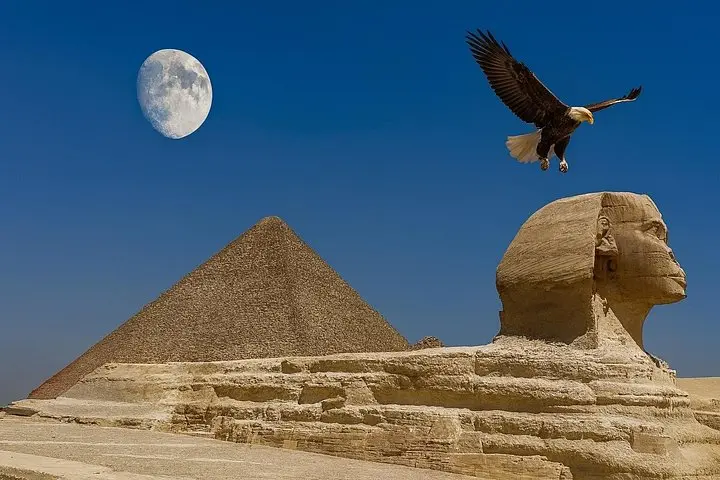
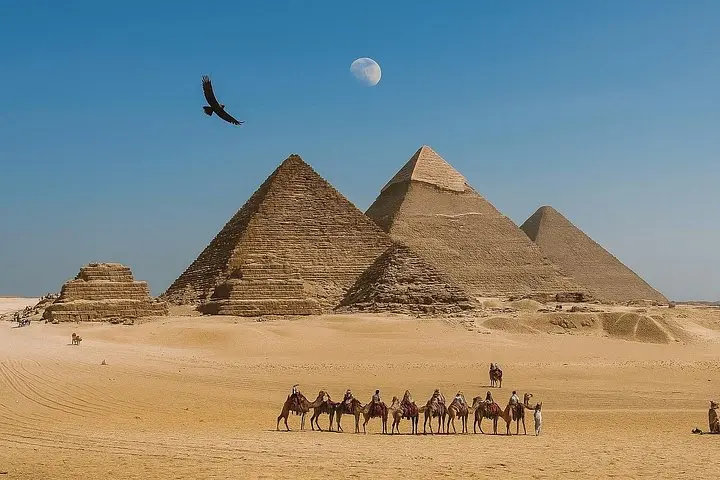
The Giza Plateau is geology and ambition in equal measure: Eocene limestone quarried and stacked into tombs that anchored pharaonic cosmology. You’ll pass Khafre’s still-glinting casing stones, Menkaure’s quieter granite faces, and the Valley Temple’s hewn blocks where priests once prepared rulers for eternity. The Sphinx keeps its ancient watch, a composite of funerary architecture and solar symbolism that tied kingship to the sky.
Beyond monuments, Giza is a working city—markets, rooftop cafés with pyramid views, and neighborhoods where everyday life frames the ancient stones. Guides here link alignment, funerary ritual, and the logistics of moving millions of blocks; that context turns impressive ruins into a functioning civilization.
Practical guidance: expect a long day with vehicle transfers; wear sturdy shoes for uneven bedrock, bring sun protection and at least 2 liters of water, and keep your passport handy for entrance checks. Photography is allowed in most areas but respects signs and restricted zones; climbing or touching monuments is prohibited. Plan your timing—early mornings have softer light and fewer crowds; late afternoons keep heat lower but can be busier. Carry small change for local vendors and tipping; follow your guide’s route to maximize time at each site.
Yes—this tour includes access to the Sphinx area without an extra entrance fee, per the operator's listing.
Transfers can be lengthy; expect a multi-hour drive each way or early departures if organized by vehicle—confirm exact pickup times with the operator.
A buffet-style lunch is included as noted; bring snacks if you prefer specific dietary options during long transfers.
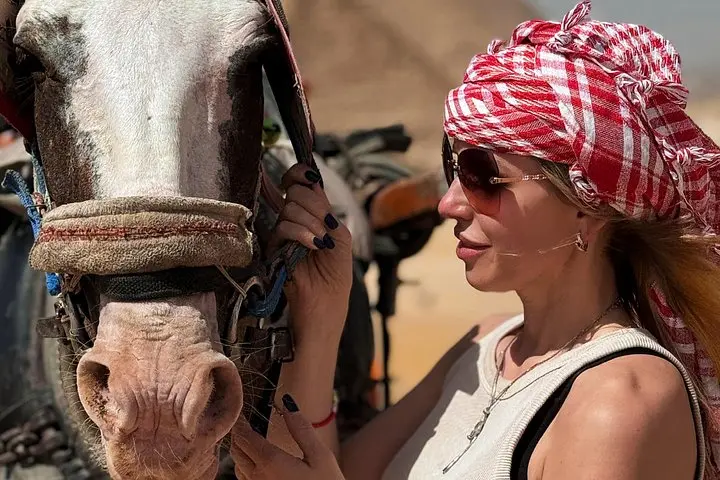
Yes—camel and horse rides are available near the plateau through local vendors, but they are optional and priced separately from the tour.
SunGo Tours operates guided outdoor trips and adventures with an emphasis on safety, stewardship, and memorable experiences.
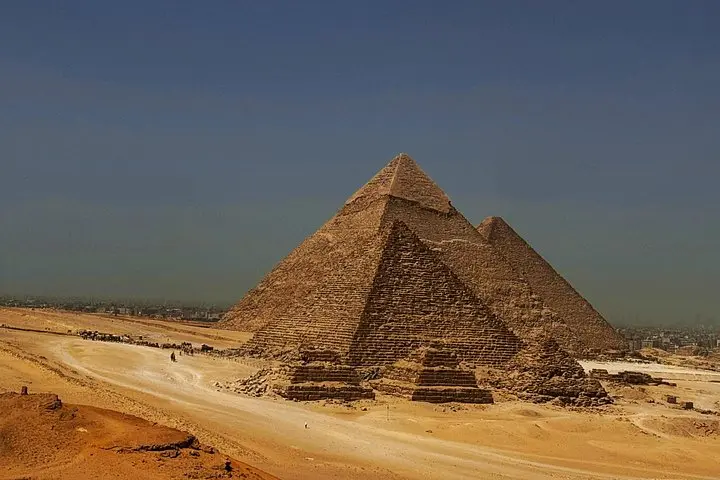
You step from the air-conditioned vehicle into a broad, sunlit plain where stone arranges itself into impossible angles—massive faces of the Great Pyramid rising like a human-made mountain against the blue. Wind moves sand in slow ribbons; the plateau dares you to measure time differently.
You step from the air-conditioned vehicle into a broad, sunlit plain where stone arranges itself into impossible angles—massive faces of the Great Pyramid rising like a human-made mountain against the blue. Wind moves sand in slow ribbons; the plateau dares you to measure time differently.
The Giza Plateau is geology and ambition in equal measure: Eocene limestone quarried and stacked into tombs that anchored pharaonic cosmology. You’ll pass Khafre’s still-glinting casing stones, Menkaure’s quieter granite faces, and the Valley Temple’s hewn blocks where priests once prepared rulers for eternity. The Sphinx keeps its ancient watch, a composite of funerary architecture and solar symbolism that tied kingship to the sky.
Beyond monuments, Giza is a working city—markets, rooftop cafés with pyramid views, and neighborhoods where everyday life frames the ancient stones. Guides here link alignment, funerary ritual, and the logistics of moving millions of blocks; that context turns impressive ruins into a functioning civilization.
Practical guidance: expect a long day with vehicle transfers; wear sturdy shoes for uneven bedrock, bring sun protection and at least 2 liters of water, and keep your passport handy for entrance checks. Photography is allowed in most areas but respects signs and restricted zones; climbing or touching monuments is prohibited. Plan your timing—early mornings have softer light and fewer crowds; late afternoons keep heat lower but can be busier. Carry small change for local vendors and tipping; follow your guide’s route to maximize time at each site.