THE ADVENTURE COLLECTIVE® · Independent discovery and booking for outdoor travel

Head out on a 2.5–3 hour evening jeep safari into Hurulu Eco Park to watch migratory Sri Lankan elephants in a dry-zone evergreen forest. This private, guided trip pairs comfortable transport with high likelihood of elephant sightings and local ecological insight.
Head out on a 2.5–3 hour evening jeep safari into Hurulu Eco Park to watch migratory Sri Lankan elephants in a dry-zone evergreen forest. This private, guided trip pairs comfortable transport with high likelihood of elephant sightings and local ecological insight.
The sun drops low across a hard, dry plain and a dust-spray trail appears as your jeep eases into Hurulu Eco Park. Tall grasses lean like an audience; distant trunks and broad canopies take on the color of late honey. Within a few minutes the guide calls a halt and the forest rearranges itself around a slow-moving line of elephants—mothers, calves and the occasional lone bull—moving with deliberate, weathered purpose.
Verified experiences and guided adventures in the surrounding area.
Operated by Minneriya Wild Jeep Safari · Anuradhapura, North Central Province
The sun drops low across a hard, dry plain and a dust-spray trail appears as your jeep eases into Hurulu Eco Park. Tall grasses lean like an audience; distant trunks and broad canopies take on the color of late honey. Within a few minutes the guide calls a halt and the forest rearranges itself around a slow-moving line of elephants—mothers, calves and the occasional lone bull—moving with deliberate, weathered purpose.
Hurulu Eco Park sits in Sri Lanka’s dry zone, a 10,000-hectare patch of evergreen within a landscape of seasonal scrub. Designated a UNESCO biosphere reserve in 1977, the park connects migratory corridors for the Sri Lankan elephant (Elephas maximus maximus) that travel between Minneriya, Kaudulla and Somawathiya. Geology here is flat to gently undulating: ancient granite and laterite soils under a thin layer of seasonal leaf litter, cut by sandy jeep tracks.
Local culture in the nearby villages is agricultural and anchored to the tank-cascade irrigation tradition; guides often point out old bunds and temple ruins that speak to centuries of dry-zone settlement. The evening safari’s rhythm is deliberate—slow tracks, scanning binoculars, and long, quiet pauses when wildlife decides to reveal itself.
Practical guidance: expect 2.5–3 hours in a comfortable, open-sided jeep with private pickup and bottled water included. Wear insect repellent, sun protection for the approach, and a light layer for cooler evenings. Keep cameras ready but follow the guide’s safety rules—stay in the vehicle and avoid sudden movements. Optimal sightings come in the cooler late afternoon and early evening, when elephants move to forage and water. The park is dusty and bumpy; if motion sensitivity is an issue, sit near the center of the jeep and bring water and mild motion remedies.
Sightings are common—Hurulu is part of a migratory corridor—but wildlife is never guaranteed; the guide’s local knowledge maximizes chances during the 2.5–3 hour window.
Yes, private pickup and drop-off are typically included; confirm your exact pickup point when booking.
Children are generally welcome, but this activity is not recommended for pregnant travelers due to bumpy tracks and potential emergency access limitations.
Minimal walking; the experience is primarily a seated jeep safari with short, guided stops for viewing and photography.
Minneriya Wild Jeep Safari operates guided outdoor trips and adventures with an emphasis on safety, stewardship, and memorable experiences.
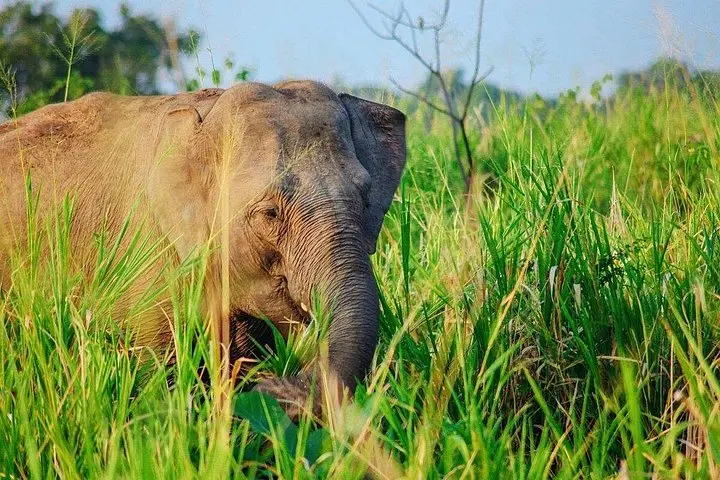
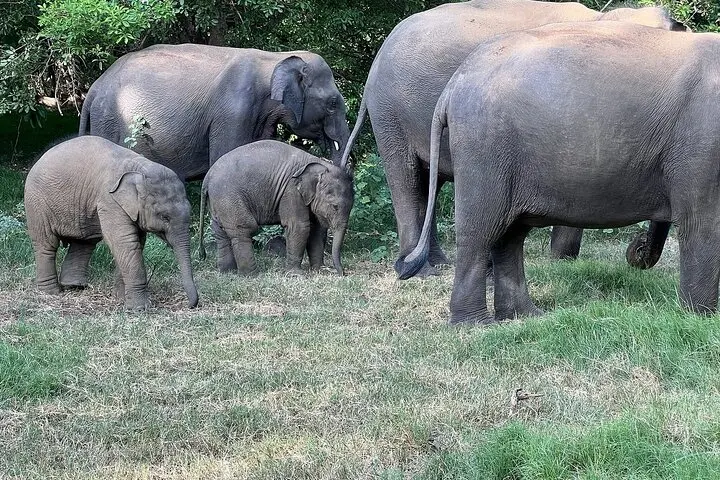
The sun drops low across a hard, dry plain and a dust-spray trail appears as your jeep eases into Hurulu Eco Park. Tall grasses lean like an audience; distant trunks and broad canopies take on the color of late honey. Within a few minutes the guide calls a halt and the forest rearranges itself around a slow-moving line of elephants—mothers, calves and the occasional lone bull—moving with deliberate, weathered purpose.
The sun drops low across a hard, dry plain and a dust-spray trail appears as your jeep eases into Hurulu Eco Park. Tall grasses lean like an audience; distant trunks and broad canopies take on the color of late honey. Within a few minutes the guide calls a halt and the forest rearranges itself around a slow-moving line of elephants—mothers, calves and the occasional lone bull—moving with deliberate, weathered purpose.
Hurulu Eco Park sits in Sri Lanka’s dry zone, a 10,000-hectare patch of evergreen within a landscape of seasonal scrub. Designated a UNESCO biosphere reserve in 1977, the park connects migratory corridors for the Sri Lankan elephant (Elephas maximus maximus) that travel between Minneriya, Kaudulla and Somawathiya. Geology here is flat to gently undulating: ancient granite and laterite soils under a thin layer of seasonal leaf litter, cut by sandy jeep tracks.
Local culture in the nearby villages is agricultural and anchored to the tank-cascade irrigation tradition; guides often point out old bunds and temple ruins that speak to centuries of dry-zone settlement. The evening safari’s rhythm is deliberate—slow tracks, scanning binoculars, and long, quiet pauses when wildlife decides to reveal itself.
Practical guidance: expect 2.5–3 hours in a comfortable, open-sided jeep with private pickup and bottled water included. Wear insect repellent, sun protection for the approach, and a light layer for cooler evenings. Keep cameras ready but follow the guide’s safety rules—stay in the vehicle and avoid sudden movements. Optimal sightings come in the cooler late afternoon and early evening, when elephants move to forage and water. The park is dusty and bumpy; if motion sensitivity is an issue, sit near the center of the jeep and bring water and mild motion remedies.