THE ADVENTURE COLLECTIVE® · Independent discovery and booking for outdoor travel

Step aboard a traditional oak boat from Húsavík and head into Skjálfandi Bay where humpbacks, minkes, dolphins and—on rare early summer days—blue and fin whales cruise. This hard-weather outing pairs expert guides with warm overalls and hot drinks for a comfortable, three-hour wildlife encounter.
Step aboard a traditional oak boat from Húsavík and head into Skjálfandi Bay where humpbacks, minkes, dolphins and—on rare early summer days—blue and fin whales cruise. This hard-weather outing pairs expert guides with warm overalls and hot drinks for a comfortable, three-hour wildlife encounter.
The bow cuts through grey water and spray; gulls wheel overhead and the cold wind sharpens every sense. On a traditional oak boat leaving Húsavík, Skjálfandi Bay opens like a vast room where deep-diving whales surface to breathe and dolphins race the wake. The crew pours hot chocolate, passes out warm overalls, and points toward distant blows — evidence that something enormous is at work beneath the surface.
Verified experiences and guided adventures in the surrounding area.
Operated by Salka Whale Watching · Húsavík, North Iceland
The bow cuts through grey water and spray; gulls wheel overhead and the cold wind sharpens every sense. On a traditional oak boat leaving Húsavík, Skjálfandi Bay opens like a vast room where deep-diving whales surface to breathe and dolphins race the wake. The crew pours hot chocolate, passes out warm overalls, and points toward distant blows — evidence that something enormous is at work beneath the surface.
Skjálfandi’s coastline is geologically young, shaped by glacial floodwaters and basalt cliffs that funnel nutrient-rich currents into the bay. Húsavík itself grew from a 19th-century fishing settlement to Iceland’s whale-watching capital, and the modest museum onshore tells that shift from local industry to wildlife tourism. Locals still fish these waters; the industry today emphasizes observation and protection.
Expect sightings of humpback and minke whales year-round, with white-beaked dolphins and porpoises commonly playing near the boat; early summer brings occasional blue and fin whale encounters. The sea has a rhythm — sometime languid, sometimes urgent — and the boat’s seasoned crew read it like a language.
Practically: tours are roughly three hours, depart from Húsavík harbor, and include warm coveralls and restroom facilities on board. Dress in layers, bring sea-sickness remedies if you’re sensitive, and set expectations that wildlife encounters are never guaranteed. Photography with a telephoto lens rewards patience. Book morning or late-evening slots for calmer seas and softer light; if the sky clears, the midnight sun can turn a routine trip into an unforgettable spectacle.
The excursion lasts approximately three hours from departure to return to Húsavík harbor.
Common sightings include humpback and minke whales, white-beaked dolphins, and porpoises; blue and fin whales are possible in early summer.
Operators typically supply weatherproof overalls; bring your own warm layers and a hat for added comfort.
Yes—tours are family-friendly and the vessel/operation notes wheelchair accessibility, though boarding assistance may be required.
Salka Whale Watching operates guided outdoor trips and adventures with an emphasis on safety, stewardship, and memorable experiences.
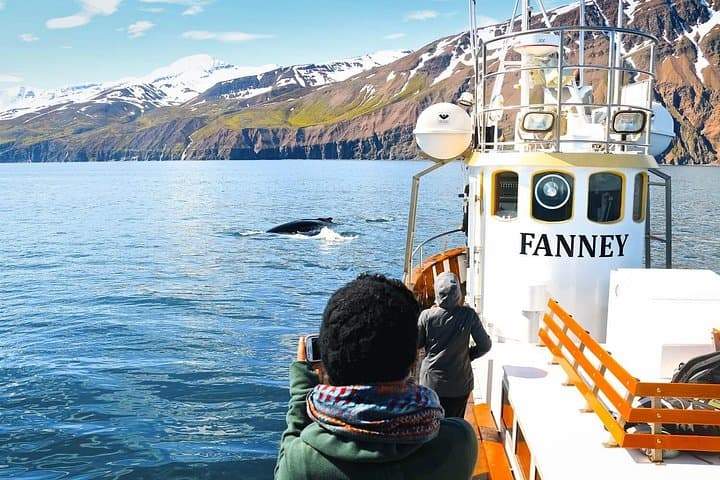


The bow cuts through grey water and spray; gulls wheel overhead and the cold wind sharpens every sense. On a traditional oak boat leaving Húsavík, Skjálfandi Bay opens like a vast room where deep-diving whales surface to breathe and dolphins race the wake. The crew pours hot chocolate, passes out warm overalls, and points toward distant blows — evidence that something enormous is at work beneath the surface.
The bow cuts through grey water and spray; gulls wheel overhead and the cold wind sharpens every sense. On a traditional oak boat leaving Húsavík, Skjálfandi Bay opens like a vast room where deep-diving whales surface to breathe and dolphins race the wake. The crew pours hot chocolate, passes out warm overalls, and points toward distant blows — evidence that something enormous is at work beneath the surface.
Skjálfandi’s coastline is geologically young, shaped by glacial floodwaters and basalt cliffs that funnel nutrient-rich currents into the bay. Húsavík itself grew from a 19th-century fishing settlement to Iceland’s whale-watching capital, and the modest museum onshore tells that shift from local industry to wildlife tourism. Locals still fish these waters; the industry today emphasizes observation and protection.
Expect sightings of humpback and minke whales year-round, with white-beaked dolphins and porpoises commonly playing near the boat; early summer brings occasional blue and fin whale encounters. The sea has a rhythm — sometime languid, sometimes urgent — and the boat’s seasoned crew read it like a language.
Practically: tours are roughly three hours, depart from Húsavík harbor, and include warm coveralls and restroom facilities on board. Dress in layers, bring sea-sickness remedies if you’re sensitive, and set expectations that wildlife encounters are never guaranteed. Photography with a telephoto lens rewards patience. Book morning or late-evening slots for calmer seas and softer light; if the sky clears, the midnight sun can turn a routine trip into an unforgettable spectacle.