THE ADVENTURE COLLECTIVE® · Independent discovery and booking for outdoor travel

Spend a full day in Hwange National Park tracking elephants, buffalo and predators across mopane woodland and clay pans. This full-day game drive focuses on early-morning watering holes and sustained wildlife viewing with experienced guides.
Spend a full day in Hwange National Park tracking elephants, buffalo and predators across mopane woodland and clay pans. This full-day game drive focuses on early-morning watering holes and sustained wildlife viewing with experienced guides.
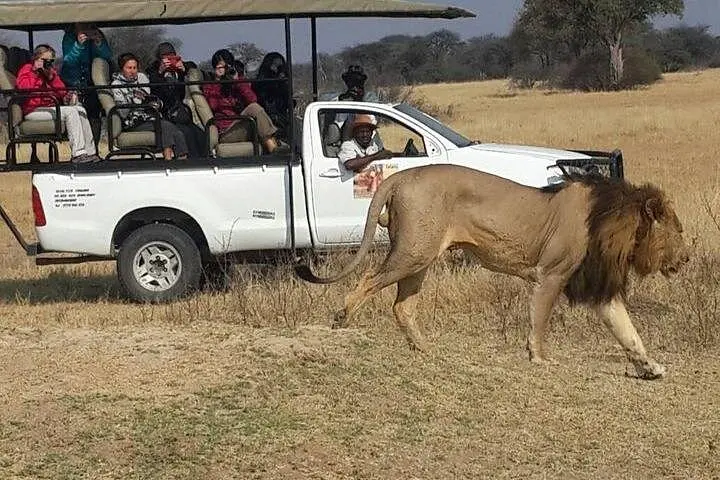
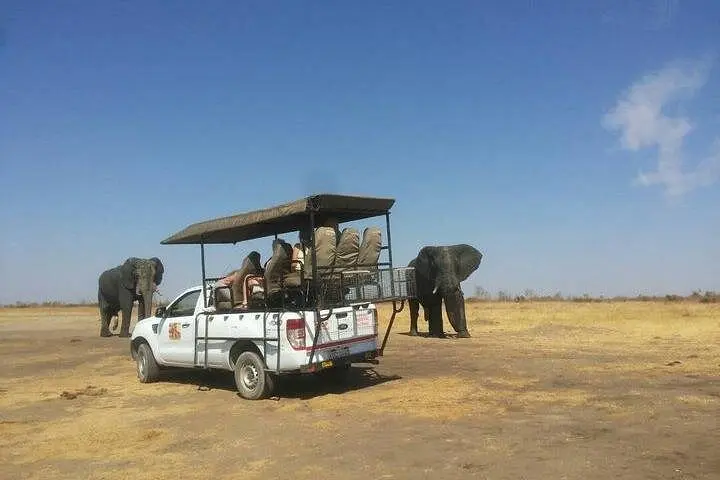
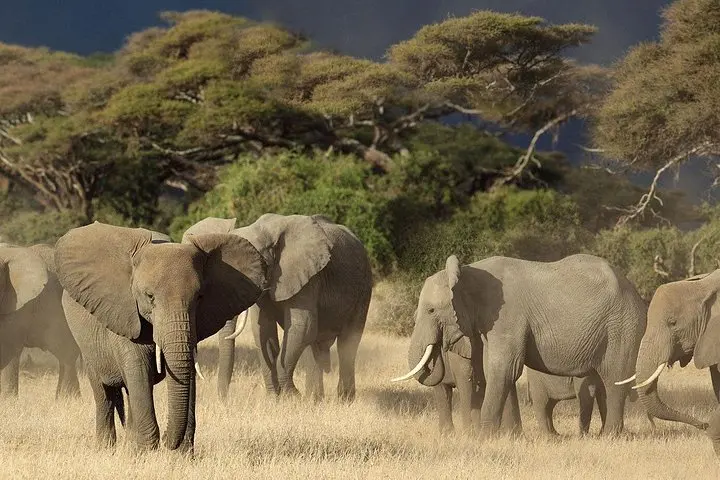
Dawn lifts a pale light over wide pans as the vehicle eases onto sandy tracks — the park breathes and the horizon pushes forward. Early hours in Hwange mean elephants moving like slow weather, buffalo milling near waterholes, and the first raptors staking a claim above mopane woodland.
Verified experiences and guided adventures in the surrounding area.
Operated by ThisAndThat Safaris · Hwange, Matabeleland North
Dawn lifts a pale light over wide pans as the vehicle eases onto sandy tracks — the park breathes and the horizon pushes forward. Early hours in Hwange mean elephants moving like slow weather, buffalo milling near waterholes, and the first raptors staking a claim above mopane woodland.
Hwange National Park grew into its reputation through decades of pastoral and colonial history, then formal protection in the early 20th century; its geology is a low-rolling expanse of Kalahari sands, pans and hard clay flats that concentrate wildlife where water remains. Local communities and settlers shaped the rim roads and access points, while indigenous place-names still map the land in oral memory.
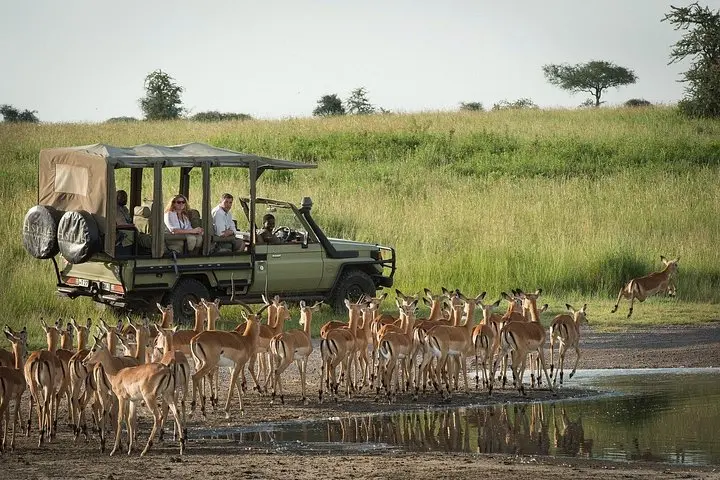
On a full-day game drive you’ll follow guides who know seasonal patterns — stopping at Nyamandlovu platform and scattered watering points to watch herds and predators at close range. Terrain is mostly flat with dusty tracks, shallow drains and stands of mopane; expect motion over rough, unpaved roads. Birds are abundant; look for hornbills and raptors perched like sentries.
Practical guidance: travel light but sun-wise — neutral clothing, wide-brim hat, sunglasses and sunscreen; bring binoculars and a camera with a long lens. Hydration matters on seven-hour outings; bottled water and a light lunch are usually provided. Respect park rules: no walking off-vehicle, keep noise low, and follow the guide’s instructions for safe viewing. Morning and late afternoon drives offer the richest sightings; the day between them is a patient study in animals’ rhythms.
This full-day safari runs about seven hours, typically starting at dawn and returning in the late afternoon.
Light lunch, refreshments and bottled water are normally included; bring a refillable bottle if you prefer.
The drive is classified as easy but requires climbing into a vehicle and sitting for long periods; it may not be suitable for those with serious spinal, heart, or pregnancy restrictions.
Sightings cannot be guaranteed, but Hwange is known for elephants, buffalo and strong predator populations — experienced guides maximize chances by using local knowledge and watering points.
ThisAndThat Safaris operates guided outdoor trips and adventures with an emphasis on safety, stewardship, and memorable experiences.
Dawn lifts a pale light over wide pans as the vehicle eases onto sandy tracks — the park breathes and the horizon pushes forward. Early hours in Hwange mean elephants moving like slow weather, buffalo milling near waterholes, and the first raptors staking a claim above mopane woodland.
Dawn lifts a pale light over wide pans as the vehicle eases onto sandy tracks — the park breathes and the horizon pushes forward. Early hours in Hwange mean elephants moving like slow weather, buffalo milling near waterholes, and the first raptors staking a claim above mopane woodland.
Hwange National Park grew into its reputation through decades of pastoral and colonial history, then formal protection in the early 20th century; its geology is a low-rolling expanse of Kalahari sands, pans and hard clay flats that concentrate wildlife where water remains. Local communities and settlers shaped the rim roads and access points, while indigenous place-names still map the land in oral memory.
On a full-day game drive you’ll follow guides who know seasonal patterns — stopping at Nyamandlovu platform and scattered watering points to watch herds and predators at close range. Terrain is mostly flat with dusty tracks, shallow drains and stands of mopane; expect motion over rough, unpaved roads. Birds are abundant; look for hornbills and raptors perched like sentries.
Practical guidance: travel light but sun-wise — neutral clothing, wide-brim hat, sunglasses and sunscreen; bring binoculars and a camera with a long lens. Hydration matters on seven-hour outings; bottled water and a light lunch are usually provided. Respect park rules: no walking off-vehicle, keep noise low, and follow the guide’s instructions for safe viewing. Morning and late afternoon drives offer the richest sightings; the day between them is a patient study in animals’ rhythms.