THE ADVENTURE COLLECTIVE® · Independent discovery and booking for outdoor travel

A compact 4-day private circuit from Hyderabad through Bijapur’s Adil Shahi monuments to Hampi’s UNESCO ruins. Expect long driving days balanced by immersive temple walks, granite viewpoints and vivid Deccan history.
A compact 4-day private circuit from Hyderabad through Bijapur’s Adil Shahi monuments to Hampi’s UNESCO ruins. Expect long driving days balanced by immersive temple walks, granite viewpoints and vivid Deccan history.
You roll out of Hyderabad before dawn, the city lights shrinking as the highway stretches north-west toward Bijapur. By late morning the car crosses flat Deccan plains and enters a landscape of broad stone monuments—Gol Gumbaz rising like a huge overturned pot—its dome shadowing the square plaza beneath.
Verified experiences and guided adventures in the surrounding area.
Operated by Agora Voyages Pvt. Ltd. · Hampi, Karnataka
You roll out of Hyderabad before dawn, the city lights shrinking as the highway stretches north-west toward Bijapur. By late morning the car crosses flat Deccan plains and enters a landscape of broad stone monuments—Gol Gumbaz rising like a huge overturned pot—its dome shadowing the square plaza beneath.
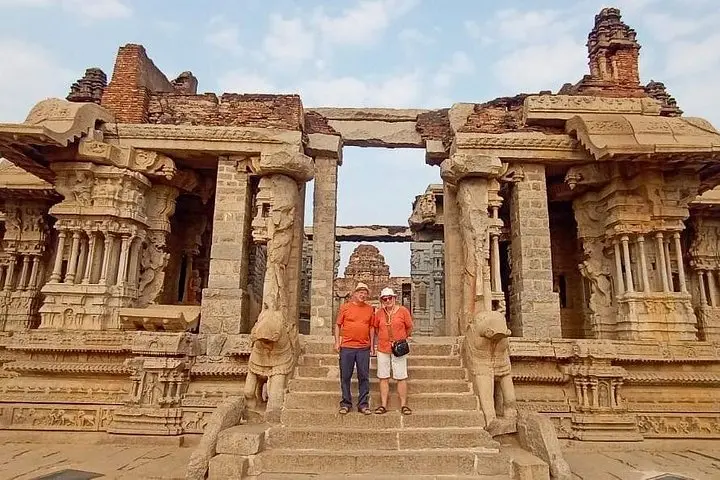
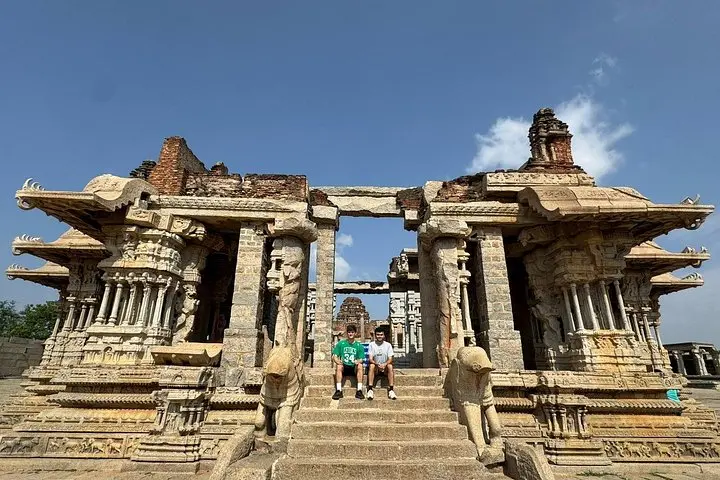
The route threads eras: the Adil Shahi court in Bijapur, where Persian-influenced mausolea and ornate mosques mark a 16th–17th century flowering of Deccan Islamic architecture; then farther south the ruined sprawl of Vijayanagara at Hampi, where boulder-strewn ridges and the Tungabhadra River frame temples, mandapas and carved pillars.
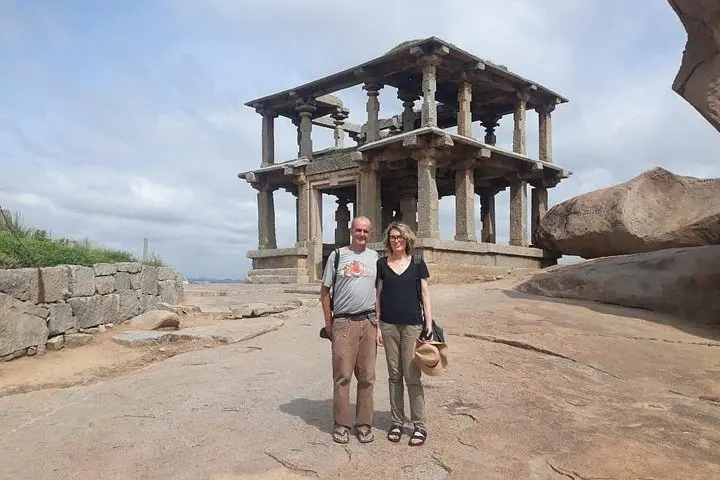
Geology shapes the mood—rounded granite outcrops hold ruined gateways and natural viewpoints; dry scrub and tamarind trees punctuate open fields. Culturally, these sites map trade routes and competing dynasties: Adil Shahi stonework and Vijayanagara sculptural panels both tell local stories of power, devotion and craft.
Practical side: this is a road-based, multi-day private tour covering roughly 800–900 km roundtrip (Hyderabad→Bijapur ≈385 km; Bijapur→Hampi ≈215 km; Hampi→Hyderabad ≈380 km). Expect short, uneven walks on temple platforms and long periods in an air-conditioned vehicle. Carry a refillable water bottle, sun protection and nonslip shoes for stepping across carved stone and boulders. Mornings are best for photography and cooler exploring; late afternoons offer softer light over the Tungabhadra. Monument entry fees and local guide time are typically handled by the operator; still, bring small cash for local stalls and tips. The expedition blends history, landscape and practical travel—leave room in your schedule to climb a hill for sunset and listen as the ruins fall quiet.
Expect up to 6–7 hours on the longest travel day (Hyderabad–Bijapur ≈7 hrs); other transfers are 3–4 hours depending on traffic and stops.
The itinerary indicates monument entrances listed are included—confirm with the operator for specific sites and any optional extras.
Access varies by site: many areas allow walking on platforms and viewing galleries, but inner sanctums and fragile carvings may be restricted—observe signage and guide instructions.
Yes—tour notes label it physically easy, but plan for heat, uneven surfaces and bring mobility aids if needed; vehicles handle transfers between sites.
Agora Voyages Pvt. Ltd. operates guided outdoor trips and adventures with an emphasis on safety, stewardship, and memorable experiences.

You roll out of Hyderabad before dawn, the city lights shrinking as the highway stretches north-west toward Bijapur. By late morning the car crosses flat Deccan plains and enters a landscape of broad stone monuments—Gol Gumbaz rising like a huge overturned pot—its dome shadowing the square plaza beneath.
You roll out of Hyderabad before dawn, the city lights shrinking as the highway stretches north-west toward Bijapur. By late morning the car crosses flat Deccan plains and enters a landscape of broad stone monuments—Gol Gumbaz rising like a huge overturned pot—its dome shadowing the square plaza beneath.
The route threads eras: the Adil Shahi court in Bijapur, where Persian-influenced mausolea and ornate mosques mark a 16th–17th century flowering of Deccan Islamic architecture; then farther south the ruined sprawl of Vijayanagara at Hampi, where boulder-strewn ridges and the Tungabhadra River frame temples, mandapas and carved pillars.
Geology shapes the mood—rounded granite outcrops hold ruined gateways and natural viewpoints; dry scrub and tamarind trees punctuate open fields. Culturally, these sites map trade routes and competing dynasties: Adil Shahi stonework and Vijayanagara sculptural panels both tell local stories of power, devotion and craft.
Practical side: this is a road-based, multi-day private tour covering roughly 800–900 km roundtrip (Hyderabad→Bijapur ≈385 km; Bijapur→Hampi ≈215 km; Hampi→Hyderabad ≈380 km). Expect short, uneven walks on temple platforms and long periods in an air-conditioned vehicle. Carry a refillable water bottle, sun protection and nonslip shoes for stepping across carved stone and boulders. Mornings are best for photography and cooler exploring; late afternoons offer softer light over the Tungabhadra. Monument entry fees and local guide time are typically handled by the operator; still, bring small cash for local stalls and tips. The expedition blends history, landscape and practical travel—leave room in your schedule to climb a hill for sunset and listen as the ruins fall quiet.