THE ADVENTURE COLLECTIVE® · Independent discovery and booking for outdoor travel

Walk across the living ice of Grey Glacier on a guided 5-hour trek from Grey Base Camp. This zodiac approach and crampon-assisted route delivers close-up crevasses, blue ice caverns, and a practical, expertly guided introduction to glacier travel in Torres del Paine.
Walk across the living ice of Grey Glacier on a guided 5-hour trek from Grey Base Camp. This zodiac approach and crampon-assisted route delivers close-up crevasses, blue ice caverns, and a practical, expertly guided introduction to glacier travel in Torres del Paine.
You step from the zodiac onto a braided shore of black stones and the wind immediately makes itself known — a clean, cold draft that scrubs the air and pushes the first flakes of spray into your face. Ahead, Grey Glacier hangs like a living wall, ridged and indigo, calves of ice calving silently into the lake. The guide fits your crampons and the world narrows to the sound of metal on ice, the rhythm of your steps, and the vast, moving surface beneath your feet.
Verified experiences and guided adventures in the surrounding area.
Operated by Howlanders · Puerto Natales, Magallanes y de la Antártica Chilena
You step from the zodiac onto a braided shore of black stones and the wind immediately makes itself known — a clean, cold draft that scrubs the air and pushes the first flakes of spray into your face. Ahead, Grey Glacier hangs like a living wall, ridged and indigo, calves of ice calving silently into the lake. The guide fits your crampons and the world narrows to the sound of metal on ice, the rhythm of your steps, and the vast, moving surface beneath your feet.
Grey Glacier is an arm of the Southern Patagonian Ice Field, one of the largest continuous ice masses outside the poles. Geologically recent in human terms, these ice flows gouged the valleys and left the moraine you cross on the hour-long walk from shore to ice. The park itself, created in 1959, mixes Mapuche and gaucho cultural histories with a legacy of exploration; shepherd camps and refugios still mark human persistence in a landscape dominated by wind and stone.
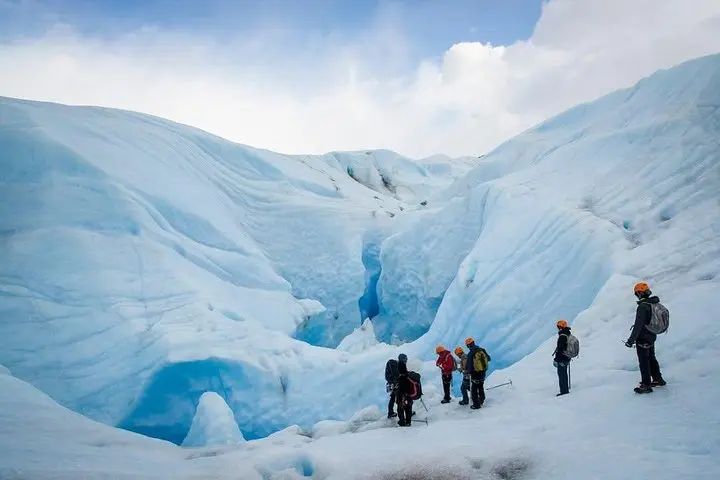
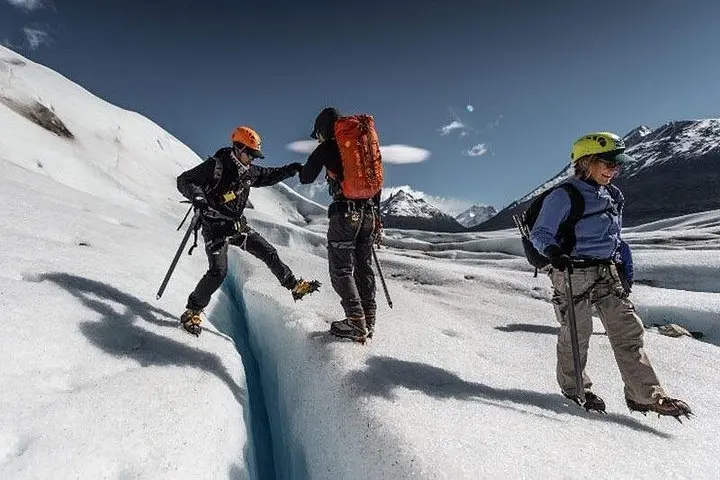
On the glacier, the ice is not a single color but a stratified archive: opaque white where snow has piled and compacted, electric blue where air has been squeezed out, and black-flecked ice where ancient moraines were swallowed and frozen. Crevasses yawn like interrupted seams, meltwater runs with a hidden insistence, and tunnels carve blue shadows that change under the sun. The experience is physical — you’ll be scrambling, leaning on an ice axe, stepping around moulins and squeezing through narrow ice ramps — but it is also intimate, where the elements feel as much companion as challenge.
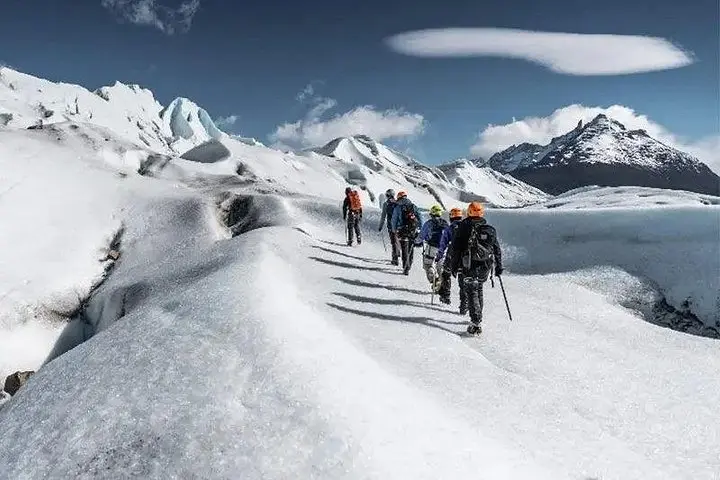
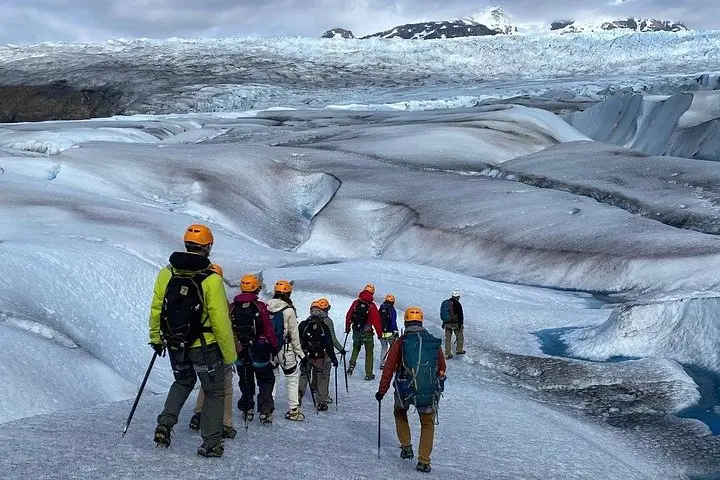
Practicalities matter here. Tours run about five hours total and are led by certified guides; expect roughly 90 minutes of approach on uneven moraine and 2–2.5 hours on the glacier itself. The zodiac crossing depends on weather and lake conditions; operators cancel in poor conditions. The company provides helmet, harness, crampons, ice axe and a hot drink at the end — but personal layers are crucial.
Aim to arrive the night before if you want the early departure: Grey Refugio or its camping area places you within a short walk of the meeting point. Fitness requirements are high: cardiovascular stamina and solid balance make the route far more enjoyable. Sunscreen, glacier sunglasses, and insulated waterproof boots will keep you moving when the wind decides to sharpen the day. Finally, treat the ice with respect: routes change seasonally and guides make conservative choices for safety — follow their lead and let the glacier do the surprising work.
No prior glacier experience is required; guides provide instruction on crampon and axe technique, but you should be confident on steep, uneven ground.
Grey Base Camp is inside Torres del Paine National Park; travelers usually reach Puerto Natales and then transit by bus, private vehicle, or arranged transfer—operators do not include pickup from Puerto Natales.
Operators will cancel for unsafe conditions; full refunds are available if canceled at least 24 hours prior or if the operator cancels due to weather.
This tour restricts participants to ages 14–65 due to physical demands and safety considerations.
Bring personal layers, waterproof boots, sunscreen, sunglasses, a water bottle, and any necessary medication—the operator supplies technical glacier gear and a hot drink.
Tipping is appreciated but not mandatory; if you had an exceptional guide, a modest tip is customary in Chilean adventure tourism.
Howlanders operates guided outdoor trips and adventures with an emphasis on safety, stewardship, and memorable experiences.
You step from the zodiac onto a braided shore of black stones and the wind immediately makes itself known — a clean, cold draft that scrubs the air and pushes the first flakes of spray into your face. Ahead, Grey Glacier hangs like a living wall, ridged and indigo, calves of ice calving silently into the lake. The guide fits your crampons and the world narrows to the sound of metal on ice, the rhythm of your steps, and the vast, moving surface beneath your feet.
You step from the zodiac onto a braided shore of black stones and the wind immediately makes itself known — a clean, cold draft that scrubs the air and pushes the first flakes of spray into your face. Ahead, Grey Glacier hangs like a living wall, ridged and indigo, calves of ice calving silently into the lake. The guide fits your crampons and the world narrows to the sound of metal on ice, the rhythm of your steps, and the vast, moving surface beneath your feet.
Grey Glacier is an arm of the Southern Patagonian Ice Field, one of the largest continuous ice masses outside the poles. Geologically recent in human terms, these ice flows gouged the valleys and left the moraine you cross on the hour-long walk from shore to ice. The park itself, created in 1959, mixes Mapuche and gaucho cultural histories with a legacy of exploration; shepherd camps and refugios still mark human persistence in a landscape dominated by wind and stone.
On the glacier, the ice is not a single color but a stratified archive: opaque white where snow has piled and compacted, electric blue where air has been squeezed out, and black-flecked ice where ancient moraines were swallowed and frozen. Crevasses yawn like interrupted seams, meltwater runs with a hidden insistence, and tunnels carve blue shadows that change under the sun. The experience is physical — you’ll be scrambling, leaning on an ice axe, stepping around moulins and squeezing through narrow ice ramps — but it is also intimate, where the elements feel as much companion as challenge.
Practicalities matter here. Tours run about five hours total and are led by certified guides; expect roughly 90 minutes of approach on uneven moraine and 2–2.5 hours on the glacier itself. The zodiac crossing depends on weather and lake conditions; operators cancel in poor conditions. The company provides helmet, harness, crampons, ice axe and a hot drink at the end — but personal layers are crucial.
Aim to arrive the night before if you want the early departure: Grey Refugio or its camping area places you within a short walk of the meeting point. Fitness requirements are high: cardiovascular stamina and solid balance make the route far more enjoyable. Sunscreen, glacier sunglasses, and insulated waterproof boots will keep you moving when the wind decides to sharpen the day. Finally, treat the ice with respect: routes change seasonally and guides make conservative choices for safety — follow their lead and let the glacier do the surprising work.