THE ADVENTURE COLLECTIVE® · Independent discovery and booking for outdoor travel

Spend a brisk half-day crossing the continental divide on guided icewalks through Marble Canyon (Kootenay) and Johnston Canyon (Banff). Two easy, one-hour walks, gear provided, with warm transport and hot chocolate between stops.
Spend a brisk half-day crossing the continental divide on guided icewalks through Marble Canyon (Kootenay) and Johnston Canyon (Banff). Two easy, one-hour walks, gear provided, with warm transport and hot chocolate between stops.
You step off the van into a cold, thin air that bites at exposed faces. A guide fits ice cleats over your boots and gestures to a slice of blue ice clinging to a vertical wall; the canyon seems to breathe, every drip paused in the freeze. This is a half-day that hops the continental divide—one canyon sending water to the Pacific, the other to the Atlantic.
Verified experiences and guided adventures in the surrounding area.
Operated by White Mountain Adventures · Banff, Alberta
You step off the van into a cold, thin air that bites at exposed faces. A guide fits ice cleats over your boots and gestures to a slice of blue ice clinging to a vertical wall; the canyon seems to breathe, every drip paused in the freeze. This is a half-day that hops the continental divide—one canyon sending water to the Pacific, the other to the Atlantic.
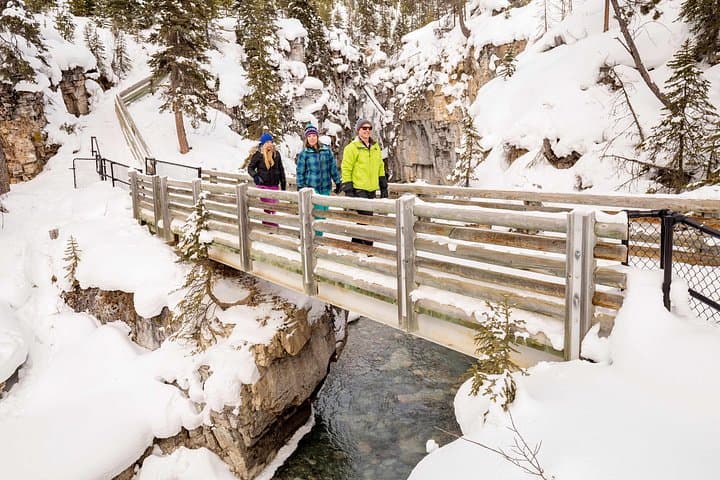
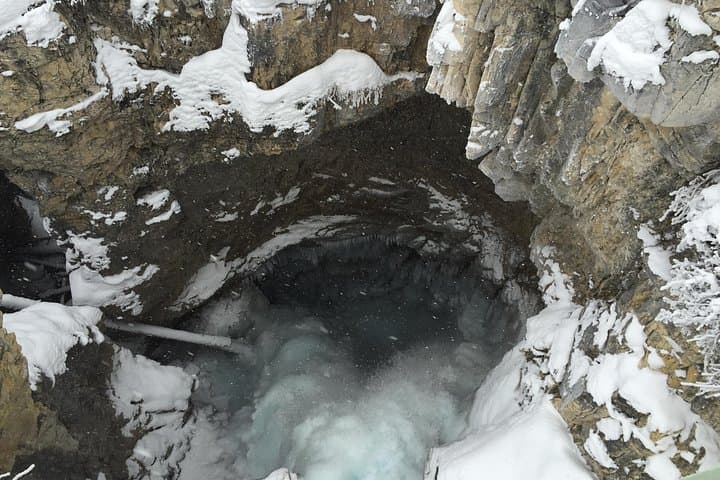
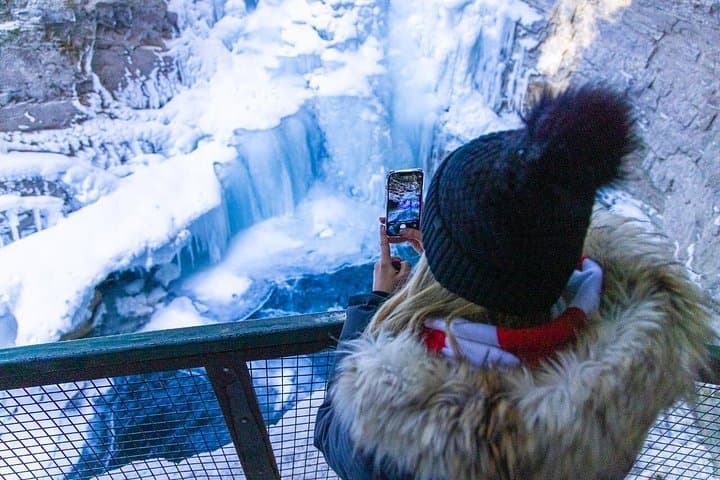
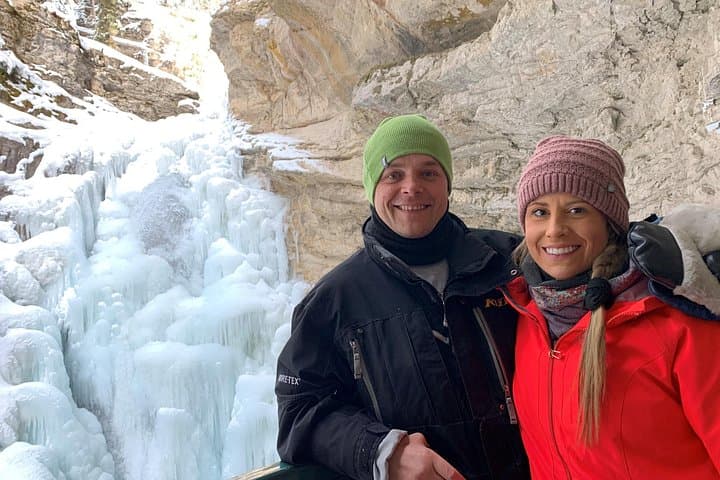
Marble Canyon in Kootenay National Park is a narrow limestone cut where water has gouged deep slots; its cliffs reveal layered rock and cold, glassy pools. Johnston Canyon in Banff National Park contrasts with suspended catwalks and the theatrical Lower Falls, where frozen curtains of water form pillars and tubes of ice. Both sites show Rockies geology in action: glacial carving, freeze-thaw dynamics, and the role of winter melt in shaping valley floors.
The tour is practical and fast: two easy, guided one-hour icewalks, a warm-up break in the van, and door-to-door transport from Banff. Guides supply ice cleats, trekking poles, and a hot chocolate break—good for families (minimum age 8) or anyone comfortable on modest terrain. Expect packed snow, short stair sections, and metal catwalks with icy patches; steady footing and layered warmth matter more than technical climbing skills.
Plan for variable winter weather, keep devices stowed on straps, and allow time in Banff for boots to dry afterward. This combo is an efficient way to experience two distinct canyon types and the wild, bracing character of the Rockies in winter.
Pickup and return are provided from Banff hotels—confirm exact meeting time and location with the operator at booking.
Yes; the tour supplies ice cleats and trekking poles as part of the package.
Minimum age is 8; children should be comfortable walking on packed snow and following guide instructions.
Tours may be canceled for severe weather or unsafe conditions; refunds are available if canceled at least 24 hours prior.
White Mountain Adventures operates guided outdoor trips and adventures with an emphasis on safety, stewardship, and memorable experiences.
You step off the van into a cold, thin air that bites at exposed faces. A guide fits ice cleats over your boots and gestures to a slice of blue ice clinging to a vertical wall; the canyon seems to breathe, every drip paused in the freeze. This is a half-day that hops the continental divide—one canyon sending water to the Pacific, the other to the Atlantic.
You step off the van into a cold, thin air that bites at exposed faces. A guide fits ice cleats over your boots and gestures to a slice of blue ice clinging to a vertical wall; the canyon seems to breathe, every drip paused in the freeze. This is a half-day that hops the continental divide—one canyon sending water to the Pacific, the other to the Atlantic.
Marble Canyon in Kootenay National Park is a narrow limestone cut where water has gouged deep slots; its cliffs reveal layered rock and cold, glassy pools. Johnston Canyon in Banff National Park contrasts with suspended catwalks and the theatrical Lower Falls, where frozen curtains of water form pillars and tubes of ice. Both sites show Rockies geology in action: glacial carving, freeze-thaw dynamics, and the role of winter melt in shaping valley floors.
The tour is practical and fast: two easy, guided one-hour icewalks, a warm-up break in the van, and door-to-door transport from Banff. Guides supply ice cleats, trekking poles, and a hot chocolate break—good for families (minimum age 8) or anyone comfortable on modest terrain. Expect packed snow, short stair sections, and metal catwalks with icy patches; steady footing and layered warmth matter more than technical climbing skills.
Plan for variable winter weather, keep devices stowed on straps, and allow time in Banff for boots to dry afterward. This combo is an efficient way to experience two distinct canyon types and the wild, bracing character of the Rockies in winter.