THE ADVENTURE COLLECTIVE® · Independent discovery and booking for outdoor travel

Step into a quiet winter valley in Nishiwaga where immense icicles form along rock faces and roots. This short guided trek uses traditional kanjiki snowshoes and ends with tea beside the ice—perfect for travelers looking for a hands-on winter nature experience.
Step into a quiet winter valley in Nishiwaga where immense icicles form along rock faces and roots. This short guided trek uses traditional kanjiki snowshoes and ends with tea beside the ice—perfect for travelers looking for a hands-on winter nature experience.
A low winter sun slices through pine branches as you follow a narrow track into a hush of snow. The forest here tightens and the air sharpens; every step on packed snow sings under the Japanese kanjiki (traditional snowshoe) strapped to your feet. After a gentle descent into the valley the trees open and you meet them—columns of glassy ice clinging to rock and root, catching light and daring you to get closer.
Verified experiences and guided adventures in the surrounding area.
Operated by ネビラキ · Nishiwaga, Iwate Prefecture
A low winter sun slices through pine branches as you follow a narrow track into a hush of snow. The forest here tightens and the air sharpens; every step on packed snow sings under the Japanese kanjiki (traditional snowshoe) strapped to your feet. After a gentle descent into the valley the trees open and you meet them—columns of glassy ice clinging to rock and root, catching light and daring you to get closer.
The landscape around Nishiwaga is a product of volcanic uplift and river carving: steep valley walls, cold springs, and rich soil that has supported timber and small farming communities for generations. Local guides bring practical knowledge of flora and winter wildlife and add cultural context—how onsen and forestry shaped seasonal life here.
Expect mostly forest tracks and a valley approach with modest elevation change; routes are short and focused on the icicle formations rather than a long summit push. The guide fits kanjiki, points out stable lines, and gives time for tea while you watch the ice.
Practical guidance: the walk is about three hours total (roughly 2–4 km round-trip, ~100–200 m elevation change), starting mid-afternoon. Dress in insulated, waterproof layers and bring warm gloves and a hat; ski pants or rain pants are recommended. Boots can be rented locally (approx. 500 yen). Tours run late January to late February and are weather-dependent—heavy snow can cancel for safety. Stay on guided routes, avoid touching fragile formations, and carry a fully charged phone and small first-aid kit. This is winter nature with a quiet, tactile thrill—accessible, short, and sharply memorable.
Tours typically run from late January through late February when repeated freeze-thaw cycles create the largest icicles.
No—guides fit kanjiki and show basic use; the terrain is short and suitable for beginners with reasonable mobility.
Elementary school age and up are welcome, but participants should have steady legs and be comfortable in winter conditions.
The operator may cancel for heavy snow or safety concerns; guests are notified about two hours before departure and can receive a full refund if canceled 24 hours in advance.
ネビラキ operates guided outdoor trips and adventures with an emphasis on safety, stewardship, and memorable experiences.
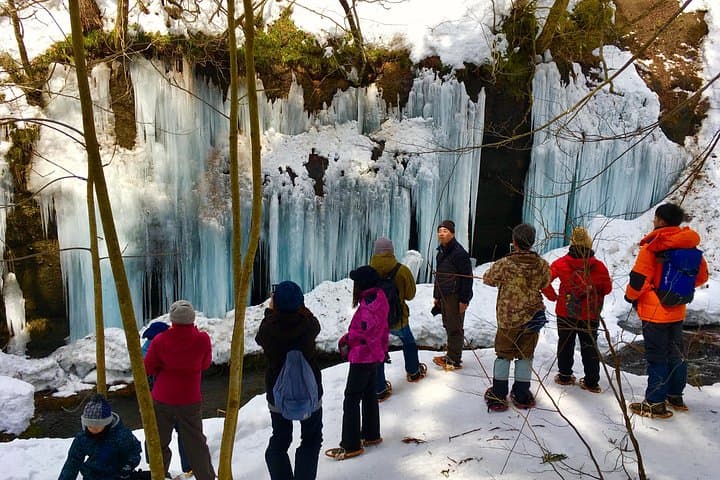


A low winter sun slices through pine branches as you follow a narrow track into a hush of snow. The forest here tightens and the air sharpens; every step on packed snow sings under the Japanese kanjiki (traditional snowshoe) strapped to your feet. After a gentle descent into the valley the trees open and you meet them—columns of glassy ice clinging to rock and root, catching light and daring you to get closer.
A low winter sun slices through pine branches as you follow a narrow track into a hush of snow. The forest here tightens and the air sharpens; every step on packed snow sings under the Japanese kanjiki (traditional snowshoe) strapped to your feet. After a gentle descent into the valley the trees open and you meet them—columns of glassy ice clinging to rock and root, catching light and daring you to get closer.
The landscape around Nishiwaga is a product of volcanic uplift and river carving: steep valley walls, cold springs, and rich soil that has supported timber and small farming communities for generations. Local guides bring practical knowledge of flora and winter wildlife and add cultural context—how onsen and forestry shaped seasonal life here.
Expect mostly forest tracks and a valley approach with modest elevation change; routes are short and focused on the icicle formations rather than a long summit push. The guide fits kanjiki, points out stable lines, and gives time for tea while you watch the ice.
Practical guidance: the walk is about three hours total (roughly 2–4 km round-trip, ~100–200 m elevation change), starting mid-afternoon. Dress in insulated, waterproof layers and bring warm gloves and a hat; ski pants or rain pants are recommended. Boots can be rented locally (approx. 500 yen). Tours run late January to late February and are weather-dependent—heavy snow can cancel for safety. Stay on guided routes, avoid touching fragile formations, and carry a fully charged phone and small first-aid kit. This is winter nature with a quiet, tactile thrill—accessible, short, and sharply memorable.