THE ADVENTURE COLLECTIVE® · Independent discovery and booking for outdoor travel

Experience both sides of Iguazu Falls in one long, sensory day: panoramic boardwalks and Devil’s Throat views from Brazil, then rainforest trails and the Upper Trail from Argentina. This shared tour is a practical, photo-rich way to see the falls’ most dramatic moments.
Experience both sides of Iguazu Falls in one long, sensory day: panoramic boardwalks and Devil’s Throat views from Brazil, then rainforest trails and the Upper Trail from Argentina. This shared tour is a practical, photo-rich way to see the falls’ most dramatic moments.
You step from the van into a spray that smells of wet rock and green leaf; the falls announce themselves before you see them, a thunder that shapes the air. The Brazilian side opens with a panoramic promenade — a 1.2-km boardwalk that stages broad views of cascades and the final, roaring arc known as Devil’s Throat. Later, the group crosses the Tancredo Neves Bridge and the jungle swallows the sound, the ecological train humming through shade to the Upper Trail and the long walkway that reaches out over the most powerful curtain of water.
Verified experiences and guided adventures in the surrounding area.
Operated by Gregtur Turismo · Foz do Iguaçu, Paraná
You step from the van into a spray that smells of wet rock and green leaf; the falls announce themselves before you see them, a thunder that shapes the air. The Brazilian side opens with a panoramic promenade — a 1.2-km boardwalk that stages broad views of cascades and the final, roaring arc known as Devil’s Throat. Later, the group crosses the Tancredo Neves Bridge and the jungle swallows the sound, the ecological train humming through shade to the Upper Trail and the long walkway that reaches out over the most powerful curtain of water.
Geologically, Iguazu sits where the Paraná Plateau fractures, sending rivers leaping over basalt steps worn in the early Cenozoic; the falls keep carving new edges. Culturally the site belongs to both Brazil and Argentina and to Guarani heritage — names, stories and local crafts echo in visitor centers and markets nearby.
Expect humid forest scent, sudden mist gusts that insist on closing camera lenses, and a steady rhythm of viewpoints that push you closer and then give you space to take it all in. Guides explain hydrology and conservation while bilingual commentary helps bridge the border.
Practical: this is a full-day, shared excursion with hotel pickup in Foz do Iguaçu. Wear waterproof footwear, bring a lightweight rain jacket, and carry water; paths are well-constructed but wet and often stepped. Have your passport handy for the Argentina crossing, protect electronics from spray, and plan for 8–12 hours round-trip depending on crowds and shuttle waits. The route rewards steady pacing with dramatic, up-close perspectives from two national parks.
Yes—this tour includes tickets for both the Brazilian and Argentine national parks as part of the itinerary.
Yes; travelers cross the Tancredo Neves Bridge into Argentina, so a valid passport (and any applicable visas) is required.
Many visitor areas and paths on the Brazilian side and parts of Iguazú National Park are wheelchair accessible; verify specifics with the operator during booking.
Morning tends to be cooler with fewer crowds; late afternoon light can be dramatic but humidity and mist increase, and some paths may be busier.
Gregtur Turismo operates guided outdoor trips and adventures with an emphasis on safety, stewardship, and memorable experiences.
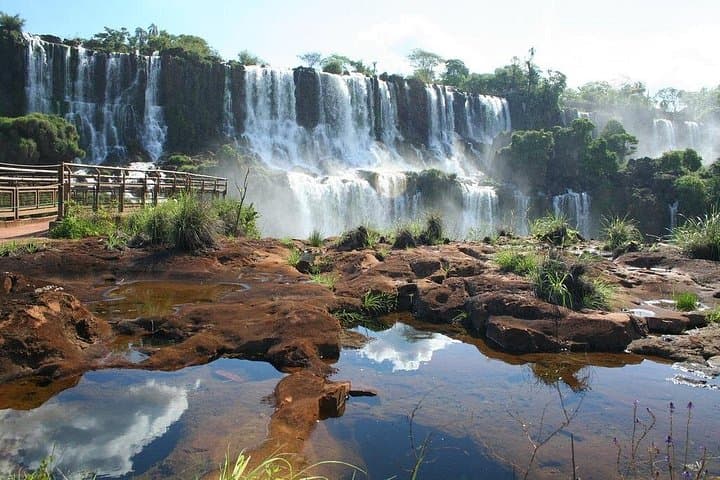


You step from the van into a spray that smells of wet rock and green leaf; the falls announce themselves before you see them, a thunder that shapes the air. The Brazilian side opens with a panoramic promenade — a 1.2-km boardwalk that stages broad views of cascades and the final, roaring arc known as Devil’s Throat. Later, the group crosses the Tancredo Neves Bridge and the jungle swallows the sound, the ecological train humming through shade to the Upper Trail and the long walkway that reaches out over the most powerful curtain of water.
You step from the van into a spray that smells of wet rock and green leaf; the falls announce themselves before you see them, a thunder that shapes the air. The Brazilian side opens with a panoramic promenade — a 1.2-km boardwalk that stages broad views of cascades and the final, roaring arc known as Devil’s Throat. Later, the group crosses the Tancredo Neves Bridge and the jungle swallows the sound, the ecological train humming through shade to the Upper Trail and the long walkway that reaches out over the most powerful curtain of water.
Geologically, Iguazu sits where the Paraná Plateau fractures, sending rivers leaping over basalt steps worn in the early Cenozoic; the falls keep carving new edges. Culturally the site belongs to both Brazil and Argentina and to Guarani heritage — names, stories and local crafts echo in visitor centers and markets nearby.
Expect humid forest scent, sudden mist gusts that insist on closing camera lenses, and a steady rhythm of viewpoints that push you closer and then give you space to take it all in. Guides explain hydrology and conservation while bilingual commentary helps bridge the border.
Practical: this is a full-day, shared excursion with hotel pickup in Foz do Iguaçu. Wear waterproof footwear, bring a lightweight rain jacket, and carry water; paths are well-constructed but wet and often stepped. Have your passport handy for the Argentina crossing, protect electronics from spray, and plan for 8–12 hours round-trip depending on crowds and shuttle waits. The route rewards steady pacing with dramatic, up-close perspectives from two national parks.