THE ADVENTURE COLLECTIVE® · Independent discovery and booking for outdoor travel

See both the Argentine and Brazilian sides of Iguazu Falls in a single, expertly guided day — ending with sunset drinks on the Brazilian overlook. Expect 7 km of walking, cross-border logistics, and panoramic golden-hour views.
See both the Argentine and Brazilian sides of Iguazu Falls in a single, expertly guided day — ending with sunset drinks on the Brazilian overlook. Expect 7 km of walking, cross-border logistics, and panoramic golden-hour views.
You step onto the metal walkway and the river answers: a thunderous wall of water that pushes air, mist, and motion toward you. On this one-day crossing of borders you’ll move from the broad, layered plates of the Argentine circuits to the panoramic promontories of the Brazilian side, arriving just in time as the falls take on evening gold and the first cocktails appear.
Verified experiences and guided adventures in the surrounding area.
Operated by Destino Iguassu · Foz do Iguaçu, Paraná
You step onto the metal walkway and the river answers: a thunderous wall of water that pushes air, mist, and motion toward you. On this one-day crossing of borders you’ll move from the broad, layered plates of the Argentine circuits to the panoramic promontories of the Brazilian side, arriving just in time as the falls take on evening gold and the first cocktails appear.
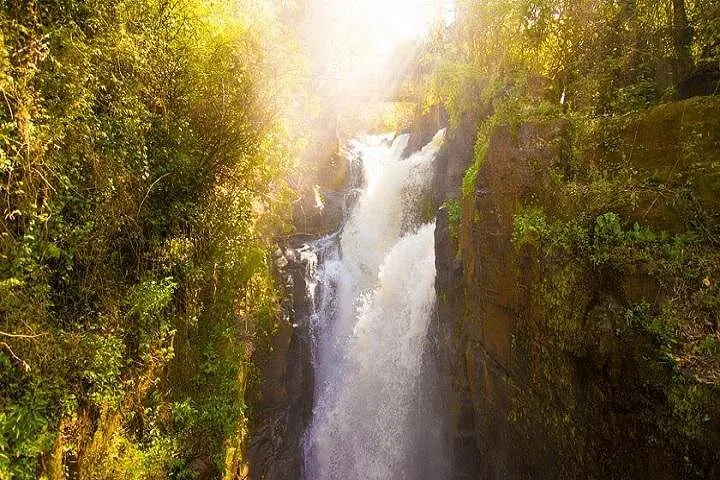
Geology here is obvious — successive basalt flows of the Paraná Plateau fractured into cliffs and chasms, and the Iguazú River exploited those weaknesses to carve the falls. Guarani people long told stories about the cataracts; European explorers later mapped the torrents. Today two national parks protect rainforest corridors and riverine habitat, and the walkways thread through subtropical forest where toucans and coatis are regular spectators.
Practical notes: the tour covers roughly 7 km of walking on the Argentine side and shorter, panoramic viewpoints on the Brazilian side, lasting about 8–9 hours including cross-border transit. You’ll need a valid passport for both entries; guides handle park entrances and most logistics. Trails are mostly boardwalk and compacted dirt but can be wet; a light rain shell and waterproof shoes matter. Time your photos: late afternoon light on the Brazilian overlook produces the highest-contrast images and the cocktail hour at Porto Canoas is scheduled to coincide with sunset. Hydrate, carry a small daypack, and expect crowds at the most famous viewpoints; move to side trails for quieter wildlife viewing. This itinerary compresses two parks into one day for travelers who want both sweeping panoramas and the warm hush of evening over the falls.
Yes — the itinerary crosses from Brazil into Argentina and back; a current passport is required for every participant.
Expect roughly 6–8 km of walking overall, mainly on boardwalks and compacted trails, broken into multiple short circuits on each side.
Yes — the tour includes entrance fees for both the Brazilian and Argentine national parks as stated in the inclusions.
The operator lists wheelchair-accessible options for transport and many viewpoints, but accessibility can vary by trail; ask the provider about specific needs when booking.
Destino Iguassu operates guided outdoor trips and adventures with an emphasis on safety, stewardship, and memorable experiences.
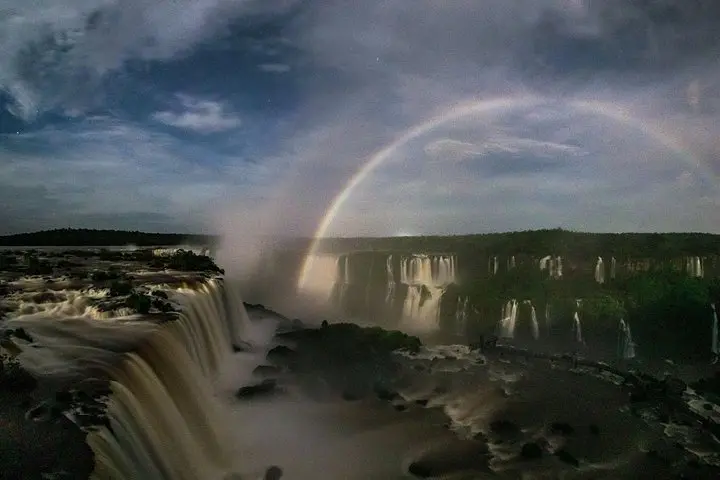
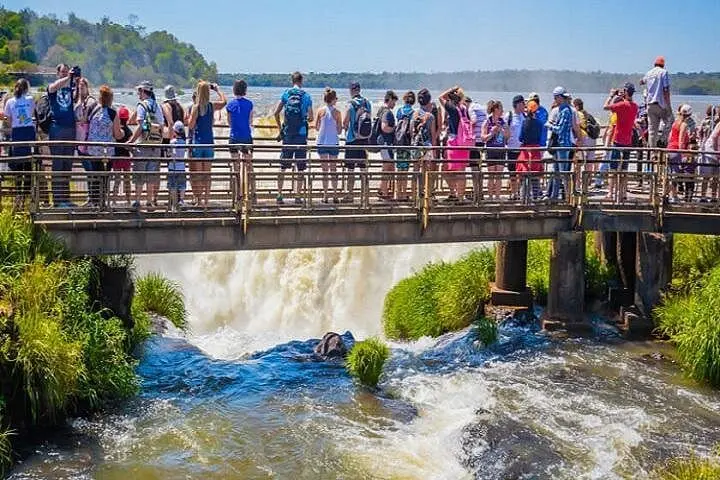
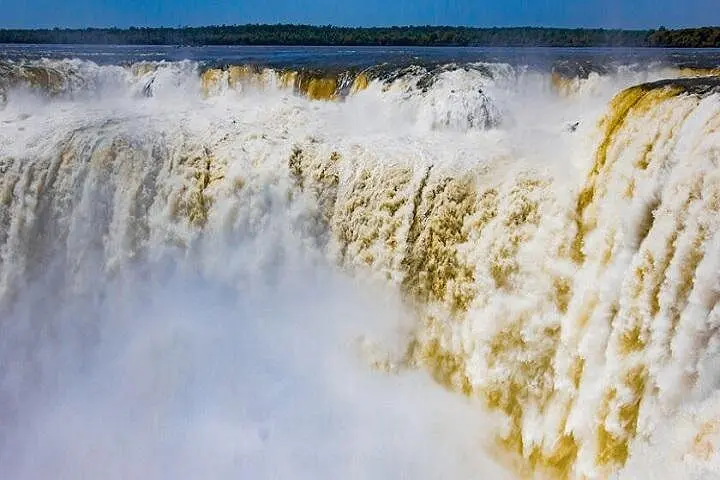
You step onto the metal walkway and the river answers: a thunderous wall of water that pushes air, mist, and motion toward you. On this one-day crossing of borders you’ll move from the broad, layered plates of the Argentine circuits to the panoramic promontories of the Brazilian side, arriving just in time as the falls take on evening gold and the first cocktails appear.
You step onto the metal walkway and the river answers: a thunderous wall of water that pushes air, mist, and motion toward you. On this one-day crossing of borders you’ll move from the broad, layered plates of the Argentine circuits to the panoramic promontories of the Brazilian side, arriving just in time as the falls take on evening gold and the first cocktails appear.
Geology here is obvious — successive basalt flows of the Paraná Plateau fractured into cliffs and chasms, and the Iguazú River exploited those weaknesses to carve the falls. Guarani people long told stories about the cataracts; European explorers later mapped the torrents. Today two national parks protect rainforest corridors and riverine habitat, and the walkways thread through subtropical forest where toucans and coatis are regular spectators.
Practical notes: the tour covers roughly 7 km of walking on the Argentine side and shorter, panoramic viewpoints on the Brazilian side, lasting about 8–9 hours including cross-border transit. You’ll need a valid passport for both entries; guides handle park entrances and most logistics. Trails are mostly boardwalk and compacted dirt but can be wet; a light rain shell and waterproof shoes matter. Time your photos: late afternoon light on the Brazilian overlook produces the highest-contrast images and the cocktail hour at Porto Canoas is scheduled to coincide with sunset. Hydrate, carry a small daypack, and expect crowds at the most famous viewpoints; move to side trails for quieter wildlife viewing. This itinerary compresses two parks into one day for travelers who want both sweeping panoramas and the warm hush of evening over the falls.