THE ADVENTURE COLLECTIVE® · Independent discovery and booking for outdoor travel

Ascend Kawah Ijen in the small hours to witness rare blue flames and sunrise over one of the world’s most acidic crater lakes. This shared 8-hour trek pairs dramatic geology with the stark human labor of traditional sulfur mining.
Ascend Kawah Ijen in the small hours to witness rare blue flames and sunrise over one of the world’s most acidic crater lakes. This shared 8-hour trek pairs dramatic geology with the stark human labor of traditional sulfur mining.
Before dawn the trail looks like a silver ribbon cutting into volcanic darkness: headlamps bob, breath fogs, and the rim of Kawah Ijen waits like an awake wound in the earth.
Verified experiences and guided adventures in the surrounding area.
Operated by TOUR INDONESIA · Banyuwangi, East Java
Before dawn the trail looks like a silver ribbon cutting into volcanic darkness: headlamps bob, breath fogs, and the rim of Kawah Ijen waits like an awake wound in the earth.
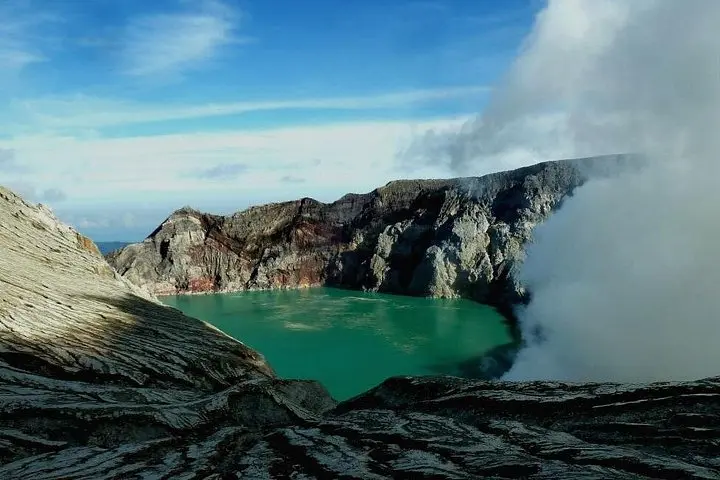
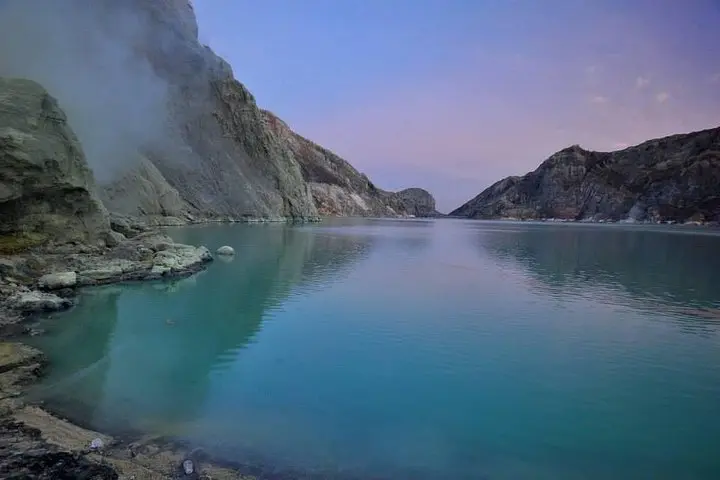
The Ijen experience pairs a midnight ascent with an otherworldly mineral show—blue flames produced when sulfuric gases ignite in fissures. Geologically, Ijen is a caldera complex in East Java; its crater lake is one of the world’s most acidic and the mining here is brutally physical—miners shoulder baskets of bright yellow sulphur back up the slope.
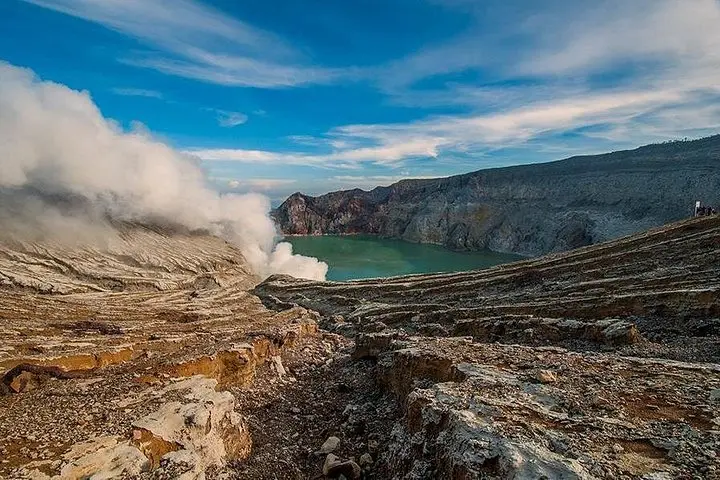
Expect a steep, rocky trail: roughly 3 km each way from the Paltuding trailhead with about 300–400 m of elevation gain to the rim, then a steep descent to the crater edge. Terrain is loose volcanic scree and packed dirt; portions require careful footing in the dark. The tour times are engineered for blue fire viewing before sunrise, then a slow walk back as the first light reveals the acid lake and surrounding peaks.
Practical notes: depart around midnight from Banyuwangi or Ketapang, allow 2–3 hours of transfer to the trailhead, and plan for cold, windy conditions at altitude. Guides and safety masks are usually provided, but bring a reliable headlamp, warm layers, and an inward focus on low-impact behavior—stay on the path and keep distance from the crater edge. The payoff is immediate: the surreal blue glow, the sight of miners at work, and a sunrise that lays the volcanic landscape bare.
Tours typically leave around midnight to reach the crater in time for the blue flames (which are visible in darkness) and the pre-dawn sunrise; transfers from Banyuwangi or Ketapang take 2–3 hours.
The flames themselves are not directly harmful at viewing distance, but sulfur gases can irritate eyes and lungs—follow your guide’s advice and use a mask provided or your own respirator.
Children may join but must be accompanied by an adult; the trail is steep and exposed in places, so assess comfort with night hiking and altitude for younger kids.
Expect a steady, steep climb of roughly 3 km with 300–400 m elevation gain from the parking area; moderate fitness and surefootedness are recommended.
TOUR INDONESIA operates guided outdoor trips and adventures with an emphasis on safety, stewardship, and memorable experiences.
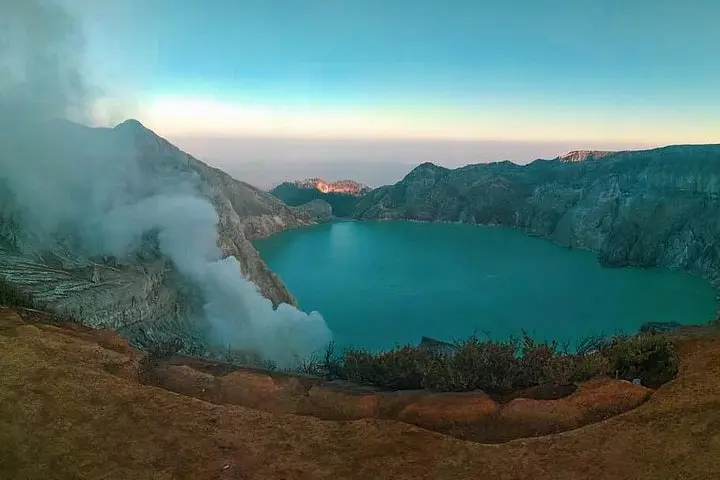
Before dawn the trail looks like a silver ribbon cutting into volcanic darkness: headlamps bob, breath fogs, and the rim of Kawah Ijen waits like an awake wound in the earth.
Before dawn the trail looks like a silver ribbon cutting into volcanic darkness: headlamps bob, breath fogs, and the rim of Kawah Ijen waits like an awake wound in the earth.
The Ijen experience pairs a midnight ascent with an otherworldly mineral show—blue flames produced when sulfuric gases ignite in fissures. Geologically, Ijen is a caldera complex in East Java; its crater lake is one of the world’s most acidic and the mining here is brutally physical—miners shoulder baskets of bright yellow sulphur back up the slope.
Expect a steep, rocky trail: roughly 3 km each way from the Paltuding trailhead with about 300–400 m of elevation gain to the rim, then a steep descent to the crater edge. Terrain is loose volcanic scree and packed dirt; portions require careful footing in the dark. The tour times are engineered for blue fire viewing before sunrise, then a slow walk back as the first light reveals the acid lake and surrounding peaks.
Practical notes: depart around midnight from Banyuwangi or Ketapang, allow 2–3 hours of transfer to the trailhead, and plan for cold, windy conditions at altitude. Guides and safety masks are usually provided, but bring a reliable headlamp, warm layers, and an inward focus on low-impact behavior—stay on the path and keep distance from the crater edge. The payoff is immediate: the surreal blue glow, the sight of miners at work, and a sunrise that lays the volcanic landscape bare.