
Ijen Blue Fire Sunrise Trek from Bali: Night Hike to the Crater Lake
A night-time trek from Bali to Mount Ijen reveals the rare blue fire and a turquoise crater lake at sunrise. This guided experience combines a steep midnight hike, unique volcanic geology, and an up-close view of traditional sulfur mining.
An Adventure In Banyuwangi.
A night-time trek from Bali to Mount Ijen reveals the rare blue fire and a turquoise crater lake at sunrise. This guided experience combines a steep midnight hike, unique volcanic geology, and an up-close view of traditional sulfur mining.
Read the full experience
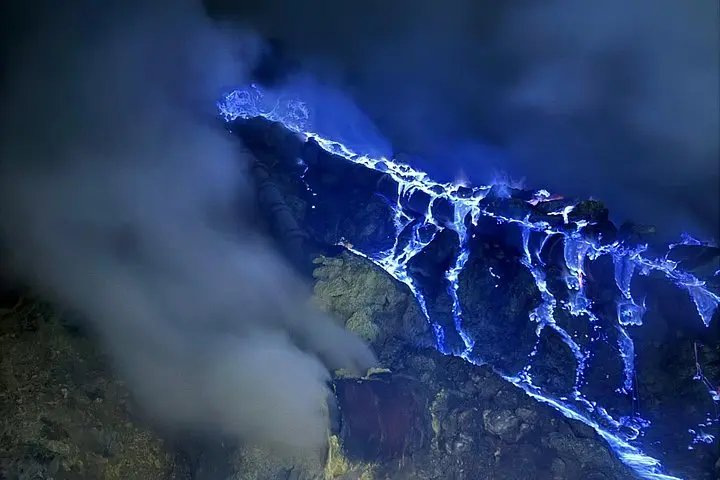
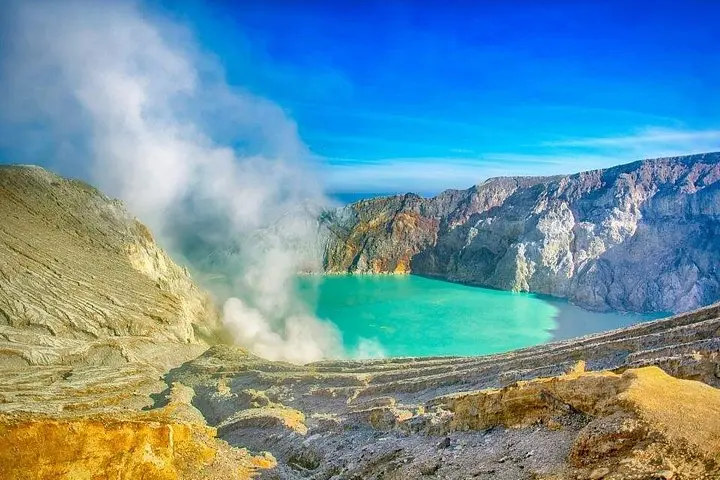
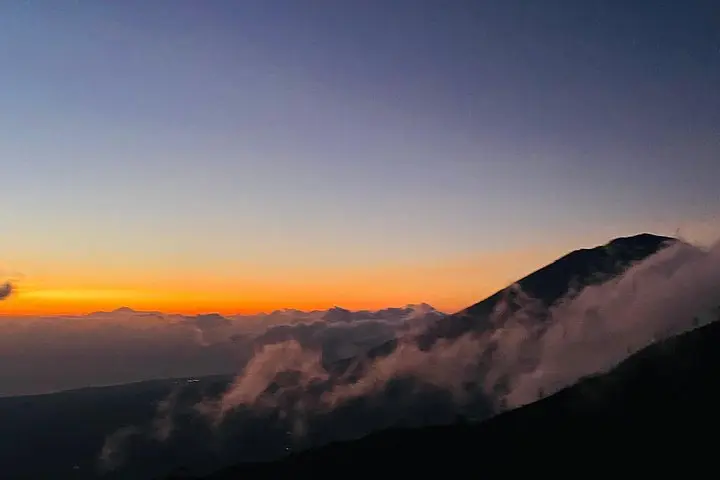
You leave Bali in the dark, the ferry's wake behind you and a small convoy of headlights moving toward East Java. By midnight you begin the ascent: a narrow volcanic trail under a black sky, headlamps bobbing like slow-fire stars. At the rim the air smells of sulfur and cold; below, pockets of electric blue glow where sulfur vapors ignite and miners—shadowed figures with baskets—move between fumaroles. An hour later the crater lake opens in turquoise light and the sun slides over jagged rim rock.
You leave Bali in the dark, the ferry's wake behind you and a small convoy of headlights moving toward East Java. By midnight you begin the ascent: a narrow volcanic trail under a black sky, headlamps bobbing like slow-fire stars. At the rim the air smells of sulfur and cold; below, pockets of electric blue glow where sulfur vapors ignite and miners—shadowed figures with baskets—move between fumaroles. An hour later the crater lake opens in turquoise light and the sun slides over jagged rim rock.
Mount Ijen is a stratovolcano whose acidic crater lake sits in a collapsed caldera; sulfur has been harvested here for generations. The blue fire is a rare chemical reaction—burning sulfuric gases—visible best on moonless nights. The local mining culture is raw and visible: men carry heavy loads down steep scree, a tradition with social and economic roots in Banyuwangi.
Practicalities matter: the guided trek typically takes 1.5–2 hours uphill on uneven, often loose volcanic scree and 45–90 minutes down. Authorities require a recent medical certificate for hikers; expect temperatures near freezing before dawn and corrosive gas pockets near the vents. Bring a reliable headlamp, sturdy boots with good grip, a warm layer, and use the supplied or your own gas mask when you approach fumaroles.
Photography rewards patience—blue fire shots need long exposures—and discretion keeps miners safe and focused. Tours include ferry and transfers; plan for a long overnight day and follow your guide's limits: the crater rim is spectacular but fragile, and the true story here is the human scale of the sulfur trade as much as the volcanic show.
Frequently asked questions
Yes—Mount Ijen authorities require a medical certificate issued by a licensed provider stating you are fit for hiking, typically within one day of the trek.
Blue fire is visible at night and into the very early morning before sunrise; the best visibility is on moonless or low-moon nights with clear weather.
Expect a 1.5–2 hour uphill on uneven volcanic scree—moderate fitness is recommended; the descent is quicker but requires care on loose rock.
Yes—miners work along the crater and you will likely encounter them; remain respectful, keep distance, and follow your guide's instructions for safety.
About This Experience
Bali Exploring Tours operates guided outdoor trips and adventures with an emphasis on safety, stewardship, and memorable experiences.
Adventure tips
Recommended gear
- Headlamp with spare batteries: Hands-free illumination for the pre-dawn ascent and safe route finding.
- Respirator or gas mask: Protects from sulfur fumes near vents—organizers often provide one but bring your own for a better fit.
- Sturdy hiking boots: Good traction and ankle support are crucial on loose volcanic scree and steep sections.
- Insulating layer and wind shell: Temperatures at the rim can drop near freezing—pack a warm layer and windproof shell for the wait at sunrise.
Photos of the experience
Related adventures & guides
Read the full experience
You leave Bali in the dark, the ferry's wake behind you and a small convoy of headlights moving toward East Java. By midnight you begin the ascent: a narrow volcanic trail under a black sky, headlamps bobbing like slow-fire stars. At the rim the air smells of sulfur and cold; below, pockets of electric blue glow where sulfur vapors ignite and miners—shadowed figures with baskets—move between fumaroles. An hour later the crater lake opens in turquoise light and the sun slides over jagged rim rock.
You leave Bali in the dark, the ferry's wake behind you and a small convoy of headlights moving toward East Java. By midnight you begin the ascent: a narrow volcanic trail under a black sky, headlamps bobbing like slow-fire stars. At the rim the air smells of sulfur and cold; below, pockets of electric blue glow where sulfur vapors ignite and miners—shadowed figures with baskets—move between fumaroles. An hour later the crater lake opens in turquoise light and the sun slides over jagged rim rock.
Mount Ijen is a stratovolcano whose acidic crater lake sits in a collapsed caldera; sulfur has been harvested here for generations. The blue fire is a rare chemical reaction—burning sulfuric gases—visible best on moonless nights. The local mining culture is raw and visible: men carry heavy loads down steep scree, a tradition with social and economic roots in Banyuwangi.
Practicalities matter: the guided trek typically takes 1.5–2 hours uphill on uneven, often loose volcanic scree and 45–90 minutes down. Authorities require a recent medical certificate for hikers; expect temperatures near freezing before dawn and corrosive gas pockets near the vents. Bring a reliable headlamp, sturdy boots with good grip, a warm layer, and use the supplied or your own gas mask when you approach fumaroles.
Photography rewards patience—blue fire shots need long exposures—and discretion keeps miners safe and focused. Tours include ferry and transfers; plan for a long overnight day and follow your guide's limits: the crater rim is spectacular but fragile, and the true story here is the human scale of the sulfur trade as much as the volcanic show.
Make a day of it nearby.
Verified experiences and guided adventures in the surrounding area.