THE ADVENTURE COLLECTIVE® · Independent discovery and booking for outdoor travel

Walk through one of Crete’s most dramatic gorges, then cool off with a swim in the warm Libyan Sea and a traditional Cretan lunch. This day tour from Chania pairs a focused 3-hour hike with seaside relaxation and local flavors.
Walk through one of Crete’s most dramatic gorges, then cool off with a swim in the warm Libyan Sea and a traditional Cretan lunch. This day tour from Chania pairs a focused 3-hour hike with seaside relaxation and local flavors.
The bus threads the spine of western Crete before the island opens into the White Mountains; by mid-morning you step out at the Imbros trailhead and the canyon seems to inhale you.
Verified experiences and guided adventures in the surrounding area.
Operated by PLATANOS TOURS · Imbros, Crete
The bus threads the spine of western Crete before the island opens into the White Mountains; by mid-morning you step out at the Imbros trailhead and the canyon seems to inhale you.
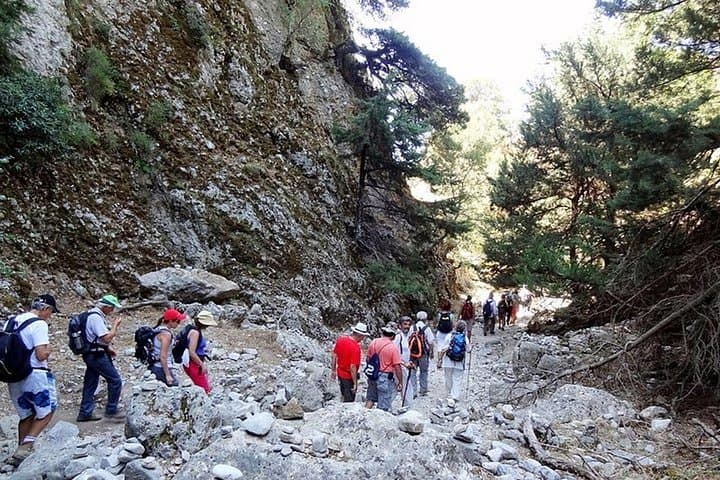
Sunlight slices down the steep limestone, turning walls the color of old parchment. The path drops steadily, sometimes narrowing until the cliffs lean in close enough to feel like companions. Water once impatiently carved these corridors and it has left fingerprints — rounded potholes, fluted ridges and shelves you walk along as if following a stone memory.
Imbros is the island’s second-longest gorge, a quieter counterpart to Samaria that has long been used as a mule route and seasonal corridor by shepherds. The White Mountains (Lefka Ori) are geologically young: uplifted limestone folded and cracked by tectonic forces, then refined by rain and time into the clefts you walk through. Culturally, the route threads Sfakia’s stubborn history — a region famous for resistance and self-reliance — and you’ll pass old shepherd shelters and terraced plots that still grow olives and thyme.
The hike itself is straightforward but honest: expect roughly 8 kilometers of descending trail, three hours of steady walking and stretches where the path narrows to a single lane between vertical faces. The rocks are generous with foot and handholds; they also demand attention. Behind the canyon’s mouth the south coast unfolds — the Libyan Sea’s blue is immediate and persuasive.
After the gorge you continue by bus to a south-coast beach where the water is warm and clear. The sea feels like a reward: the current tugs at your limbs in a friendly way, salt and sunshine doing the rest. A traditional Cretan lunch at a seaside taverna follows: grilled fish, simple salads, and bread that soaks up olive oil like a consummate local.
Practical edge: go early. In summer the gorge bakes by midday and bus rotations sell out; in shoulder seasons you’ll find cooler hiking temperatures and quieter tavernas. Wear sturdy hiking shoes, carry 1.5–2 liters of water, and bring swimwear and a lightweight towel for the post-hike dip. If you’re prone to vertigo the narrow sections can feel confining; take steady steps and rely on the guide’s pacing.
This is a day that balances movement and reward: a compact mountain walk that finishes with sea and food, the best sort of Cretan equation for an active day trip. With a little preparation — proper footwear, sun protection, and a readiness to let the landscape lead — Imbros delivers both scenery and a slice of island life.
The gorge hike is about 2–3 hours on a roughly 8 km path, mostly descending and uneven underfoot.
Yes, the tour includes hotel pickup and return by air-conditioned coach; exact pickup points are confirmed by the local operator.
This trek is not recommended for children under 6, pregnant travelers, or anyone with serious mobility or cardiovascular issues due to uneven terrain and continuous walking.
A traditional lunch is included at a seaside taverna, but bring cash for extras and any special dietary items; inform the operator of restrictions ahead of time.
Good trekking shoes or sturdy trainers are required—flip-flops and casual sandals are not appropriate for the gorge trail.
Travelers with spinal or severe orthopedic issues are advised not to join; the trail involves continuous walking and some uneven steps that can aggravate conditions.
PLATANOS TOURS operates guided outdoor trips and adventures with an emphasis on safety, stewardship, and memorable experiences.



The bus threads the spine of western Crete before the island opens into the White Mountains; by mid-morning you step out at the Imbros trailhead and the canyon seems to inhale you.
The bus threads the spine of western Crete before the island opens into the White Mountains; by mid-morning you step out at the Imbros trailhead and the canyon seems to inhale you.
Sunlight slices down the steep limestone, turning walls the color of old parchment. The path drops steadily, sometimes narrowing until the cliffs lean in close enough to feel like companions. Water once impatiently carved these corridors and it has left fingerprints — rounded potholes, fluted ridges and shelves you walk along as if following a stone memory.
Imbros is the island’s second-longest gorge, a quieter counterpart to Samaria that has long been used as a mule route and seasonal corridor by shepherds. The White Mountains (Lefka Ori) are geologically young: uplifted limestone folded and cracked by tectonic forces, then refined by rain and time into the clefts you walk through. Culturally, the route threads Sfakia’s stubborn history — a region famous for resistance and self-reliance — and you’ll pass old shepherd shelters and terraced plots that still grow olives and thyme.
The hike itself is straightforward but honest: expect roughly 8 kilometers of descending trail, three hours of steady walking and stretches where the path narrows to a single lane between vertical faces. The rocks are generous with foot and handholds; they also demand attention. Behind the canyon’s mouth the south coast unfolds — the Libyan Sea’s blue is immediate and persuasive.
After the gorge you continue by bus to a south-coast beach where the water is warm and clear. The sea feels like a reward: the current tugs at your limbs in a friendly way, salt and sunshine doing the rest. A traditional Cretan lunch at a seaside taverna follows: grilled fish, simple salads, and bread that soaks up olive oil like a consummate local.
Practical edge: go early. In summer the gorge bakes by midday and bus rotations sell out; in shoulder seasons you’ll find cooler hiking temperatures and quieter tavernas. Wear sturdy hiking shoes, carry 1.5–2 liters of water, and bring swimwear and a lightweight towel for the post-hike dip. If you’re prone to vertigo the narrow sections can feel confining; take steady steps and rely on the guide’s pacing.
This is a day that balances movement and reward: a compact mountain walk that finishes with sea and food, the best sort of Cretan equation for an active day trip. With a little preparation — proper footwear, sun protection, and a readiness to let the landscape lead — Imbros delivers both scenery and a slice of island life.