THE ADVENTURE COLLECTIVE® · Independent discovery and booking for outdoor travel

A compact, family-friendly canyon walk on Crete’s southern flank: a 9 km descent through limestone corridors that ends with a seaside cooldown in Chora Sfakion. Here’s what to expect, how to prepare, and the local context that makes Imbros worth the day trip from Chania.
A compact, family-friendly canyon walk on Crete’s southern flank: a 9 km descent through limestone corridors that ends with a seaside cooldown in Chora Sfakion. Here’s what to expect, how to prepare, and the local context that makes Imbros worth the day trip from Chania.
The minibus peels away from Chania before sunrise and the road tightens, moving from olive groves to the raw ribs of Crete’s south coast. By the time you pull into the parking clearing above Imbros Gorge, the walls have already taken on a bronze sheen. A guide outlines the route: a steady 9‑kilometer descent through limestone corridors where the path alternates between smooth bedrock, loose scree and a few narrow squeezes that force you to walk single file. The air inside the gorge is cooler; water trickles along carved grooves and the canyon seems to watch you as much as you watch it.
Verified experiences and guided adventures in the surrounding area.
Operated by Travel ID · Komitades, Crete
The minibus peels away from Chania before sunrise and the road tightens, moving from olive groves to the raw ribs of Crete’s south coast. By the time you pull into the parking clearing above Imbros Gorge, the walls have already taken on a bronze sheen. A guide outlines the route: a steady 9‑kilometer descent through limestone corridors where the path alternates between smooth bedrock, loose scree and a few narrow squeezes that force you to walk single file. The air inside the gorge is cooler; water trickles along carved grooves and the canyon seems to watch you as much as you watch it.
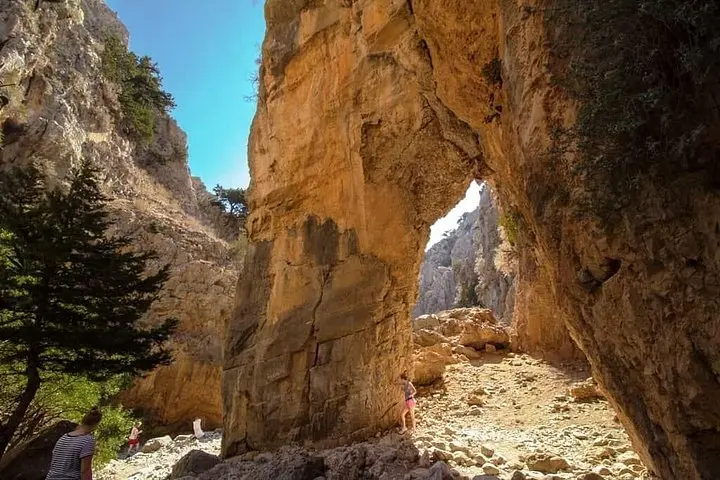
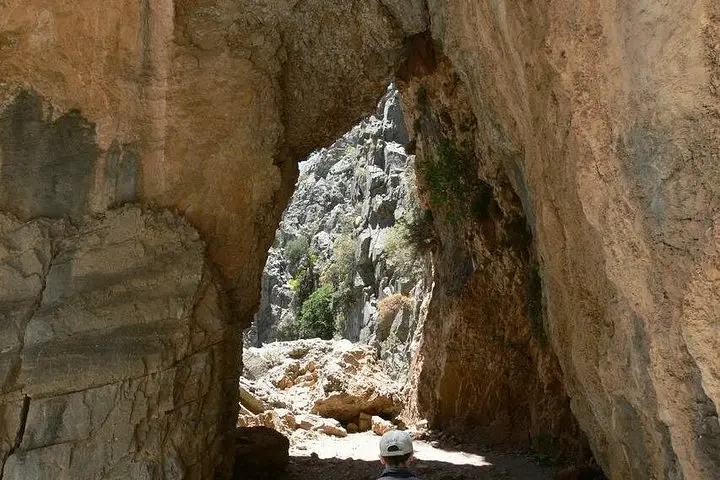
Imbros is often cited as Crete’s second major gorge after Samaria — a compact counterpart that has served shepherds and villagers for centuries. The gorge cuts into the island’s limestone and dolomite, shaped by seasonal torrents and tectonic uplift that folded these rocks into steep, sometimes vertical, slabs. As you walk you’ll pass rock features named by locals — the “Airplane” cliff, the Stenada squeeze, Mesofarango and the Xepitira arch — each a navigation point and a conversation starter with guides who layer geological notes with stories of Sfakia’s rebellious past and Venetian watch posts along the coast.
Culturally the hike threads through living villages: the trail finishes in Komitades, where narrow alleys, creaky doors and a few kafenia offer black coffee and baklava. From there the tour continues to Chora Sfakion, a sleepy seaside town with a sandy cove and simple tavernas where you can cool off in crystalline water — a traditional, salty reward after a dry canyon descent.
Practicalities are straightforward. The walking section is roughly 2–3 hours for competent walkers; expect a continuous downhill grade that can be hard on knees. Footing varies from packed dirt to loose stones; good trail shoes with solid tread matter more than poles, though poles help with stability. Bring 1.5–2 liters of water, sun protection and a light layer for the gorge’s shade. The full day includes hotel pickup and return service from Chania-area hotels and a transfer to the southern coast, so plan for a long but relaxed day (the operator lists a full outing of up to 10 hours including transfers).
This hike works well for families and beginners when the group keeps a steady pace, but it’s not suitable for pregnant travelers and is canceled for bad weather. Aim for early-season springs for wildflowers and cooler temps, or shoulder-season autumns for warm sea dips without peak crowds. Finish the day with a seawater soak and a plate of grilled fish — a simple, well-earned end to a gorge that gives as much as it asks.
The gorge trail is roughly 9 km and typically takes 2–3 hours to descend at a steady, relaxed pace.
Yes — the route is considered low difficulty and family-friendly, but supervise children in narrow or steep sections and ensure they have proper footwear.
This organized tour includes a hiking escort; the gorge itself requires no special permit, though guided groups make logistics and safety easier.
Sturdy trail shoes with good tread are recommended; flip-flops or sandals are not suitable for the canyon.
Yes — the itinerary ends with time at Chora Sfakion’s sandy beach where you can swim and relax after the hike.
According to the operator, you can get a full refund if you cancel at least 24 hours before departure; tours may be canceled for bad weather.
Travel ID operates guided outdoor trips and adventures with an emphasis on safety, stewardship, and memorable experiences.
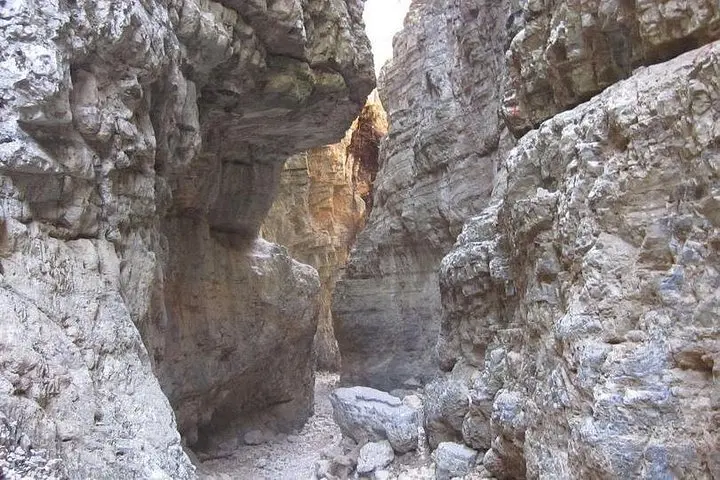
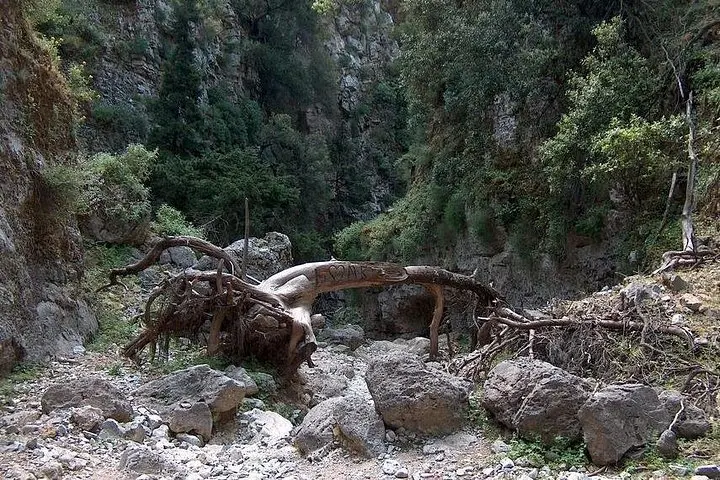
The minibus peels away from Chania before sunrise and the road tightens, moving from olive groves to the raw ribs of Crete’s south coast. By the time you pull into the parking clearing above Imbros Gorge, the walls have already taken on a bronze sheen. A guide outlines the route: a steady 9‑kilometer descent through limestone corridors where the path alternates between smooth bedrock, loose scree and a few narrow squeezes that force you to walk single file. The air inside the gorge is cooler; water trickles along carved grooves and the canyon seems to watch you as much as you watch it.
The minibus peels away from Chania before sunrise and the road tightens, moving from olive groves to the raw ribs of Crete’s south coast. By the time you pull into the parking clearing above Imbros Gorge, the walls have already taken on a bronze sheen. A guide outlines the route: a steady 9‑kilometer descent through limestone corridors where the path alternates between smooth bedrock, loose scree and a few narrow squeezes that force you to walk single file. The air inside the gorge is cooler; water trickles along carved grooves and the canyon seems to watch you as much as you watch it.
Imbros is often cited as Crete’s second major gorge after Samaria — a compact counterpart that has served shepherds and villagers for centuries. The gorge cuts into the island’s limestone and dolomite, shaped by seasonal torrents and tectonic uplift that folded these rocks into steep, sometimes vertical, slabs. As you walk you’ll pass rock features named by locals — the “Airplane” cliff, the Stenada squeeze, Mesofarango and the Xepitira arch — each a navigation point and a conversation starter with guides who layer geological notes with stories of Sfakia’s rebellious past and Venetian watch posts along the coast.
Culturally the hike threads through living villages: the trail finishes in Komitades, where narrow alleys, creaky doors and a few kafenia offer black coffee and baklava. From there the tour continues to Chora Sfakion, a sleepy seaside town with a sandy cove and simple tavernas where you can cool off in crystalline water — a traditional, salty reward after a dry canyon descent.
Practicalities are straightforward. The walking section is roughly 2–3 hours for competent walkers; expect a continuous downhill grade that can be hard on knees. Footing varies from packed dirt to loose stones; good trail shoes with solid tread matter more than poles, though poles help with stability. Bring 1.5–2 liters of water, sun protection and a light layer for the gorge’s shade. The full day includes hotel pickup and return service from Chania-area hotels and a transfer to the southern coast, so plan for a long but relaxed day (the operator lists a full outing of up to 10 hours including transfers).
This hike works well for families and beginners when the group keeps a steady pace, but it’s not suitable for pregnant travelers and is canceled for bad weather. Aim for early-season springs for wildflowers and cooler temps, or shoulder-season autumns for warm sea dips without peak crowds. Finish the day with a seawater soak and a plate of grilled fish — a simple, well-earned end to a gorge that gives as much as it asks.