THE ADVENTURE COLLECTIVE® · Independent discovery and booking for outdoor travel

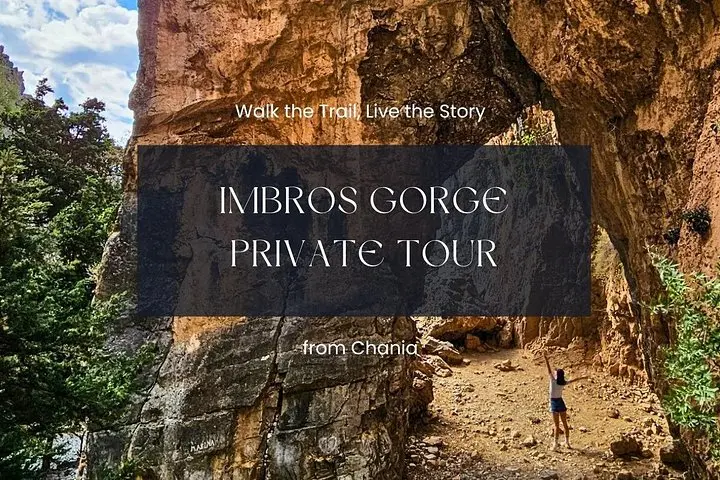
Walk a narrow limestone corridor where cliffs whisper wartime history and wild thyme scents the air. This private tour pairs a guided 8 km hike through Imbros Gorge with a cleansing swim in the Libyan Sea and a seaside taverna meal.
Walk a narrow limestone corridor where cliffs whisper wartime history and wild thyme scents the air. This private tour pairs a guided 8 km hike through Imbros Gorge with a cleansing swim in the Libyan Sea and a seaside taverna meal.
The trail narrows and the world shrinks to stone and sky. Limestone walls rise on either side, fluted by rain and time, and the path underfoot is a ribbon of ancient stepping-stones and gritty scree. Morning light finds pockets in the cliff and wild thyme perfumes the air; sheep bells tinkle on distant ridgelines as your guide points out a carved notch where a mule cart once passed.
Verified experiences and guided adventures in the surrounding area.
Operated by Crete Private & Luxury Tours by Snami Travel · Komitades, Crete
The trail narrows and the world shrinks to stone and sky. Limestone walls rise on either side, fluted by rain and time, and the path underfoot is a ribbon of ancient stepping-stones and gritty scree. Morning light finds pockets in the cliff and wild thyme perfumes the air; sheep bells tinkle on distant ridgelines as your guide points out a carved notch where a mule cart once passed.
Imbros Gorge is a place where landscape and history are in constant conversation. Geologically, it’s a cleft cut through brittle Cretan limestone—vertical faces that at points close to a few meters apart—and a path that falls roughly 300–400 meters from rim to sea over roughly 8 kilometers of trail. In May 1941, the same corridor became a narrow artery of escape when Allied troops and local families used the gorge to flee wartime danger; your guide will fold those stories into every bend.
Culture here is tactile: terraces clinging to slopes, ancient shepherd tracks, and villages where the menu reads like local memory—olive oil drunk like wine, grilled fish, dakos, and tsikoudia poured with the same casual generosity used to offer hospitality. The trail empties at Komitades and soon the Libyan Sea opens like a cooled fist—blue and insistent—inviting a swim that feels less like recreation and more like absolution after dust and stone.
Practicals matter. The walk is moderate: expect 2–3 hours on the gorge itself over uneven stone, narrow passages, and occasional loose scree; the full private tour runs 8–10 hours including transfers from Chania or nearby towns, a guided walk, post-hike swim, and a seaside taverna meal. Wear sturdy hiking shoes with good grip; trekking poles help on descents. Hydrate early—there’s little shade in the center—and start in the morning when walls glow and heat is low. Guides manage logistics—pickup, chauffeured transfer, and local reservations—so the day reads like a curated encounter rather than a checklist.
Leave no trace: the gorge bears stories and fragile plants (wild thyme, Cretan herbs) and benefits from careful foot traffic. If you’re after photography, aim for low-angle light in the morning and the taverna at sunset; if you want solitude, plan weekdays outside peak summer. Imbros is straightforward to reach but complex in feeling: a hike that asks you to listen—to rock, to history, to the sea—and leaves you with a cleaner sense of why this coast has never been easy to forget.
The gorge walk is roughly 8 km and typically takes 2–3 hours at a steady pace; the full private tour including transfers and lunch runs 8–10 hours.
Those with moderate mobility can usually complete the trail, but small children and people with limited mobility may find narrow passages and uneven footing challenging.
A guide isn’t strictly required on the public trail, but a local guide adds historical context, navigation, and logistics—useful on a private tour.
Yes—Komitades/Sfakia offers clear spots for swimming in the Libyan Sea; bring swimwear and be aware of rocky entries.
Layered clothing for morning cool, sturdy shoes for the trail, sun protection, and a change for the swim and seaside taverna.
Facilities are limited; use restrooms before the walk and rely on your guide’s vehicle for post-hike options.
Crete Private & Luxury Tours by Snami Travel operates guided outdoor trips and adventures with an emphasis on safety, stewardship, and memorable experiences.

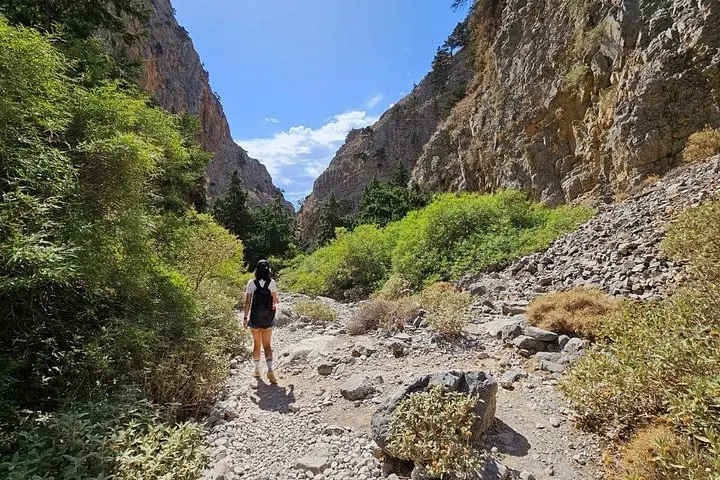
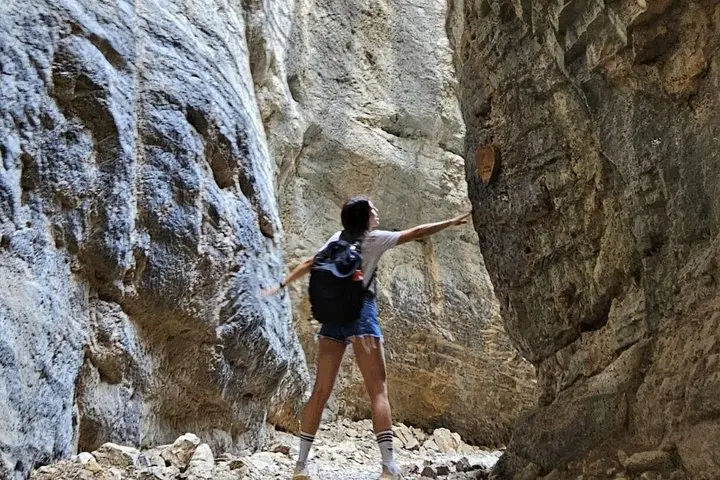
The trail narrows and the world shrinks to stone and sky. Limestone walls rise on either side, fluted by rain and time, and the path underfoot is a ribbon of ancient stepping-stones and gritty scree. Morning light finds pockets in the cliff and wild thyme perfumes the air; sheep bells tinkle on distant ridgelines as your guide points out a carved notch where a mule cart once passed.
The trail narrows and the world shrinks to stone and sky. Limestone walls rise on either side, fluted by rain and time, and the path underfoot is a ribbon of ancient stepping-stones and gritty scree. Morning light finds pockets in the cliff and wild thyme perfumes the air; sheep bells tinkle on distant ridgelines as your guide points out a carved notch where a mule cart once passed.
Imbros Gorge is a place where landscape and history are in constant conversation. Geologically, it’s a cleft cut through brittle Cretan limestone—vertical faces that at points close to a few meters apart—and a path that falls roughly 300–400 meters from rim to sea over roughly 8 kilometers of trail. In May 1941, the same corridor became a narrow artery of escape when Allied troops and local families used the gorge to flee wartime danger; your guide will fold those stories into every bend.
Culture here is tactile: terraces clinging to slopes, ancient shepherd tracks, and villages where the menu reads like local memory—olive oil drunk like wine, grilled fish, dakos, and tsikoudia poured with the same casual generosity used to offer hospitality. The trail empties at Komitades and soon the Libyan Sea opens like a cooled fist—blue and insistent—inviting a swim that feels less like recreation and more like absolution after dust and stone.
Practicals matter. The walk is moderate: expect 2–3 hours on the gorge itself over uneven stone, narrow passages, and occasional loose scree; the full private tour runs 8–10 hours including transfers from Chania or nearby towns, a guided walk, post-hike swim, and a seaside taverna meal. Wear sturdy hiking shoes with good grip; trekking poles help on descents. Hydrate early—there’s little shade in the center—and start in the morning when walls glow and heat is low. Guides manage logistics—pickup, chauffeured transfer, and local reservations—so the day reads like a curated encounter rather than a checklist.
Leave no trace: the gorge bears stories and fragile plants (wild thyme, Cretan herbs) and benefits from careful foot traffic. If you’re after photography, aim for low-angle light in the morning and the taverna at sunset; if you want solitude, plan weekdays outside peak summer. Imbros is straightforward to reach but complex in feeling: a hike that asks you to listen—to rock, to history, to the sea—and leaves you with a cleaner sense of why this coast has never been easy to forget.