THE ADVENTURE COLLECTIVE® · Independent discovery and booking for outdoor travel

Leave Marrakech before dawn and trade the medina’s heat for mountain air on a full‑day loop: an hour exploring the cavernous Imi n'Ifri with a local guide, then a hike and lunch beside the 110m Ouzoud Waterfalls. Expect geology, local stories, olive groves—and practical trails that reward steady shoes.
Leave Marrakech before dawn and trade the medina’s heat for mountain air on a full‑day loop: an hour exploring the cavernous Imi n'Ifri with a local guide, then a hike and lunch beside the 110m Ouzoud Waterfalls. Expect geology, local stories, olive groves—and practical trails that reward steady shoes.
You step out of the minaret-shadowed chaos of Jemaa el‑Fna into an air that tastes cleaner by the minute—orange trees give way to low Atlas foothills, and the coach hums along a ribbon of highway toward Demnate.
Verified experiences and guided adventures in the surrounding area.
Operated by Great Travel Morocco · Demnate, Béni Mellal-Khénifra
You step out of the minaret-shadowed chaos of Jemaa el‑Fna into an air that tastes cleaner by the minute—orange trees give way to low Atlas foothills, and the coach hums along a ribbon of highway toward Demnate.
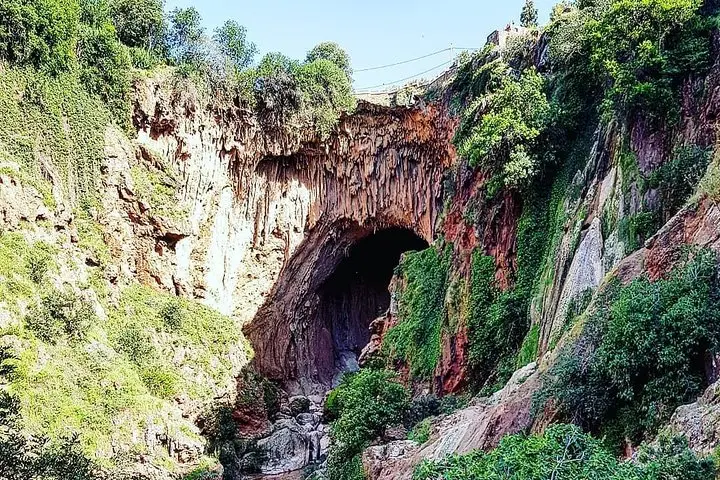
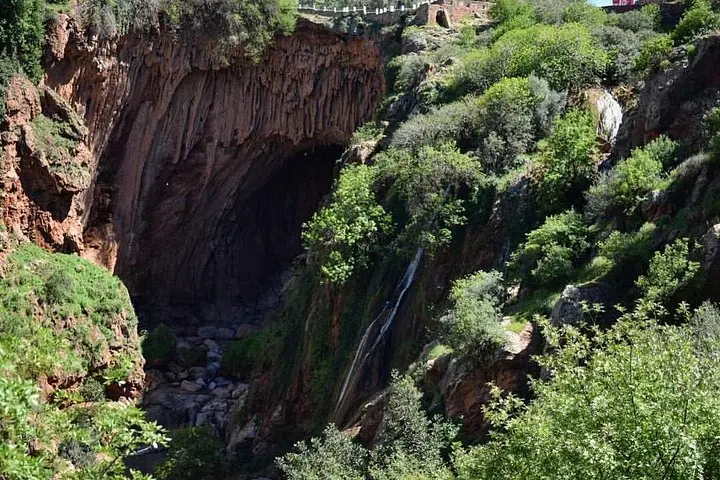
By midmorning you’re at Imi n'Ifri: a raw, wide mouth carved by water over prehistoric time. The cave’s arch leans over the valley like an old gate, its limestone ribs bearing the fingerprints of 200 million years of erosion. A local mountain guide leads a careful hour inside, pointing out rock faces that resemble maps, faces and ancient stories: the local legend of Nat, a young woman whose myth is etched across the stone and through the channels that once carried her story—and blood—down to thirsty villages.
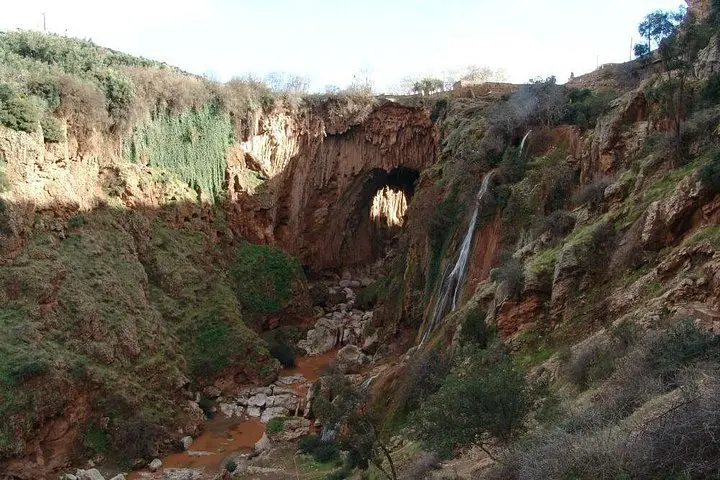
Imi n'Ifri is more than folklore. Geologists call it a natural bridge, formed when a subterranean stream collapsed and left a roofed canyon. Birdwatchers call it a refuge—vultures and other raptors wheel and nest in the cliffs while smaller passerines chatter in reed beds below.
From Imi n'Ifri the route moves northeast to a different kind of spectacle: Ouzoud Waterfalls. At roughly 110 meters high, the cascades drop through terraces of olive trees into a fern‑laced gorge. The falls push and roar as if daring you to stand close; spray rim‑lights the air into constant tiny rainbows.
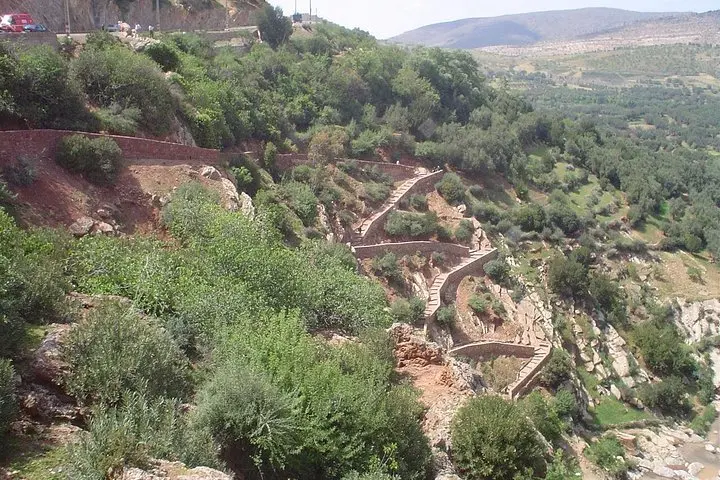
You’ll hike roughly 2 hours along packed earth and stone paths, switchbacking beneath terraces and passing restored watermills still turning with the seasonal flow. Local restaurants perch on terraces above the plunge pool—tagines steam and mint tea is poured. There’s time for a short boat trip across the basin to climb the stairs to the waterfall rim and for a relaxed lunch before the slow drive back toward Marrakech.
Practical snapshot: expect a long day—about 9–11 hours roundtrip. Trails involve uneven stone steps and some short steep sections around the falls; the cave tour includes uneven, occasionally narrow passages. Moderate fitness and surefooted shoes make the difference between an outing and an ordeal.
Timing matters: mornings at Imi n'Ifri are cooler and quieter; late afternoon light along Ouzoud sculpts the cliffs. Bring layers for wind and spray, a good water bottle, and modest swimwear if you plan to take a dip in designated pools. Respect local guides and the natural features—these places are both culturally rich and ecologically sensitive.
This combined tour stitches geology, myth and village life into a single day—an accessible, image‑rich route out of Marrakech that leaves you with carved stones in your memory and the steady sound of water in your bones.
The meeting point is near Jemaa el‑Fna Square (Ola Energy Services Gas Station). Pickups from central riads/hotels begin around 8:00 AM.
The guided cave walk is about one hour with short, uneven passages and interpretive stops.
There are designated swimming spots in calmer pools downstream—follow guide instructions and local signage; water can be cold.
Yes—near Demnate the guide visits sites with documented prehistoric footprints; these are fragile and should not be touched.
Children can join but terrain is challenging for toddlers; infant seats are available in vehicles, and supervision is required on trails.
Local guides typically speak French, Arabic and often English; the tour operator provides an Imi‑n‑Ifri guide as listed in inclusions.
Great Travel Morocco operates guided outdoor trips and adventures with an emphasis on safety, stewardship, and memorable experiences.
You step out of the minaret-shadowed chaos of Jemaa el‑Fna into an air that tastes cleaner by the minute—orange trees give way to low Atlas foothills, and the coach hums along a ribbon of highway toward Demnate.
You step out of the minaret-shadowed chaos of Jemaa el‑Fna into an air that tastes cleaner by the minute—orange trees give way to low Atlas foothills, and the coach hums along a ribbon of highway toward Demnate.
By midmorning you’re at Imi n'Ifri: a raw, wide mouth carved by water over prehistoric time. The cave’s arch leans over the valley like an old gate, its limestone ribs bearing the fingerprints of 200 million years of erosion. A local mountain guide leads a careful hour inside, pointing out rock faces that resemble maps, faces and ancient stories: the local legend of Nat, a young woman whose myth is etched across the stone and through the channels that once carried her story—and blood—down to thirsty villages.
Imi n'Ifri is more than folklore. Geologists call it a natural bridge, formed when a subterranean stream collapsed and left a roofed canyon. Birdwatchers call it a refuge—vultures and other raptors wheel and nest in the cliffs while smaller passerines chatter in reed beds below.
From Imi n'Ifri the route moves northeast to a different kind of spectacle: Ouzoud Waterfalls. At roughly 110 meters high, the cascades drop through terraces of olive trees into a fern‑laced gorge. The falls push and roar as if daring you to stand close; spray rim‑lights the air into constant tiny rainbows.
You’ll hike roughly 2 hours along packed earth and stone paths, switchbacking beneath terraces and passing restored watermills still turning with the seasonal flow. Local restaurants perch on terraces above the plunge pool—tagines steam and mint tea is poured. There’s time for a short boat trip across the basin to climb the stairs to the waterfall rim and for a relaxed lunch before the slow drive back toward Marrakech.
Practical snapshot: expect a long day—about 9–11 hours roundtrip. Trails involve uneven stone steps and some short steep sections around the falls; the cave tour includes uneven, occasionally narrow passages. Moderate fitness and surefooted shoes make the difference between an outing and an ordeal.
Timing matters: mornings at Imi n'Ifri are cooler and quieter; late afternoon light along Ouzoud sculpts the cliffs. Bring layers for wind and spray, a good water bottle, and modest swimwear if you plan to take a dip in designated pools. Respect local guides and the natural features—these places are both culturally rich and ecologically sensitive.
This combined tour stitches geology, myth and village life into a single day—an accessible, image‑rich route out of Marrakech that leaves you with carved stones in your memory and the steady sound of water in your bones.