THE ADVENTURE COLLECTIVE® · Independent discovery and booking for outdoor travel

Spend a full day from Marrakech exploring Imlil’s orchards, mule tracks and the Kasbah waterfalls, with a home-cooked Berber lunch and sweeping views of Mount Toubkal. This guided trek is a compact, cultural mountain introduction suitable for most walkers.
Spend a full day from Marrakech exploring Imlil’s orchards, mule tracks and the Kasbah waterfalls, with a home-cooked Berber lunch and sweeping views of Mount Toubkal. This guided trek is a compact, cultural mountain introduction suitable for most walkers.
Morning light slices across terraced orchards as the minivan winds up from Marrakech toward Imlil. By the time you step out at 1,700 meters the air has a cool bite; stone tracks and mule paths lead up through nut trees while the distant outline of Mount Toubkal (4,167 m) looms like a patient giant.
Verified experiences and guided adventures in the surrounding area.
Operated by Arib Voyages · Imlil, Marrakech-Safi
Morning light slices across terraced orchards as the minivan winds up from Marrakech toward Imlil. By the time you step out at 1,700 meters the air has a cool bite; stone tracks and mule paths lead up through nut trees while the distant outline of Mount Toubkal (4,167 m) looms like a patient giant.
The route from Imlil to the Kasbah waterfalls follows centuries-old Berber tracks, passing small farms that still grow apples, figs, raspberries and walnuts for the weekly Asni market. Geologically the High Atlas is young and rugged — folded sandstone and volcanic plugs carved by winter snows and spring torrents — which is why trails switchback and streams dare you across stepped rock. Culture here is visible: villages of mud-brick houses, terraces, and the hospitality of Amazigh families who invite trekkers in for tajine and mint tea.
Expect 8–9 hours door-to-door, including a guided 1.5‑hour walk to the waterfalls, a short drive to Sidi Fares valley, and lunch inside a Berber home. Terrain is mostly well‑worn mule tracks with loose scree on steeper pitches; a net elevation change on the day is modest (hundreds of meters), though altitude and sun can make it feel harder. Practical notes: wear sturdy boots, carry 1–2 liters of water, layer for variable mountain weather, and bring small change for the souk and household tips. Respect private fields and ask before photographing people; this keeps the exchange fair and the route open to future visitors.
This day trek is an efficient, scenic way to experience High Atlas life without committing to a multiday climb — ideal for travelers wanting an authentic, manageable mountain day from Marrakech.
The guided walk to the Kasbah waterfalls is about 1.5 hours each way on well-marked mule tracks, with short uphill sections and some rocky footing.
No; summiting Toubkal requires a separate 2–3 day trek from Imlil with acclimatization, a local guide and often mule support for gear.
Yes—the itinerary includes a homemade lunch in a Berber family home, typically tajine or couscous, salad, fruit, mint tea and bottled water.
Yes—air-conditioned vehicle pickup and drop-off in Marrakech are included, with a roughly 1.5-hour drive each way depending on traffic.
Arib Voyages operates guided outdoor trips and adventures with an emphasis on safety, stewardship, and memorable experiences.
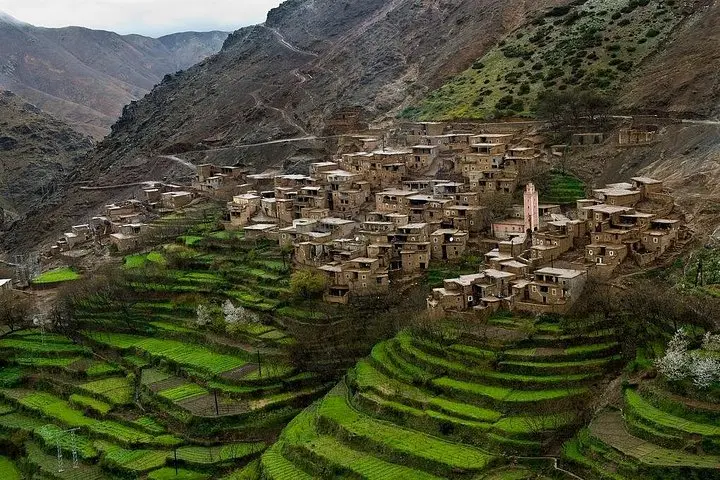
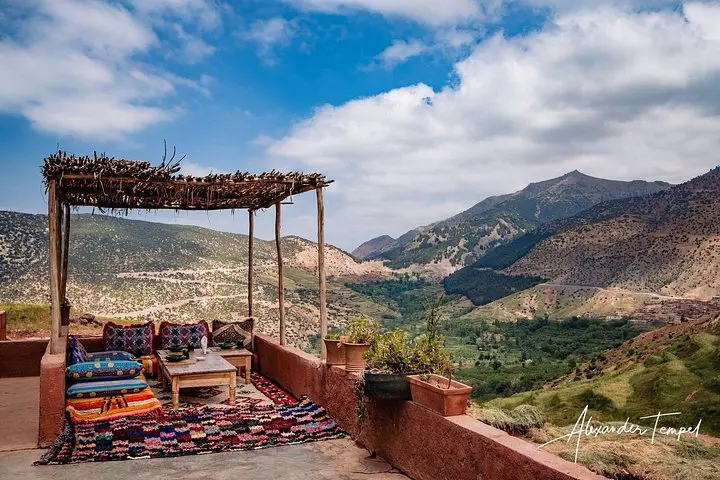


Morning light slices across terraced orchards as the minivan winds up from Marrakech toward Imlil. By the time you step out at 1,700 meters the air has a cool bite; stone tracks and mule paths lead up through nut trees while the distant outline of Mount Toubkal (4,167 m) looms like a patient giant.
Morning light slices across terraced orchards as the minivan winds up from Marrakech toward Imlil. By the time you step out at 1,700 meters the air has a cool bite; stone tracks and mule paths lead up through nut trees while the distant outline of Mount Toubkal (4,167 m) looms like a patient giant.
The route from Imlil to the Kasbah waterfalls follows centuries-old Berber tracks, passing small farms that still grow apples, figs, raspberries and walnuts for the weekly Asni market. Geologically the High Atlas is young and rugged — folded sandstone and volcanic plugs carved by winter snows and spring torrents — which is why trails switchback and streams dare you across stepped rock. Culture here is visible: villages of mud-brick houses, terraces, and the hospitality of Amazigh families who invite trekkers in for tajine and mint tea.
Expect 8–9 hours door-to-door, including a guided 1.5‑hour walk to the waterfalls, a short drive to Sidi Fares valley, and lunch inside a Berber home. Terrain is mostly well‑worn mule tracks with loose scree on steeper pitches; a net elevation change on the day is modest (hundreds of meters), though altitude and sun can make it feel harder. Practical notes: wear sturdy boots, carry 1–2 liters of water, layer for variable mountain weather, and bring small change for the souk and household tips. Respect private fields and ask before photographing people; this keeps the exchange fair and the route open to future visitors.
This day trek is an efficient, scenic way to experience High Atlas life without committing to a multiday climb — ideal for travelers wanting an authentic, manageable mountain day from Marrakech.