THE ADVENTURE COLLECTIVE® · Independent discovery and booking for outdoor travel

A day in the High Atlas that trades Marrakech’s heat for pine-scented mountain air, stone villages and wide alpine views. This guided trek from Marrakech delivers village walks, panoramic ridgelines and a taste of Berber life with private transport and lunch included.
A day in the High Atlas that trades Marrakech’s heat for pine-scented mountain air, stone villages and wide alpine views. This guided trek from Marrakech delivers village walks, panoramic ridgelines and a taste of Berber life with private transport and lunch included.
You step out of the van and cold mountain air pushes at your jacket like a livelier version of Marrakech’s city breeze. Above, serrated peaks of the High Atlas cleave the sky; below, dry-stone walls and terraced fields thread the valley. The trail leaves the village on a dirt track, moving past mule caravans, small orchards and clustered Berber homes with flat roofs that offer constant, shifting views of the range.
Verified experiences and guided adventures in the surrounding area.
Operated by Amazing Toubkal Trek · Imlil, Marrakesh-Safi
You step out of the van and cold mountain air pushes at your jacket like a livelier version of Marrakech’s city breeze. Above, serrated peaks of the High Atlas cleave the sky; below, dry-stone walls and terraced fields thread the valley. The trail leaves the village on a dirt track, moving past mule caravans, small orchards and clustered Berber homes with flat roofs that offer constant, shifting views of the range.
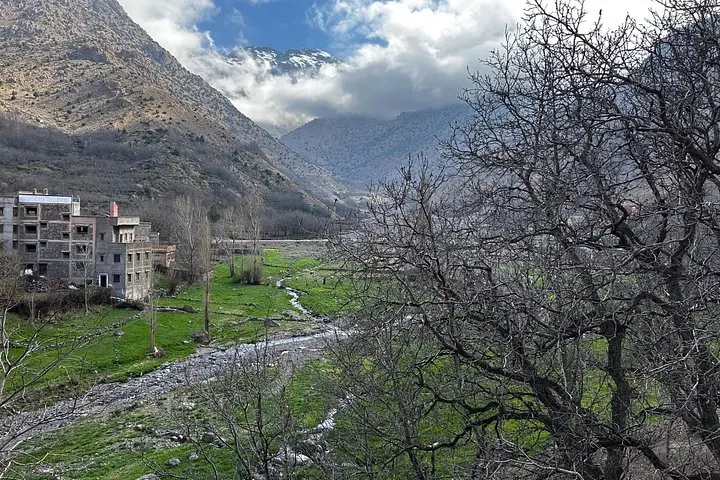
Imlil sits in the heart of the Mizane Valley and is a traditional trailhead for routes into Jebel Toubkal, North Africa’s highest peak. Geologically the High Atlas is young—folded and uplifted by the collision of the African and Eurasian plates—so expect steep ridgelines, rocky outcrops and quick changes in weather. Culturally, the area remains very much Berber: villagers still herd goats, tend terraces and welcome visitors into tea ceremonies.
Most guided loops from Imlil range from 6–10 km on mixed dirt and rocky tracks with 200–600 m cumulative elevation gain, depending on how far you go (Aremd, Sidi Chamharouch or a higher viewpoint). Terrain is uneven but non-technical; policed trails become looser above village level.
Plan for a day of moderate walking: sturdy boots, sun protection, layered clothing and 1–2 liters of water. The excursion includes private transport from Marrakech (about 1–1.5 hours each way) and a local guide; expect breaks for photos, tea and a shared lunch in a village house or simple café. Morning drives bring clearer light on the peaks; afternoons can cloud in. Respect private farms, tip guides locally, and carry out any waste—this landscape thrives when visitors tread lightly.
Expect roughly 1 to 1.5 hours each way depending on traffic and route; the trip covers about 60–70 km into the High Atlas.
Yes for those comfortable with walking on uneven ground; the tour is rated easy-to-moderate and can be tailored, but inform the operator of mobility limits when booking.
No technical experience required—basic fitness and sure-footedness on rocky paths are adequate for the standard village loop itineraries.
Many local guides speak French and Arabic, and most operators provide English-speaking guides for international visitors; check when booking.
Amazing Toubkal Trek operates guided outdoor trips and adventures with an emphasis on safety, stewardship, and memorable experiences.
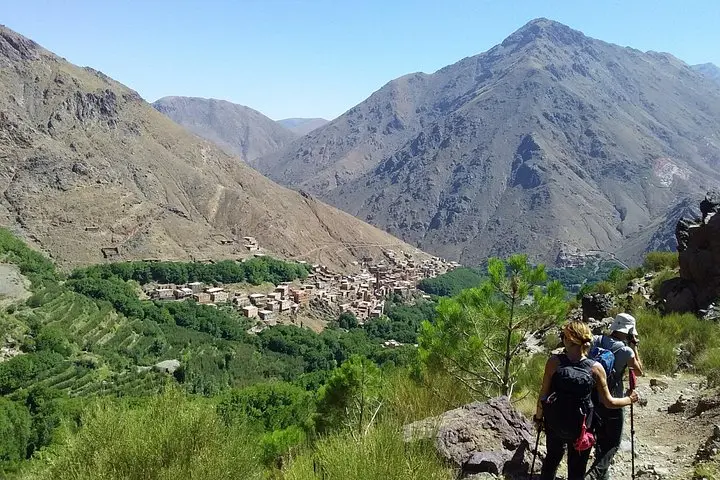
You step out of the van and cold mountain air pushes at your jacket like a livelier version of Marrakech’s city breeze. Above, serrated peaks of the High Atlas cleave the sky; below, dry-stone walls and terraced fields thread the valley. The trail leaves the village on a dirt track, moving past mule caravans, small orchards and clustered Berber homes with flat roofs that offer constant, shifting views of the range.
You step out of the van and cold mountain air pushes at your jacket like a livelier version of Marrakech’s city breeze. Above, serrated peaks of the High Atlas cleave the sky; below, dry-stone walls and terraced fields thread the valley. The trail leaves the village on a dirt track, moving past mule caravans, small orchards and clustered Berber homes with flat roofs that offer constant, shifting views of the range.
Imlil sits in the heart of the Mizane Valley and is a traditional trailhead for routes into Jebel Toubkal, North Africa’s highest peak. Geologically the High Atlas is young—folded and uplifted by the collision of the African and Eurasian plates—so expect steep ridgelines, rocky outcrops and quick changes in weather. Culturally, the area remains very much Berber: villagers still herd goats, tend terraces and welcome visitors into tea ceremonies.
Most guided loops from Imlil range from 6–10 km on mixed dirt and rocky tracks with 200–600 m cumulative elevation gain, depending on how far you go (Aremd, Sidi Chamharouch or a higher viewpoint). Terrain is uneven but non-technical; policed trails become looser above village level.
Plan for a day of moderate walking: sturdy boots, sun protection, layered clothing and 1–2 liters of water. The excursion includes private transport from Marrakech (about 1–1.5 hours each way) and a local guide; expect breaks for photos, tea and a shared lunch in a village house or simple café. Morning drives bring clearer light on the peaks; afternoons can cloud in. Respect private farms, tip guides locally, and carry out any waste—this landscape thrives when visitors tread lightly.