THE ADVENTURE COLLECTIVE® · Independent discovery and booking for outdoor travel

Leave Marrakech for a day in the High Atlas: walk through Berber villages, follow mule tracks to a lively waterfall and eat homemade lunch with mountain views. This accessible day trip blends culture, geology and a short, satisfying hike.
Leave Marrakech for a day in the High Atlas: walk through Berber villages, follow mule tracks to a lively waterfall and eat homemade lunch with mountain views. This accessible day trip blends culture, geology and a short, satisfying hike.
Dust from Marrakech falls away as the road climbs into the High Atlas and the air sharpens with stone and thyme. You arrive in Imlil Valley where a network of mule tracks threads between terraced fields and compact Berber homes; a short hike pushes you up to a tumbling waterfall, and the peaks of Toubkal watch like slow-moving weather.
Verified experiences and guided adventures in the surrounding area.
Operated by Berber Atlas Walks · Imlil, Marrakech-Safi
Dust from Marrakech falls away as the road climbs into the High Atlas and the air sharpens with stone and thyme. You arrive in Imlil Valley where a network of mule tracks threads between terraced fields and compact Berber homes; a short hike pushes you up to a tumbling waterfall, and the peaks of Toubkal watch like slow-moving weather.
The valley sits on ancient trade and pastoral routes that linked mountain communities to Marrakech. Geologically the High Atlas is young and rugged — uplifted by the collision of the African and Eurasian plates — so expect steep valleys, exposed schists and granite outcrops, and gullies carved by seasonal torrents. Culturally, Imlil is a living Berber landscape: women weaving, men tending small orchards, and guesthouses serving tagine and mint tea with direct mountain views.
Practically, this is a classic day excursion: a drive of roughly 1–1.5 hours each way from Marrakech and a 1–3 hour round-trip hike to the main waterfall depending on pace and route. Trails alternate between village lanes, stony mule paths and short steep pitches; some sections can be slick after rain. Bring layered clothing for rapid temperature swings, sturdy footwear, water and local currency for small purchases. If you’re aiming higher toward Toubkal base, add a full day and stronger conditioning.
The trip rewards simple navigation — clear tracks and local guides — and delivers a concentrated mountain experience: vivid rock, working terraces and a chance to step out of Marrakech’s bustle into a landscape that still speaks in water and stone.
From Imlil village the popular route to the main waterfall takes about 1–1.5 hours one-way depending on pace and stops for photos or village visits.
Guides are not strictly required for the short waterfall route, but a local guide is recommended for village navigation, cultural context and safety on mountain trails.
The drive to Imlil is roughly 60–90 minutes each way from central Marrakech, depending on traffic and exact pickup location.
Short sections are family-friendly, but expect uneven footing; travelers with mobility issues should evaluate the steep pitches and consider staying in the village rather than continuing to the waterfall.
Berber Atlas Walks operates guided outdoor trips and adventures with an emphasis on safety, stewardship, and memorable experiences.
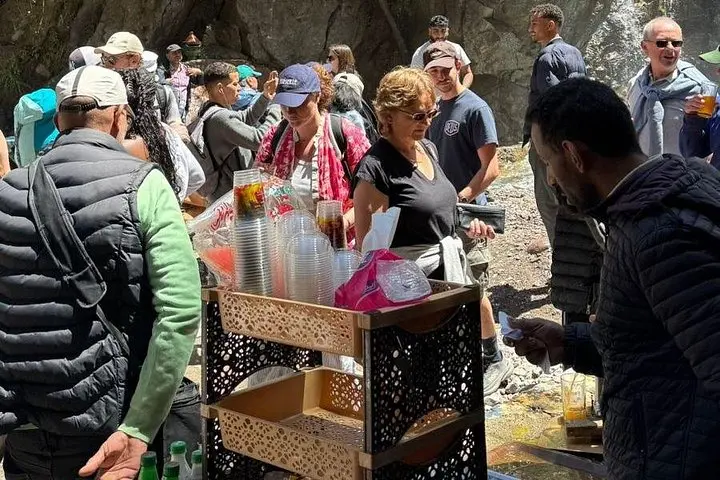

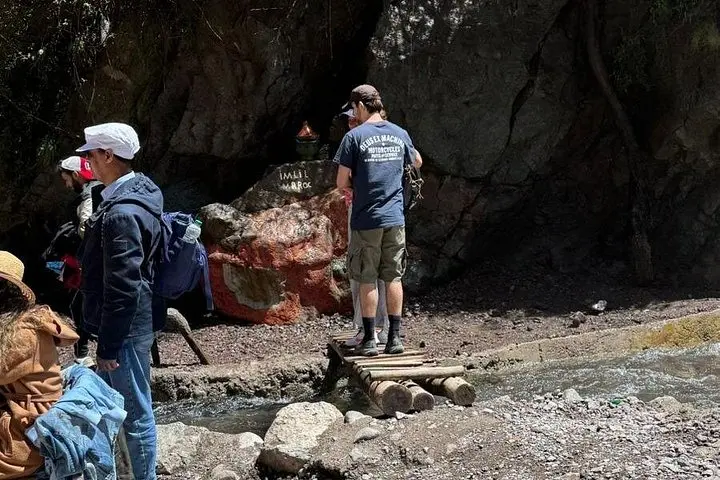

Dust from Marrakech falls away as the road climbs into the High Atlas and the air sharpens with stone and thyme. You arrive in Imlil Valley where a network of mule tracks threads between terraced fields and compact Berber homes; a short hike pushes you up to a tumbling waterfall, and the peaks of Toubkal watch like slow-moving weather.
Dust from Marrakech falls away as the road climbs into the High Atlas and the air sharpens with stone and thyme. You arrive in Imlil Valley where a network of mule tracks threads between terraced fields and compact Berber homes; a short hike pushes you up to a tumbling waterfall, and the peaks of Toubkal watch like slow-moving weather.
The valley sits on ancient trade and pastoral routes that linked mountain communities to Marrakech. Geologically the High Atlas is young and rugged — uplifted by the collision of the African and Eurasian plates — so expect steep valleys, exposed schists and granite outcrops, and gullies carved by seasonal torrents. Culturally, Imlil is a living Berber landscape: women weaving, men tending small orchards, and guesthouses serving tagine and mint tea with direct mountain views.
Practically, this is a classic day excursion: a drive of roughly 1–1.5 hours each way from Marrakech and a 1–3 hour round-trip hike to the main waterfall depending on pace and route. Trails alternate between village lanes, stony mule paths and short steep pitches; some sections can be slick after rain. Bring layered clothing for rapid temperature swings, sturdy footwear, water and local currency for small purchases. If you’re aiming higher toward Toubkal base, add a full day and stronger conditioning.
The trip rewards simple navigation — clear tracks and local guides — and delivers a concentrated mountain experience: vivid rock, working terraces and a chance to step out of Marrakech’s bustle into a landscape that still speaks in water and stone.