THE ADVENTURE COLLECTIVE® · Independent discovery and booking for outdoor travel

Ride camels across Elsen Tasarkhai, sleep in traditional gers and watch the Takhi horses in Hustai—this compact two-day tour pairs accessible wildlife viewing with classic Gobi dune scenery. Practical for first-time visitors, it balances soft adventure with cultural immersion.
Ride camels across Elsen Tasarkhai, sleep in traditional gers and watch the Takhi horses in Hustai—this compact two-day tour pairs accessible wildlife viewing with classic Gobi dune scenery. Practical for first-time visitors, it balances soft adventure with cultural immersion.
The wind off the dunes catches your jacket, and for a moment the world is only sand, sky and the steady sway of a camel beneath you.
Verified experiences and guided adventures in the surrounding area.
Operated by Rara Avis Travel · Ulaanbaatar, Ulaanbaatar
The wind off the dunes catches your jacket, and for a moment the world is only sand, sky and the steady sway of a camel beneath you.
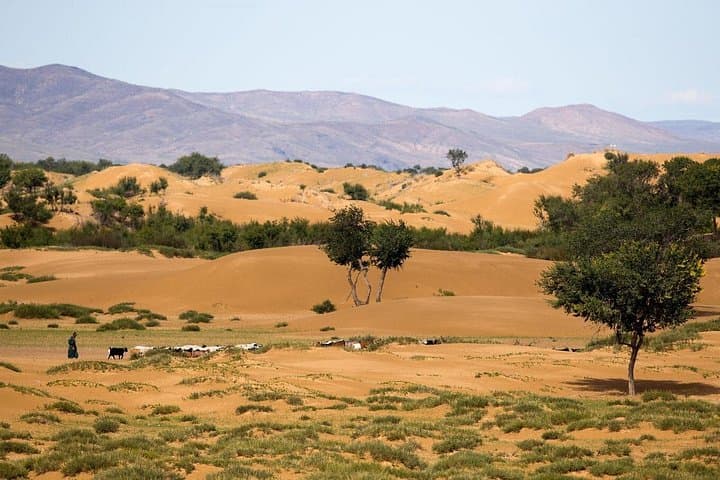
This two-day route moves from the rolling grasslands of Hustai National Park—where the rare Takhi (Przewalski’s horse) graze—out to the Elsen Tasarkhai dunes in Hugnu-Tarna. Geologically, the area is an interface between steppe and desert: wind-sculpted dunes sit beside loess soils and low volcanic ridges, offering broad sightlines and sudden pockets of hardy vegetation.
Culturally, the itinerary threads nomadic life through the landscape. Nights are in traditional gers (yurts), with boiled milk tea and meat stews that reflect centuries of mobility and livestock husbandry. The nearby archaeological region around Kharkhorin recalls Mongolia’s imperial past and the old caravan routes that once linked steppe and Gobi.
Expect short walks, guided wildlife viewing, a 1–2 hour camel trek across soft dunes, and a campfire beneath a remarkable dark sky. Guides typically handle logistics—pickup from Ulaanbaatar, meals, and ger accommodation—so the experience is accessible even for first-time travellers.
Practical guidance: wear broken-in boots for firmer sand and steppe trails, bring layered clothing (nights are cold), and carry sunscreen and a wide-brim hat—the desert sun is intense. Hydrate frequently; guides supply water but plan to drink a liter or more across active hours. For photographers, arrive at dawn or dusk for the cleanest light on dunes and the best chance to watch wildlife when temperatures cool.
This trip balances easy access with distinctly Mongolian landscapes—an efficient window into nomadic culture and desert silence.
The tour is rated easy—activities include short hikes, low-impact wildlife viewing and a camel ride; no technical skills required.
Yes, accommodations include traditional gers with basic bedding; expect simple but warm setups and communal facilities at camp.
Common sightings include Przewalski’s (Takhi) horses in Hustai, marmots, and various steppe birds; sightings aren’t guaranteed but guides know the best viewing windows.
It runs most of the year but conditions change seasonally—summer is warm and dusty, spring and fall are cooler, and winter can be very cold; check operator dates.
Rara Avis Travel operates guided outdoor trips and adventures with an emphasis on safety, stewardship, and memorable experiences.
The wind off the dunes catches your jacket, and for a moment the world is only sand, sky and the steady sway of a camel beneath you.
The wind off the dunes catches your jacket, and for a moment the world is only sand, sky and the steady sway of a camel beneath you.
This two-day route moves from the rolling grasslands of Hustai National Park—where the rare Takhi (Przewalski’s horse) graze—out to the Elsen Tasarkhai dunes in Hugnu-Tarna. Geologically, the area is an interface between steppe and desert: wind-sculpted dunes sit beside loess soils and low volcanic ridges, offering broad sightlines and sudden pockets of hardy vegetation.
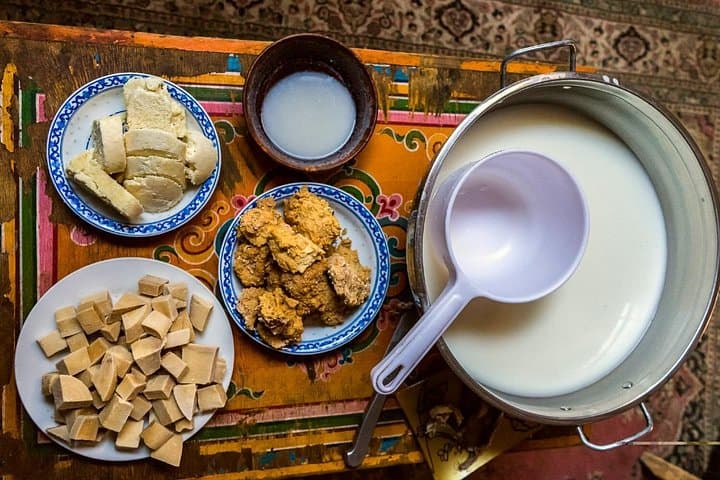
Culturally, the itinerary threads nomadic life through the landscape. Nights are in traditional gers (yurts), with boiled milk tea and meat stews that reflect centuries of mobility and livestock husbandry. The nearby archaeological region around Kharkhorin recalls Mongolia’s imperial past and the old caravan routes that once linked steppe and Gobi.
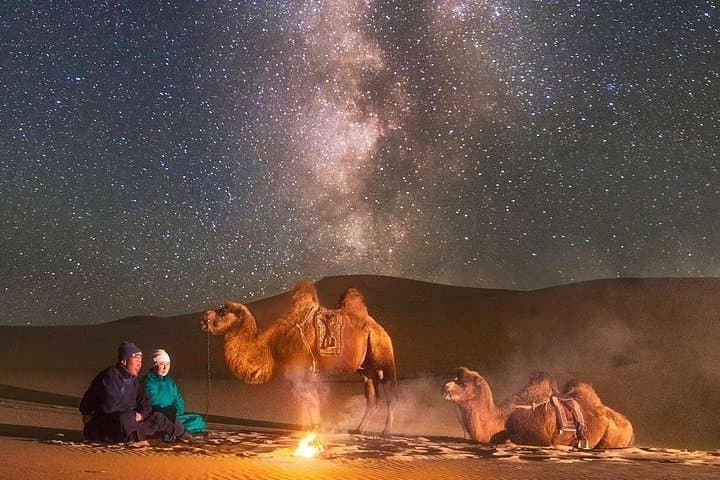
Expect short walks, guided wildlife viewing, a 1–2 hour camel trek across soft dunes, and a campfire beneath a remarkable dark sky. Guides typically handle logistics—pickup from Ulaanbaatar, meals, and ger accommodation—so the experience is accessible even for first-time travellers.
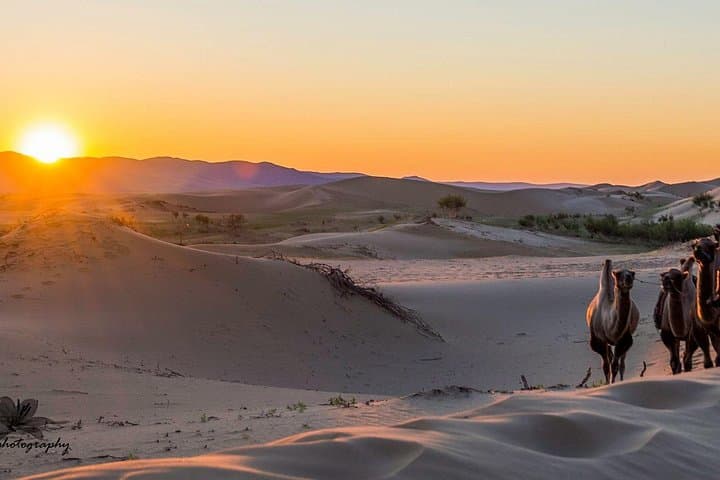
Practical guidance: wear broken-in boots for firmer sand and steppe trails, bring layered clothing (nights are cold), and carry sunscreen and a wide-brim hat—the desert sun is intense. Hydrate frequently; guides supply water but plan to drink a liter or more across active hours. For photographers, arrive at dawn or dusk for the cleanest light on dunes and the best chance to watch wildlife when temperatures cool.
This trip balances easy access with distinctly Mongolian landscapes—an efficient window into nomadic culture and desert silence.