THE ADVENTURE COLLECTIVE® · Independent discovery and booking for outdoor travel

Walk where St. Paul preached and Lydia was baptized on a private, full-day guided visit to Philippi. Explore expansive ruins, an early-Christian baptistry, and optional winery tasting while learning the region’s layered history.
Walk where St. Paul preached and Lydia was baptized on a private, full-day guided visit to Philippi. Explore expansive ruins, an early-Christian baptistry, and optional winery tasting while learning the region’s layered history.
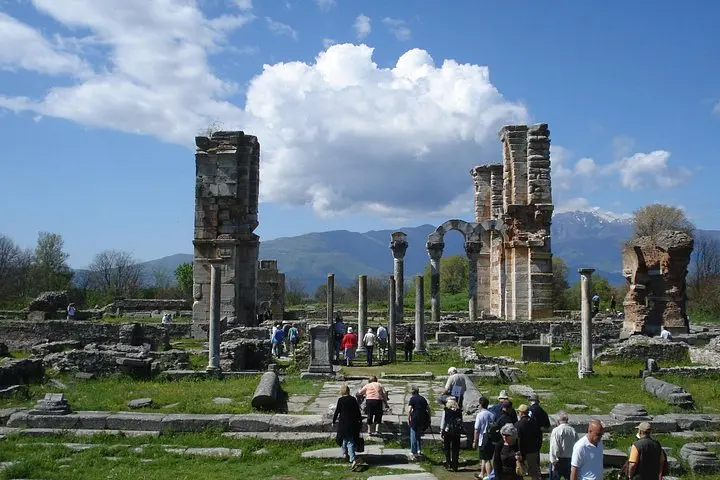
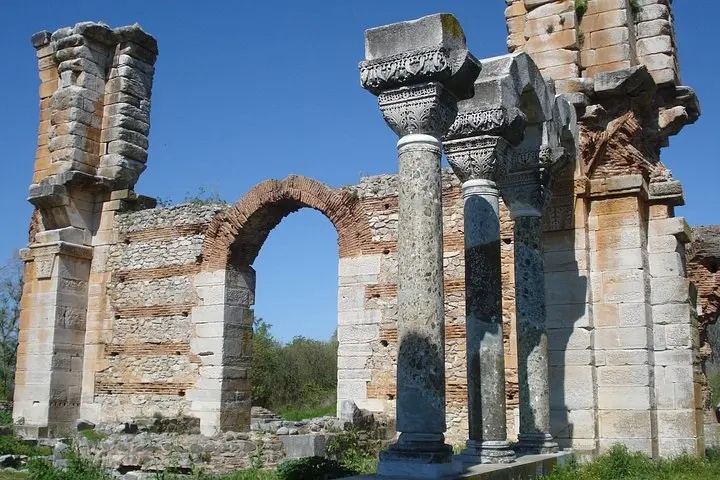
You arrive on a cracked limestone track beneath an open sky, the river Strymon murmuring nearby as palms of reeds bend toward the water. Olive groves and scrub roll away from the excavated stones; the theatre’s tiered curve catches light like a pale wave. A private guide meets you and the day becomes an intimate walk through layers of empire—Greek foundations, Roman streets, early-Christian mosaics—each stone keeping score of centuries.
Verified experiences and guided adventures in the surrounding area.
Operated by Greece Guided Tours by Efi Kalampoukidou · Nea Filippoi, East Macedonia and Thrace
You arrive on a cracked limestone track beneath an open sky, the river Strymon murmuring nearby as palms of reeds bend toward the water. Olive groves and scrub roll away from the excavated stones; the theatre’s tiered curve catches light like a pale wave. A private guide meets you and the day becomes an intimate walk through layers of empire—Greek foundations, Roman streets, early-Christian mosaics—each stone keeping score of centuries.
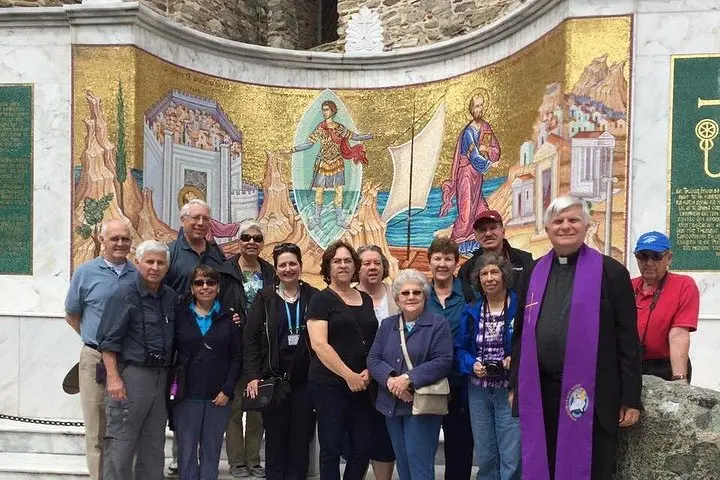
Philippi was founded in the 4th century BCE, prospered under Roman rule, and entered history again in AD 49 when St. Paul preached here. Geologically the valley sits where alluvial plains meet low limestone hills; the Strymon’s sediment laid the ground for agriculture and the city’s strategic placement on ancient trade routes. Locally, villagers still mark baptisms at the small chapel by the stream where Lydia is said to have been baptized; the chapel’s mosaics and marble work link living ritual to archaeology.
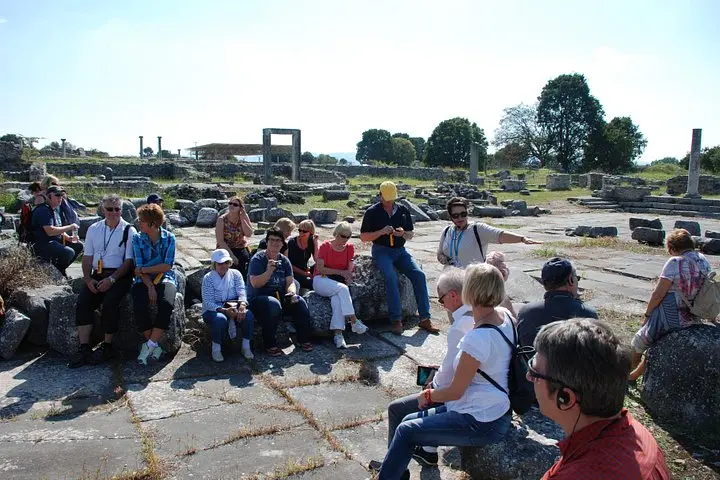
Expect uneven paths, low walls to sit on, and open exposures—sun and wind shape the experience as much as ruins. A focused 90-minute walk across the main site covers the forum, basilica outlines, the theatre, and the baptistry. Combine with a photo stop at the 4th-century marble lion by the Strymon and, on request, a nearby winery tasting.
Practical: bring a refillable water bottle, sturdy shoes, sun protection, and a light layer for breezy mornings. The site is best visited in morning light or late afternoon to avoid mid-day heat; allow a full day if you add a winery or start from Thessaloniki.
Admission is typically not included in the base private-guided experience—confirm with the operator ahead of booking to cover tickets or group rates.
Expect about 90–120 minutes to see the main excavated areas, plus short stops at the baptistry and photo points; plan a full day with transfers and optional winery visits.
Yes—many departures begin in Thessaloniki (roughly 1.5–2 hours drive); some operators also offer pickup from Kavala or nearby towns.
The small chapel and baptistry are visitable but contain steps and narrow approaches—infants should be carried and strollers are not practical in the immediate ruins.
Greece Guided Tours by Efi Kalampoukidou operates guided outdoor trips and adventures with an emphasis on safety, stewardship, and memorable experiences.
You arrive on a cracked limestone track beneath an open sky, the river Strymon murmuring nearby as palms of reeds bend toward the water. Olive groves and scrub roll away from the excavated stones; the theatre’s tiered curve catches light like a pale wave. A private guide meets you and the day becomes an intimate walk through layers of empire—Greek foundations, Roman streets, early-Christian mosaics—each stone keeping score of centuries.
You arrive on a cracked limestone track beneath an open sky, the river Strymon murmuring nearby as palms of reeds bend toward the water. Olive groves and scrub roll away from the excavated stones; the theatre’s tiered curve catches light like a pale wave. A private guide meets you and the day becomes an intimate walk through layers of empire—Greek foundations, Roman streets, early-Christian mosaics—each stone keeping score of centuries.
Philippi was founded in the 4th century BCE, prospered under Roman rule, and entered history again in AD 49 when St. Paul preached here. Geologically the valley sits where alluvial plains meet low limestone hills; the Strymon’s sediment laid the ground for agriculture and the city’s strategic placement on ancient trade routes. Locally, villagers still mark baptisms at the small chapel by the stream where Lydia is said to have been baptized; the chapel’s mosaics and marble work link living ritual to archaeology.
Expect uneven paths, low walls to sit on, and open exposures—sun and wind shape the experience as much as ruins. A focused 90-minute walk across the main site covers the forum, basilica outlines, the theatre, and the baptistry. Combine with a photo stop at the 4th-century marble lion by the Strymon and, on request, a nearby winery tasting.
Practical: bring a refillable water bottle, sturdy shoes, sun protection, and a light layer for breezy mornings. The site is best visited in morning light or late afternoon to avoid mid-day heat; allow a full day if you add a winery or start from Thessaloniki.