THE ADVENTURE COLLECTIVE® · Independent discovery and booking for outdoor travel

Trade the classic trail for downhill singletrack, jungle hikes and a final walk into Machu Picchu. This four-day Inca Jungle route combines biking from Abra Málaga, river valleys, ziplining and a guided entry to the citadel.
Trade the classic trail for downhill singletrack, jungle hikes and a final walk into Machu Picchu. This four-day Inca Jungle route combines biking from Abra Málaga, river valleys, ziplining and a guided entry to the citadel.
Morning wind at Abra Málaga bites sharp and clean as you mount a bike and point downhill toward green slopes that seem to pull you forward. Over the next four days the landscape flips between puna grassland and humid cloud forest—high passes give way to rivers that dare you to follow them toward the Urubamba basin and the stone city beyond.
Verified experiences and guided adventures in the surrounding area.
Operated by Zarate Adventours · Cusco, Cusco Region
Morning wind at Abra Málaga bites sharp and clean as you mount a bike and point downhill toward green slopes that seem to pull you forward. Over the next four days the landscape flips between puna grassland and humid cloud forest—high passes give way to rivers that dare you to follow them toward the Urubamba basin and the stone city beyond.
This route by-passes the classic Inca Trail but threads its own history: colonial-era valleys, Inca agricultural terraces at Huamanmarca and the ruined watchpost of Llactapata where, centuries ago, the same ridgelines marked movement and observation. Geology is obvious—folded Andean strata opening into deep canyons, volcanic and metamorphic outcrops feeding clear streams below. The culture you pass is still agricultural: coca, coffee and cassava fields punctuate villages where Quechua and Spanish intertwine.
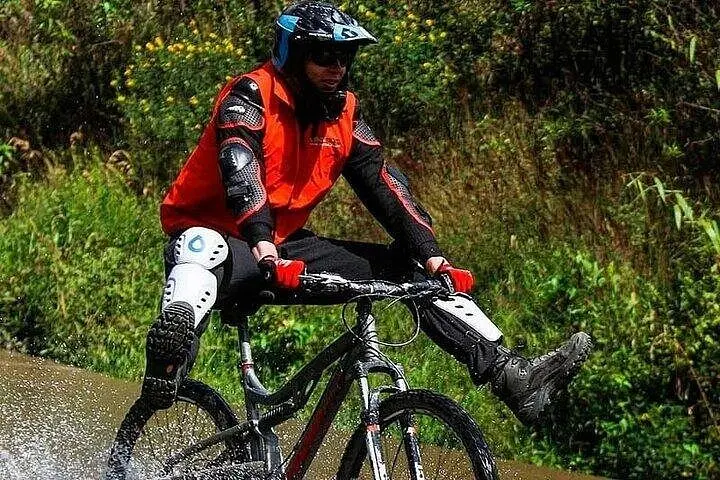
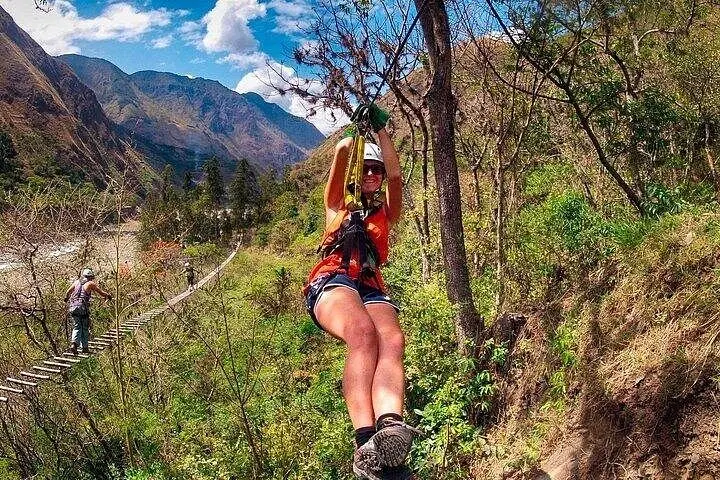
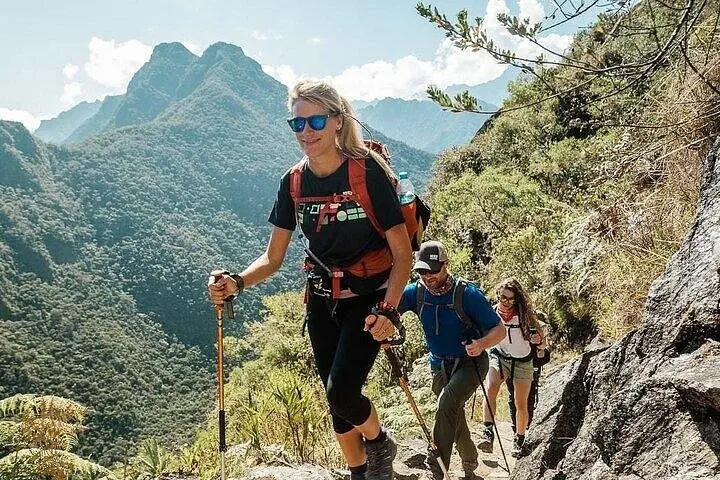
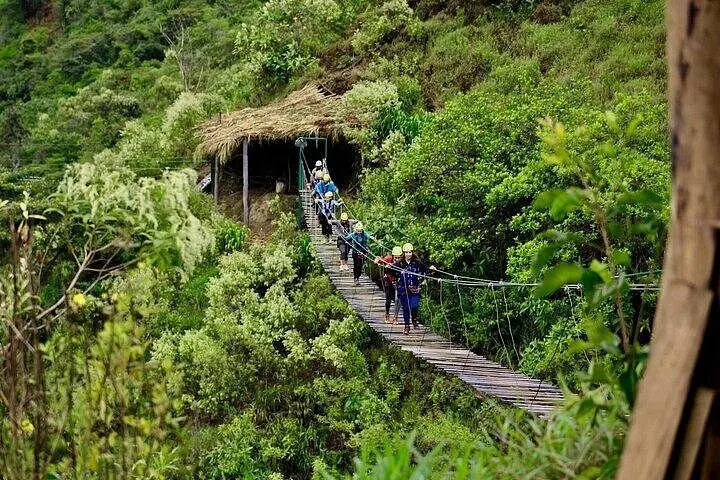
Practical rhythm of the trip: day one is a 2–3 hour technical downhill from Abra Málaga (4,316 m) to Santa María by bike; day two includes a 4–5 hour hike toward Waka Yupana, then ziplining and optional thermal baths at Cocal Mayo; day three moves through Lucmabamba and Llactapata with views of Machu Picchu and a final stretch along the Hidroeléctrica tracks into Aguas Calientes; day four is an early uphill approach to Machu Picchu and a guided 2.5-hour circuit of the citadel.
Bring layers for rapid climate change, drink often to manage altitude, and expect rough singletrack, river crossings and rail-walk sections. This is a physically engaging, logistics-rich adventure: plan for early starts, modest camping and basic comforts in villages but extraordinary access to nature and history.
Moderate mountain biking experience is recommended; guides provide equipment and instruction but you'll face steep descents and varied terrain.
Yes, entrance to Machu Picchu (circuit 1 or 2 depending on availability) is included in the tour package.
The route is designed for adventurous travelers of many ages, but it is not recommended for very young children or those with limited stamina due to long days and high altitude.
There’s an option to take the train from Hidroeléctrica to Aguas Calientes (not included); guides will advise based on your condition and timing.
Zarate Adventours operates guided outdoor trips and adventures with an emphasis on safety, stewardship, and memorable experiences.
Morning wind at Abra Málaga bites sharp and clean as you mount a bike and point downhill toward green slopes that seem to pull you forward. Over the next four days the landscape flips between puna grassland and humid cloud forest—high passes give way to rivers that dare you to follow them toward the Urubamba basin and the stone city beyond.
Morning wind at Abra Málaga bites sharp and clean as you mount a bike and point downhill toward green slopes that seem to pull you forward. Over the next four days the landscape flips between puna grassland and humid cloud forest—high passes give way to rivers that dare you to follow them toward the Urubamba basin and the stone city beyond.
This route by-passes the classic Inca Trail but threads its own history: colonial-era valleys, Inca agricultural terraces at Huamanmarca and the ruined watchpost of Llactapata where, centuries ago, the same ridgelines marked movement and observation. Geology is obvious—folded Andean strata opening into deep canyons, volcanic and metamorphic outcrops feeding clear streams below. The culture you pass is still agricultural: coca, coffee and cassava fields punctuate villages where Quechua and Spanish intertwine.
Practical rhythm of the trip: day one is a 2–3 hour technical downhill from Abra Málaga (4,316 m) to Santa María by bike; day two includes a 4–5 hour hike toward Waka Yupana, then ziplining and optional thermal baths at Cocal Mayo; day three moves through Lucmabamba and Llactapata with views of Machu Picchu and a final stretch along the Hidroeléctrica tracks into Aguas Calientes; day four is an early uphill approach to Machu Picchu and a guided 2.5-hour circuit of the citadel.
Bring layers for rapid climate change, drink often to manage altitude, and expect rough singletrack, river crossings and rail-walk sections. This is a physically engaging, logistics-rich adventure: plan for early starts, modest camping and basic comforts in villages but extraordinary access to nature and history.