
Incense, Caves, and Ancient Capitals: Tam Coc & Quang Phu Cau Day Tour from Hanoi
Spend a day traveling from Hanoi to Quang Phu Cau’s incense fields, glide through Tam Coc’s river caves on a sampan, and visit the temples of Hoa Lu Ancient Capital. This accessible day tour combines craft, karst scenery and compact history with easy logistics for first-time visitors.
An Adventure In Hanoi.
Spend a day traveling from Hanoi to Quang Phu Cau’s incense fields, glide through Tam Coc’s river caves on a sampan, and visit the temples of Hoa Lu Ancient Capital. This accessible day tour combines craft, karst scenery and compact history with easy logistics for first-time visitors.
Read the full experience
Morning light pulls the minivan away from Hanoi's Old Quarter and into open road: rice paddies stretch like green plains, limestone karsts puncture the skyline, and a river threads between them daring you to come closer.
Morning light pulls the minivan away from Hanoi's Old Quarter and into open road: rice paddies stretch like green plains, limestone karsts puncture the skyline, and a river threads between them daring you to come closer.
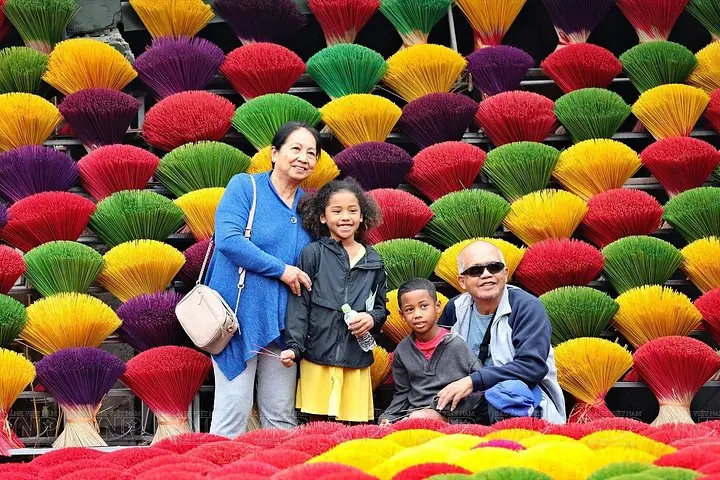
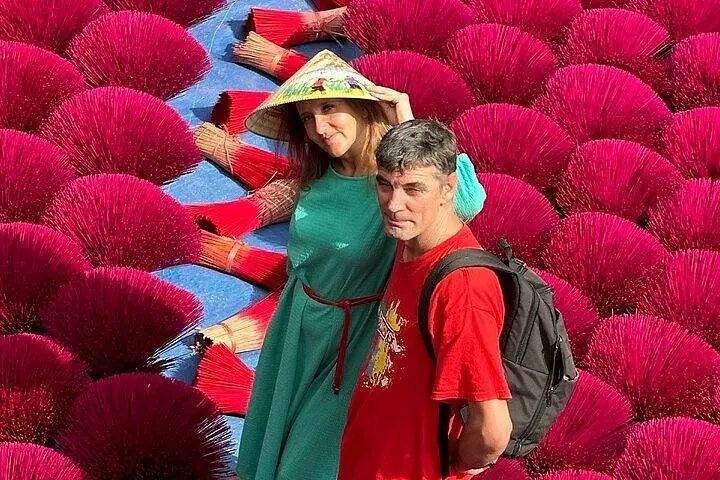
The first stop is Quang Phu Cau, where racks of bright incense sticks dry under the sun and the village hums with the rhythm of an age-old craft. Workers move with practiced motion; kumquat-orange bundles lean against low walls. From there the tour drives deeper into Ninh Binh province to Tam Coc, where a local rower takes a sampan down a slow river that slips into caves framed by stalactites and sheer karst walls. The water seems to push you forward, the cliffs crowding in like an audience.
Nearby Hoa Lu—the 10th- and 11th-century capital—offers compact temples to the Dinh and Early Le dynasties, simple stone architecture and inscriptions that map early Vietnamese statehood. Geologically, the region is classic karst: soluble limestone worn into caves, towers and subterranean passages that shape both landscape and livelihoods.
Practical guidance: expect a long day (about 9–10 hours) with two hours of driving each way. Wear closed-toe shoes for village walk-throughs, bring sun protection and a lightweight rain jacket during wet season. Carry local currency for small purchases and tips for rowers. Photography is excellent but be respectful in homes and production areas—ask before shooting close portraits. The pace is steady and accessible for most travelers, offering a compact mix of craft, scenery and history in a single well-organized day.
Frequently asked questions
The tour runs about 9–10 hours with hotel pickup in Hanoi Old Quarter between 7:15–7:45 AM and return around 6:00–6:30 PM.
Yes—an included sampan boat ride lasts roughly 60–90 minutes depending on water levels and routing through three caves.
Lunch featuring Vietnamese dishes and entrance fees for sites listed in the itinerary are included; small extras and souvenirs are not.
The tour is labeled suitable for all fitness levels; however, boarding a small boat and walking on uneven ground may be challenging for some mobility-limited travelers.
About This Experience
Authentic Travel in Vietnam operates guided outdoor trips and adventures with an emphasis on safety, stewardship, and memorable experiences.
Adventure tips
Recommended gear
- Light rain jacket: Protects against tropical showers during the wet season and wind on open roads.
- Sunhat and sunscreen: Crucial for open rice fields and time on the boat where shade is limited.
- Comfortable closed-toe shoes: Good for walking in village workshops, temple grounds and uneven riverbanks.
- Compact camera or phone with extra battery: Tam Coc and Quang Phu Cau offer prime photographic opportunities—bring extra power or storage.
Photos of the experience


Related adventures & guides
Read the full experience
Morning light pulls the minivan away from Hanoi's Old Quarter and into open road: rice paddies stretch like green plains, limestone karsts puncture the skyline, and a river threads between them daring you to come closer.
Morning light pulls the minivan away from Hanoi's Old Quarter and into open road: rice paddies stretch like green plains, limestone karsts puncture the skyline, and a river threads between them daring you to come closer.
The first stop is Quang Phu Cau, where racks of bright incense sticks dry under the sun and the village hums with the rhythm of an age-old craft. Workers move with practiced motion; kumquat-orange bundles lean against low walls. From there the tour drives deeper into Ninh Binh province to Tam Coc, where a local rower takes a sampan down a slow river that slips into caves framed by stalactites and sheer karst walls. The water seems to push you forward, the cliffs crowding in like an audience.
Nearby Hoa Lu—the 10th- and 11th-century capital—offers compact temples to the Dinh and Early Le dynasties, simple stone architecture and inscriptions that map early Vietnamese statehood. Geologically, the region is classic karst: soluble limestone worn into caves, towers and subterranean passages that shape both landscape and livelihoods.
Practical guidance: expect a long day (about 9–10 hours) with two hours of driving each way. Wear closed-toe shoes for village walk-throughs, bring sun protection and a lightweight rain jacket during wet season. Carry local currency for small purchases and tips for rowers. Photography is excellent but be respectful in homes and production areas—ask before shooting close portraits. The pace is steady and accessible for most travelers, offering a compact mix of craft, scenery and history in a single well-organized day.
Make a day of it nearby.
Verified experiences and guided adventures in the surrounding area.