THE ADVENTURE COLLECTIVE® · Independent discovery and booking for outdoor travel

Leave Hanoi’s hectic streets for a full-day tour that pairs Quang Phu Cau’s incense workshops with a sampan glide through Tam Coc’s limestone caves and the historic temples of Hoa Lu. Expect easy walking, local stories, and striking karst scenery.
Leave Hanoi’s hectic streets for a full-day tour that pairs Quang Phu Cau’s incense workshops with a sampan glide through Tam Coc’s limestone caves and the historic temples of Hoa Lu. Expect easy walking, local stories, and striking karst scenery.
Morning in Hanoi’s Old Quarter feels urgent: scooters hum, vendors call, and a small minivan eases out of the narrow streets toward open fields. Two hours later the city gives way to rice plains and stacked limestone—Ninh Binh’s karst ridges loom like weathered walls, and a ribbon of brown water dares you to follow.
Verified experiences and guided adventures in the surrounding area.
Operated by Authenitc Travel DA NANG · Ninh Binh, Ninh Binh
Morning in Hanoi’s Old Quarter feels urgent: scooters hum, vendors call, and a small minivan eases out of the narrow streets toward open fields. Two hours later the city gives way to rice plains and stacked limestone—Ninh Binh’s karst ridges loom like weathered walls, and a ribbon of brown water dares you to follow.
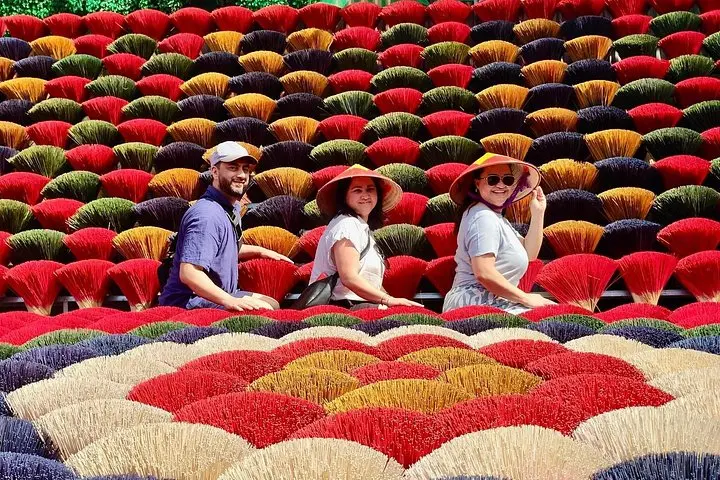
First stop is Quang Phu Cau, the incense village where rows of drying sticks create bands of color across courtyards. Here craft meets ritual: families continue a centuries-old trade that feeds altars from Hanoi to Hue. The region’s geology—limestone karst etched by rain over millennia—forms caves and tunnels you’ll pass through on a traditional sampan at Tam Coc.
The boat section is gentle but dramatic: a local rower maneuvers you under low cave mouths, past stalactites and alongside rice fields reflected in the river. Hoa Lu’s ruined temples close out the day, offering quiet stone courtyards and inscriptions tied to Vietnam’s 10th–11th century Dinh and Early Le dynasties.
Practical guidance: expect a 9–10 hour day with about four hours’ cumulative driving, mostly flat walking, and short temple climbs. Bring sun protection and cash for tips and small purchases; sandals won’t cut it for cave banks—choose sturdy, quick-dry shoes. Cameras and a small telephoto reward patient observers—kingfishers and water buffalo often appear along the riverbanks.
This is a low-impact, culturally rich day trip: move deliberately, respect temple rules, and leave the village as you found it.
Yes—pick up and drop off within Hanoi’s Old Quarter are included; confirmation email will list an exact pickup time.
The seated sampan segment typically lasts about 45–60 minutes depending on river conditions and group size.
Yes—operators can handle vegetarian, vegan, and gluten-free requests if indicated at booking.
Yes—this is an easy-paced, small-group tour with minimal walking; however, boat entry and temple steps may be challenging for mobility-limited guests.
Authenitc Travel DA NANG operates guided outdoor trips and adventures with an emphasis on safety, stewardship, and memorable experiences.



Morning in Hanoi’s Old Quarter feels urgent: scooters hum, vendors call, and a small minivan eases out of the narrow streets toward open fields. Two hours later the city gives way to rice plains and stacked limestone—Ninh Binh’s karst ridges loom like weathered walls, and a ribbon of brown water dares you to follow.
Morning in Hanoi’s Old Quarter feels urgent: scooters hum, vendors call, and a small minivan eases out of the narrow streets toward open fields. Two hours later the city gives way to rice plains and stacked limestone—Ninh Binh’s karst ridges loom like weathered walls, and a ribbon of brown water dares you to follow.
First stop is Quang Phu Cau, the incense village where rows of drying sticks create bands of color across courtyards. Here craft meets ritual: families continue a centuries-old trade that feeds altars from Hanoi to Hue. The region’s geology—limestone karst etched by rain over millennia—forms caves and tunnels you’ll pass through on a traditional sampan at Tam Coc.
The boat section is gentle but dramatic: a local rower maneuvers you under low cave mouths, past stalactites and alongside rice fields reflected in the river. Hoa Lu’s ruined temples close out the day, offering quiet stone courtyards and inscriptions tied to Vietnam’s 10th–11th century Dinh and Early Le dynasties.
Practical guidance: expect a 9–10 hour day with about four hours’ cumulative driving, mostly flat walking, and short temple climbs. Bring sun protection and cash for tips and small purchases; sandals won’t cut it for cave banks—choose sturdy, quick-dry shoes. Cameras and a small telephoto reward patient observers—kingfishers and water buffalo often appear along the riverbanks.
This is a low-impact, culturally rich day trip: move deliberately, respect temple rules, and leave the village as you found it.