THE ADVENTURE COLLECTIVE® · Independent discovery and booking for outdoor travel

Experience the buzz of freefall without the plane: two guided wind-tunnel flights in Dubai give beginners a safe, coached introduction to body-flight. Read on for what to expect, health notes, and how to prepare.
Experience the buzz of freefall without the plane: two guided wind-tunnel flights in Dubai give beginners a safe, coached introduction to body-flight. Read on for what to expect, health notes, and how to prepare.
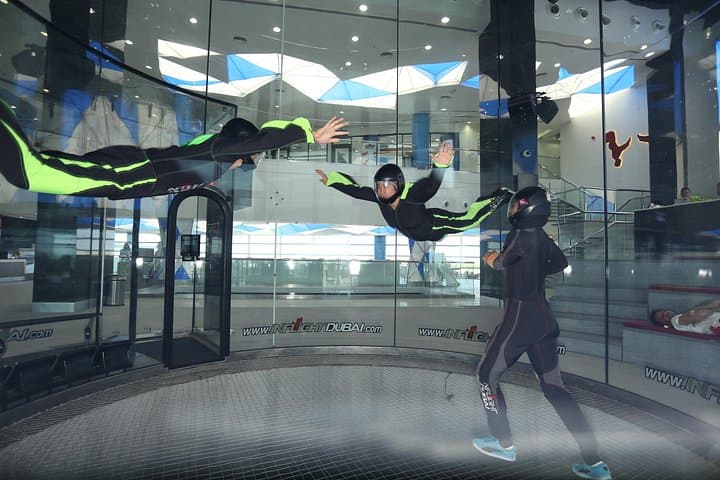
The wind greets you first — a focused, mechanical gust that fills the glass cylinder and makes the idea of falling feel strangely organized.
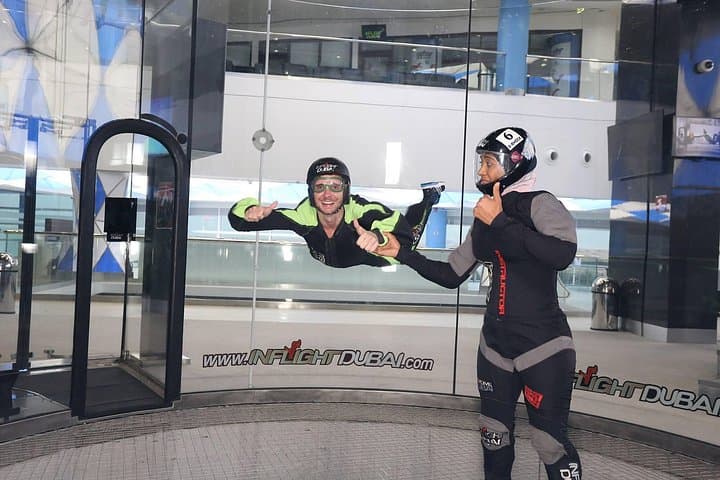
Step through the doors of a Dubai wind tunnel and the city’s skyline becomes background static; inside, gusts map to body language and every subtle wrist angle has a consequence. The session opens with a safety briefing and a short video, then a guided practice on body control before two flights that mimic the rush of freefall without altitude.
Dubai’s appetite for engineered experiences grew alongside its skyscrapers and reclaimed shorelines; indoor skydiving fits that arc, a controlled piece of flight carved out of modern entertainment infrastructure. Geologically, you’re still in a young coastal plain beside the Persian Gulf — sand and wind have shaped the emirate’s culture of mobility and spectacle — but here the flight is made by turbines, not thermals.
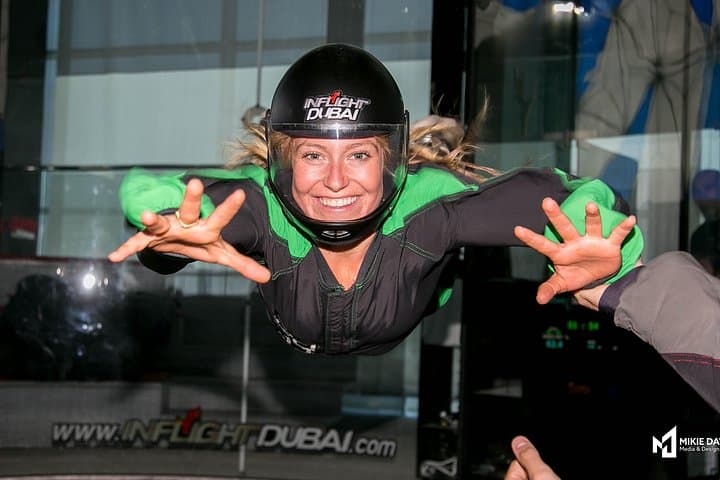
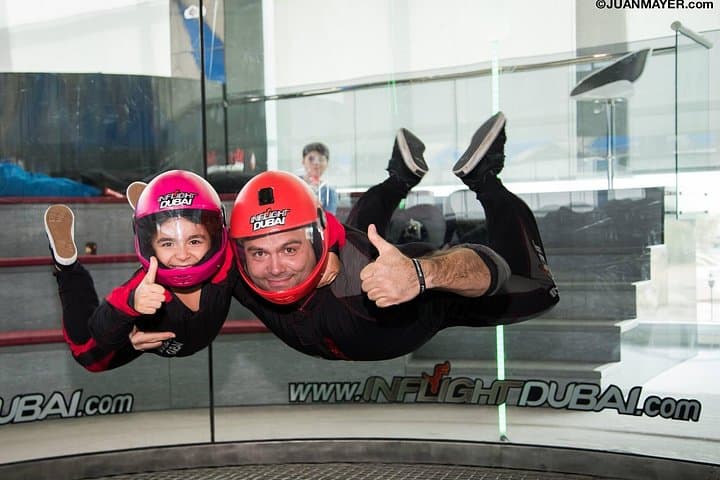
Culturally, the tunnel draws families, corporate groups and repeat flyers refining technique under instructor guidance. Expect clear safety protocols: helmets, flight suits and a short debrief with a certificate.
Practically, plan to arrive 45 minutes early for check-in, wear lace-up sports shoes and leave jewelry in a locker. The training covers body posture, hand signals and exits; instructors tailor coaching to beginners and return flyers alike. Health restrictions (pregnancy, serious back or heart issues) and weight limits are enforced for safety. After two flights you’ll have a feel for terminal velocity without the logistics of a plane or drop zone — a compact, high-adrenaline taste of flight in the heart of Dubai.
Verified experiences and guided adventures in the surrounding area.
Operated by Inflight Dubai · Dubai, Dubai
The wind greets you first — a focused, mechanical gust that fills the glass cylinder and makes the idea of falling feel strangely organized.
Step through the doors of a Dubai wind tunnel and the city’s skyline becomes background static; inside, gusts map to body language and every subtle wrist angle has a consequence. The session opens with a safety briefing and a short video, then a guided practice on body control before two flights that mimic the rush of freefall without altitude.
Dubai’s appetite for engineered experiences grew alongside its skyscrapers and reclaimed shorelines; indoor skydiving fits that arc, a controlled piece of flight carved out of modern entertainment infrastructure. Geologically, you’re still in a young coastal plain beside the Persian Gulf — sand and wind have shaped the emirate’s culture of mobility and spectacle — but here the flight is made by turbines, not thermals.
Culturally, the tunnel draws families, corporate groups and repeat flyers refining technique under instructor guidance. Expect clear safety protocols: helmets, flight suits and a short debrief with a certificate.
Practically, plan to arrive 45 minutes early for check-in, wear lace-up sports shoes and leave jewelry in a locker. The training covers body posture, hand signals and exits; instructors tailor coaching to beginners and return flyers alike. Health restrictions (pregnancy, serious back or heart issues) and weight limits are enforced for safety. After two flights you’ll have a feel for terminal velocity without the logistics of a plane or drop zone — a compact, high-adrenaline taste of flight in the heart of Dubai.
Minimum age varies by operator; many accept children aged 3–4 with guardian approval and special junior instructions — check at booking.
Yes — most facilities have an upper weight limit for safe flight and instructor control; provide accurate weight when booking.
No — indoor skydiving is not recommended for pregnant participants due to the forces and safety restraints involved.
Each wind-tunnel flight is typically 60–90 seconds of sustained airtime; the full session including briefing and gearing takes about 90 minutes.
Inflight Dubai operates guided outdoor trips and adventures with an emphasis on safety, stewardship, and memorable experiences.
The wind greets you first — a focused, mechanical gust that fills the glass cylinder and makes the idea of falling feel strangely organized.
Step through the doors of a Dubai wind tunnel and the city’s skyline becomes background static; inside, gusts map to body language and every subtle wrist angle has a consequence. The session opens with a safety briefing and a short video, then a guided practice on body control before two flights that mimic the rush of freefall without altitude.
Dubai’s appetite for engineered experiences grew alongside its skyscrapers and reclaimed shorelines; indoor skydiving fits that arc, a controlled piece of flight carved out of modern entertainment infrastructure. Geologically, you’re still in a young coastal plain beside the Persian Gulf — sand and wind have shaped the emirate’s culture of mobility and spectacle — but here the flight is made by turbines, not thermals.
Culturally, the tunnel draws families, corporate groups and repeat flyers refining technique under instructor guidance. Expect clear safety protocols: helmets, flight suits and a short debrief with a certificate.
Practically, plan to arrive 45 minutes early for check-in, wear lace-up sports shoes and leave jewelry in a locker. The training covers body posture, hand signals and exits; instructors tailor coaching to beginners and return flyers alike. Health restrictions (pregnancy, serious back or heart issues) and weight limits are enforced for safety. After two flights you’ll have a feel for terminal velocity without the logistics of a plane or drop zone — a compact, high-adrenaline taste of flight in the heart of Dubai.