THE ADVENTURE COLLECTIVE® · Independent discovery and booking for outdoor travel

Board a small skiff and fish the shallow channels of the Drangefjord under the guidance of a local angler. Learn traditional pots and troll nets while watching for seals and sea trout in a glacially carved coastal landscape.
Board a small skiff and fish the shallow channels of the Drangefjord under the guidance of a local angler. Learn traditional pots and troll nets while watching for seals and sea trout in a glacially carved coastal landscape.
You push off from a low quay and the fjord opens like a cool, moving plain — shallow channels rimmed by rocky skerries and low farms that once fed Viking crews. The boat slips over a thin freshwater lens on the surface, a telltale sign the Drangefjord is fed by many small rivers; the guide nods toward a seal sunning on a rock and readies a rod.
Verified experiences and guided adventures in the surrounding area.
You push off from a low quay and the fjord opens like a cool, moving plain — shallow channels rimmed by rocky skerries and low farms that once fed Viking crews. The boat slips over a thin freshwater lens on the surface, a telltale sign the Drangefjord is fed by many small rivers; the guide nods toward a seal sunning on a rock and readies a rod.
This stretch of Norway carries a visible human history: scattered Viking-age homesteads and shoreline boathouses that show a long relationship between people and fish. Geologically the Drangefjord is a glacial carve — low cliffs, sheltered coves and sudden deep troughs where sea trout hunt. Local culture still favors hands-on methods: pots, troll nets and shore-set gear that have changed little in a century.
On a typical 2.5-hour inshore trip you’ll learn to set a line, try light trolling and check a small pot while the guide explains where sea trout concentrate and why cod and mackerel visit in different seasons. Expect short transits between productive coves; the action can switch from calm casting to quick, technical strikes.
Practicalities: dress windproof and waterproof, bring layered clothing and a small dry bag for camera and phone. Morning and late afternoon are prime for light and feeding fish; summer brings mackerel, spring and early autumn are best for sea trout. The operator supplies lifejackets and local expertise — you supply steady footing, patience and a camera. Respect haul-out sites, follow catch rules and be ready for brisk coastal weather: the fjord can change mood in minutes.
Most guided inshore trips include licenses for the vessel and guide; confirm with the operator for personal catch rules and any regional permits.
Many operators allow children but expect parental supervision; communicate ages in advance so the guide can prepare appropriate gear and safety briefings.
Common targets in Drangefjord include sea trout, cod, mackerel, garfish and seasonal catches like sole or ling; spider crabs may appear around pots.
Yes — the outing offers wildlife viewing, local history and short shore stops, making it accessible to companions who prefer observation over fishing.
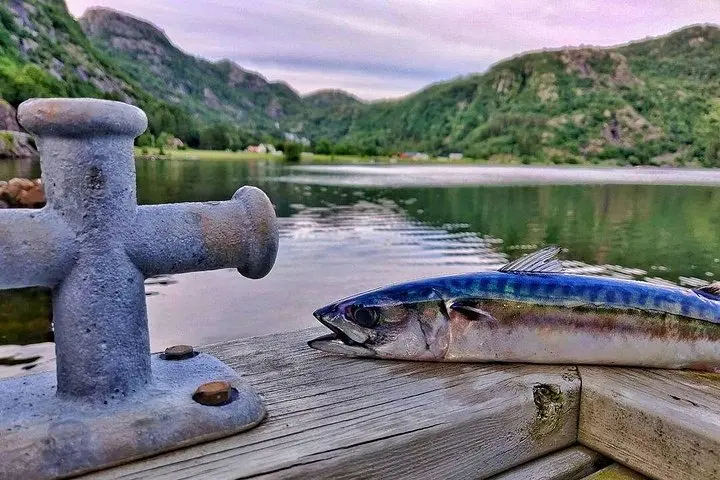
You push off from a low quay and the fjord opens like a cool, moving plain — shallow channels rimmed by rocky skerries and low farms that once fed Viking crews. The boat slips over a thin freshwater lens on the surface, a telltale sign the Drangefjord is fed by many small rivers; the guide nods toward a seal sunning on a rock and readies a rod.
You push off from a low quay and the fjord opens like a cool, moving plain — shallow channels rimmed by rocky skerries and low farms that once fed Viking crews. The boat slips over a thin freshwater lens on the surface, a telltale sign the Drangefjord is fed by many small rivers; the guide nods toward a seal sunning on a rock and readies a rod.
This stretch of Norway carries a visible human history: scattered Viking-age homesteads and shoreline boathouses that show a long relationship between people and fish. Geologically the Drangefjord is a glacial carve — low cliffs, sheltered coves and sudden deep troughs where sea trout hunt. Local culture still favors hands-on methods: pots, troll nets and shore-set gear that have changed little in a century.
On a typical 2.5-hour inshore trip you’ll learn to set a line, try light trolling and check a small pot while the guide explains where sea trout concentrate and why cod and mackerel visit in different seasons. Expect short transits between productive coves; the action can switch from calm casting to quick, technical strikes.
Practicalities: dress windproof and waterproof, bring layered clothing and a small dry bag for camera and phone. Morning and late afternoon are prime for light and feeding fish; summer brings mackerel, spring and early autumn are best for sea trout. The operator supplies lifejackets and local expertise — you supply steady footing, patience and a camera. Respect haul-out sites, follow catch rules and be ready for brisk coastal weather: the fjord can change mood in minutes.