THE ADVENTURE COLLECTIVE® · Independent discovery and booking for outdoor travel

Step inside Anfield and trace Liverpool FC’s rise from local club to trophy heavyweight. This concise guide covers what you’ll see, how to plan your visit, and the practical tips to make the most of your museum entry.
Step inside Anfield and trace Liverpool FC’s rise from local club to trophy heavyweight. This concise guide covers what you’ll see, how to plan your visit, and the practical tips to make the most of your museum entry.
You step off the city street and into a corridor of chants and colour—the stadium’s concrete arms rise above you, and the museum’s glass and steel breathes modernity into a place shaped by decades of devotion.
Verified experiences and guided adventures in the surrounding area.
Operated by Anfield Stadium · Liverpool, Merseyside
You step off the city street and into a corridor of chants and colour—the stadium’s concrete arms rise above you, and the museum’s glass and steel breathes modernity into a place shaped by decades of devotion.
The LFC Museum maps Liverpool’s football story from its 1892 foundation through managerial icons and trophy-laden eras. Exhibits move from early kit designs to a rare room where major trophies sit together, and the new “Champions” display captures the 2024/25 season with interactive moments and a Premier League trophy on view. The museum sits at Anfield, on the eastern edge of the Mersey estuary; Liverpool’s docks and reclaimed foreshore shaped the city’s industrial age and the community that backed this club.
Expect culture as much as chronology: the museum records working-class identity, managerial personalities, and fan rituals that pulse through matchdays. Architecturally, the space balances preserved matchday artefacts with contemporary exhibition technology, and it's fully accessible for visitors with mobility needs.
Practical guidance: allow 30–60 minutes for a focused visit; book a mobile ticket and arrive early to avoid match-day restrictions (last entry varies). Bags are checked, food and drink aren’t permitted, and children must be accompanied. Public transport links are strong; Stanley Park car park is the primary paid parking option on non-match days. Combine this stop with a walk around the Kop, the Shankly Gates and nearby Stanley Park for a fuller sense of place. Comfortable shoes, your camera, and a charged phone for interactive exhibits will make the visit smooth and memorable.
Allocate 30–60 minutes for the museum; fans who read every display or add a stadium tour should plan more time.
Yes—the museum is wheelchair accessible with level surfaces and facilities; check with staff for any specific assistance needs.
Yes, but last entry on match days is generally one hour before kick-off and some areas may be restricted—confirm match schedules before booking.
Photography of most displays is allowed for personal use, but flash or large tripods may be restricted and certain exhibits may be off-limits.
Anfield Stadium operates guided outdoor trips and adventures with an emphasis on safety, stewardship, and memorable experiences.
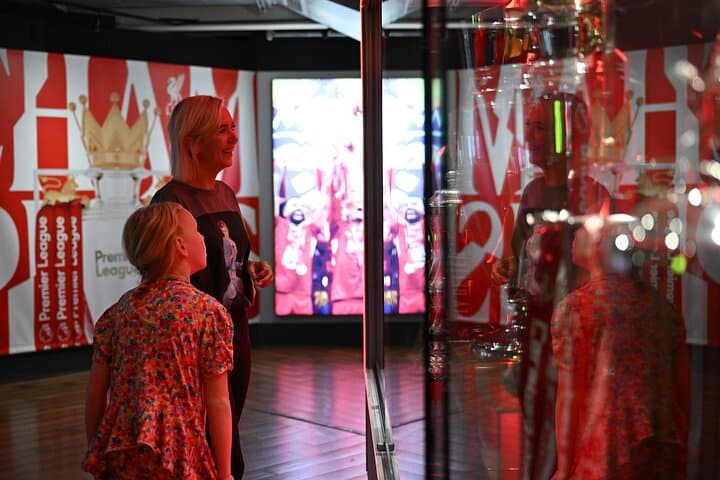



You step off the city street and into a corridor of chants and colour—the stadium’s concrete arms rise above you, and the museum’s glass and steel breathes modernity into a place shaped by decades of devotion.
You step off the city street and into a corridor of chants and colour—the stadium’s concrete arms rise above you, and the museum’s glass and steel breathes modernity into a place shaped by decades of devotion.
The LFC Museum maps Liverpool’s football story from its 1892 foundation through managerial icons and trophy-laden eras. Exhibits move from early kit designs to a rare room where major trophies sit together, and the new “Champions” display captures the 2024/25 season with interactive moments and a Premier League trophy on view. The museum sits at Anfield, on the eastern edge of the Mersey estuary; Liverpool’s docks and reclaimed foreshore shaped the city’s industrial age and the community that backed this club.
Expect culture as much as chronology: the museum records working-class identity, managerial personalities, and fan rituals that pulse through matchdays. Architecturally, the space balances preserved matchday artefacts with contemporary exhibition technology, and it's fully accessible for visitors with mobility needs.
Practical guidance: allow 30–60 minutes for a focused visit; book a mobile ticket and arrive early to avoid match-day restrictions (last entry varies). Bags are checked, food and drink aren’t permitted, and children must be accompanied. Public transport links are strong; Stanley Park car park is the primary paid parking option on non-match days. Combine this stop with a walk around the Kop, the Shankly Gates and nearby Stanley Park for a fuller sense of place. Comfortable shoes, your camera, and a charged phone for interactive exhibits will make the visit smooth and memorable.