THE ADVENTURE COLLECTIVE® · Independent discovery and booking for outdoor travel

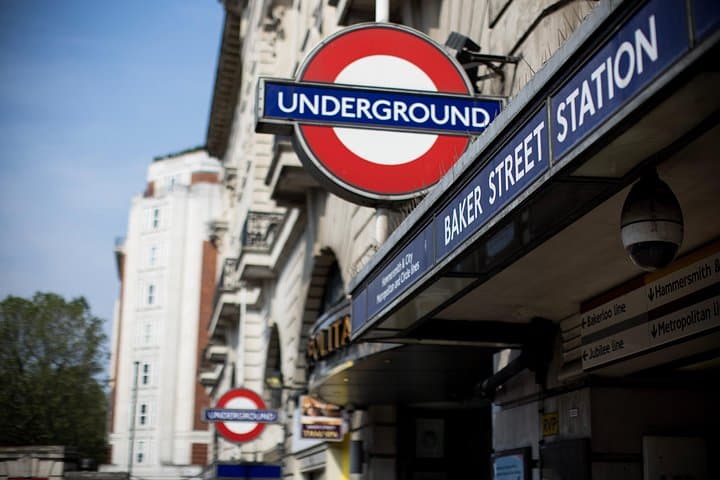
Go beyond the public platforms on an 85‑minute guided tour of Baker Street station to explore original 19th‑century platforms, disused lift shafts and rooms closed to visitors for decades. This is a physically active, history-rich look at the world’s first underground railway.
Go beyond the public platforms on an 85‑minute guided tour of Baker Street station to explore original 19th‑century platforms, disused lift shafts and rooms closed to visitors for decades. This is a physically active, history-rich look at the world’s first underground railway.
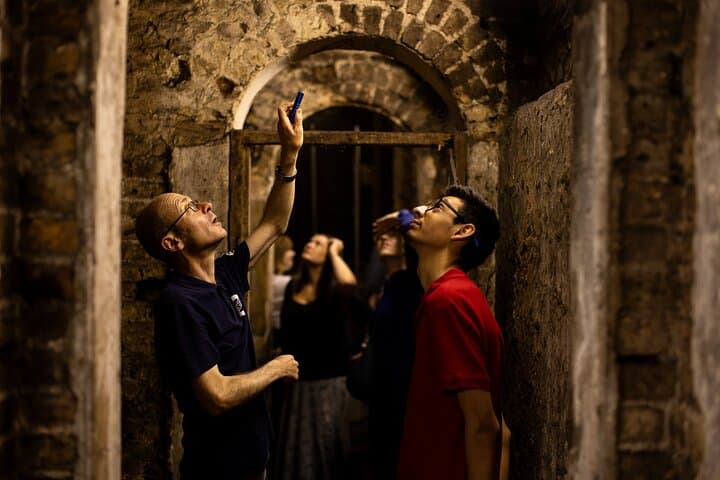
You step from traffic into a cooler, dim corridor and the city's noise thins to a distant echo — Baker Street's older platforms smell faintly of oil, brick and the human rhythm of a hundred years of commuting.
Verified experiences and guided adventures in the surrounding area.
Operated by London Transport Museum · London, Greater London
You step from traffic into a cooler, dim corridor and the city's noise thins to a distant echo — Baker Street's older platforms smell faintly of oil, brick and the human rhythm of a hundred years of commuting.
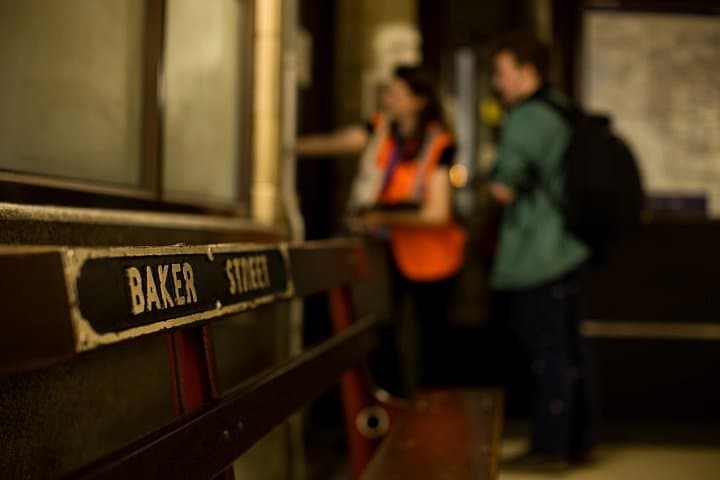
On this guided walk through closed parts of Baker Street station you move through spaces the public hasn't seen since 1945: original platform faces, disused lift shafts and low-lit service corridors. The story is physical — the Metropolitan Railway opened in January 1863 to cut a 90-minute surface journey down to 20 minutes, and the station later served as an operational hub for an expanding network.
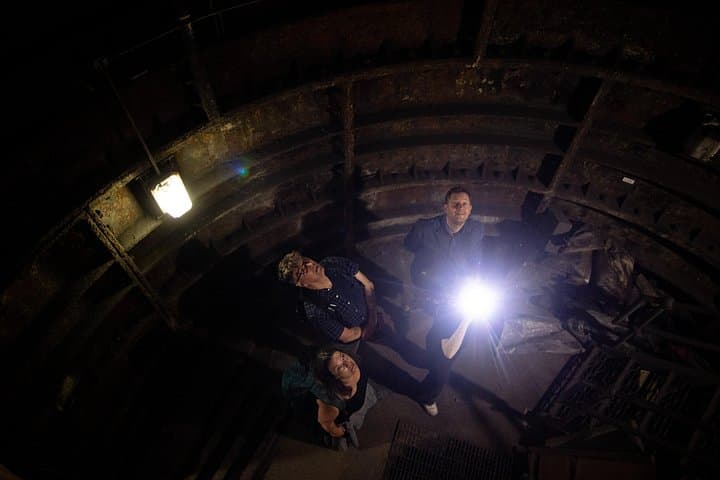
Geology and engineering sit close together here; cut-and-cover construction through London Clay and hand-laid brick vaulting shaped the tunnels, while later steel and concrete retrofits kept the line running beneath a growing city. Cultural footnotes shadow the route too — the station sits in a city of neighborhoods, from Victorian commuting culture to the Sherlock Holmes associations that color Baker Street's identity.
Practicalities matter: the tour is 85 minutes, includes many stairs and uneven ground, and reaches poorly lit, confined spaces. Guides pace the group through stepped passages and rooms once used for signal control and wartime coordination. Expect walking, close quarters, and a focus on historic detail rather than modern comforts.
Bring photo ID, wear closed-toe shoes, travel light and arrive ready for stairs. The experience rewards curiosity — you come away with a tactile sense of how London's Underground was born and how infrastructure shapes urban life.
Tours are not suitable for children under 10; a maximum of four children aged 10–15 are allowed per adult.
No — the route includes many stairs, no elevators and uneven ground; it is not step-free.
Photography may be restricted in some areas; follow the guide’s instructions and do not use flash where prohibited.
For a full refund cancel at least 24 hours before departure; tours may be cancelled if minimum participant numbers aren’t met.
London Transport Museum operates guided outdoor trips and adventures with an emphasis on safety, stewardship, and memorable experiences.
You step from traffic into a cooler, dim corridor and the city's noise thins to a distant echo — Baker Street's older platforms smell faintly of oil, brick and the human rhythm of a hundred years of commuting.
You step from traffic into a cooler, dim corridor and the city's noise thins to a distant echo — Baker Street's older platforms smell faintly of oil, brick and the human rhythm of a hundred years of commuting.
On this guided walk through closed parts of Baker Street station you move through spaces the public hasn't seen since 1945: original platform faces, disused lift shafts and low-lit service corridors. The story is physical — the Metropolitan Railway opened in January 1863 to cut a 90-minute surface journey down to 20 minutes, and the station later served as an operational hub for an expanding network.
Geology and engineering sit close together here; cut-and-cover construction through London Clay and hand-laid brick vaulting shaped the tunnels, while later steel and concrete retrofits kept the line running beneath a growing city. Cultural footnotes shadow the route too — the station sits in a city of neighborhoods, from Victorian commuting culture to the Sherlock Holmes associations that color Baker Street's identity.
Practicalities matter: the tour is 85 minutes, includes many stairs and uneven ground, and reaches poorly lit, confined spaces. Guides pace the group through stepped passages and rooms once used for signal control and wartime coordination. Expect walking, close quarters, and a focus on historic detail rather than modern comforts.
Bring photo ID, wear closed-toe shoes, travel light and arrive ready for stairs. The experience rewards curiosity — you come away with a tactile sense of how London's Underground was born and how infrastructure shapes urban life.