THE ADVENTURE COLLECTIVE® · Independent discovery and booking for outdoor travel
Cool stone and renewed lighting frame a 200‑meter walk through stalactites and narrow passageways—Cave Okinawa is an accessible karst grotto close to Ishikawa Interchange. Read on for what to expect, practical tips, and seasonal notes for planning.
Cool stone and renewed lighting frame a 200‑meter walk through stalactites and narrow passageways—Cave Okinawa is an accessible karst grotto close to Ishikawa Interchange. Read on for what to expect, practical tips, and seasonal notes for planning.
You step off the roadside under Okinawa's humid air and descend a short ramp into cool stone—lighted passageways carve a narrow world of gray and bronze where drops from the ceiling keep time. The route through Cave Okinawa runs about 200 meters; the lighting has been refreshed, so shadowed columns and thin stalactites stand out like slow-moving sculptures.
Verified experiences and guided adventures in the surrounding area.
Operated by CAVE OKINAWA · Uruma, Okinawa
You step off the roadside under Okinawa's humid air and descend a short ramp into cool stone—lighted passageways carve a narrow world of gray and bronze where drops from the ceiling keep time. The route through Cave Okinawa runs about 200 meters; the lighting has been refreshed, so shadowed columns and thin stalactites stand out like slow-moving sculptures.
The cave is part of the Ryukyu Islands' limestone bedrock, formed when corals and marine sediments were lifted by tectonic activity over tens of thousands of years. Locally guided interpretation is minimal, so the exhibit relies on interpretive lighting and the natural shapes to tell the geological story. The site sits near Ishikawa Interchange and is a practical rainy-day stop between beach visits and castle ruins.
Inside, the air is cool and steady; the cave's quiet seems to watch visitors rather than the other way around. Bats and cave insects keep their distance from the well-trafficked path, and management has built straightforward railings and walkways to protect delicate formations.
Practical guidance: allow 30–45 minutes for the visit, including entry and a brief photo stop. Wear closed-toe shoes—steps and narrow sections are uneven. Photography is allowed but avoid flash close to fragile flowstone. The cave is family-friendly but not recommended for people with serious back or heart conditions; last admission is typically 17:00. Tickets are purchased on site, and the location may not appear on all in-car navigation systems—check Google Maps or ask locally for the Ishikawa interchange directions.
Plan 30–45 minutes for the caves themselves; allow extra time for parking and ticketing.
No—walk-up tickets are available on site during business hours (last entry typically 17:00).
The route has steps and narrow sections; it is not fully wheelchair accessible and strollers may be difficult in spots.
Admission applies to ages 3 and up; the site advises against visiting if you have serious back, heart, or pregnancy-related health concerns.
CAVE OKINAWA operates guided outdoor trips and adventures with an emphasis on safety, stewardship, and memorable experiences.
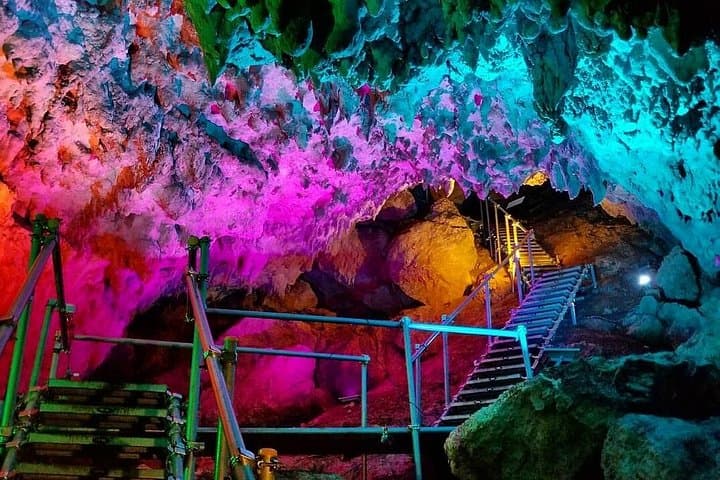
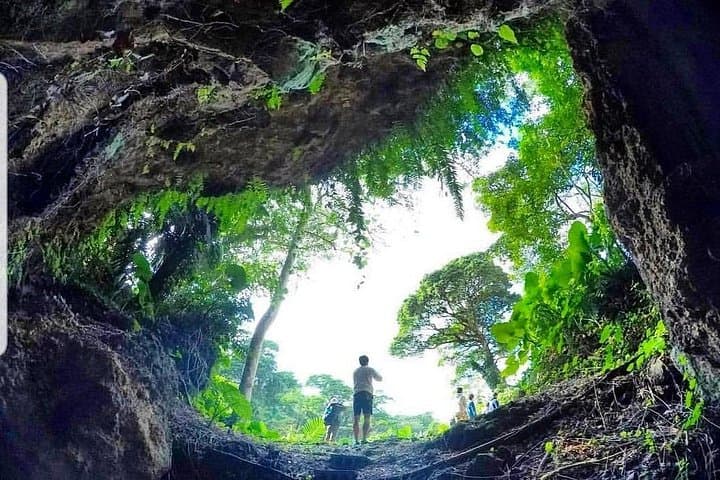
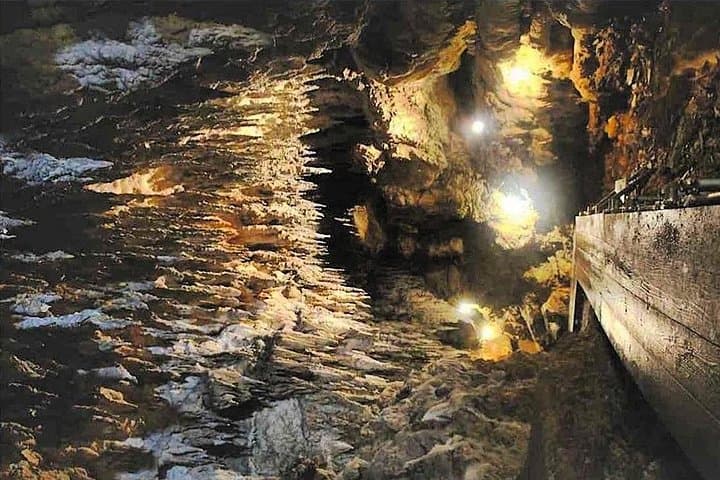
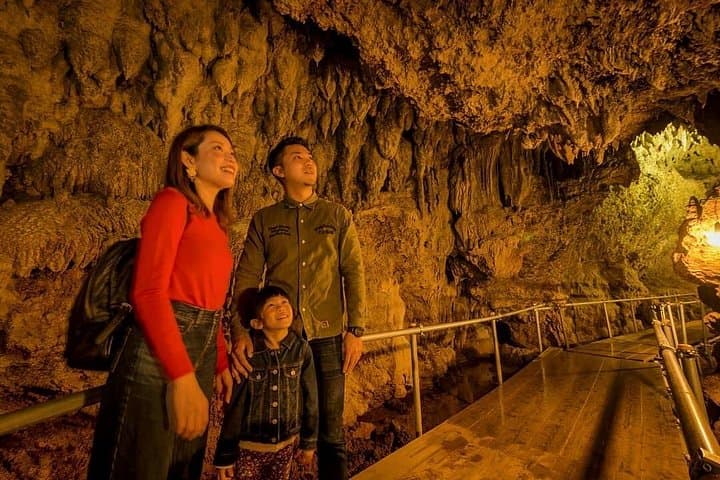
You step off the roadside under Okinawa's humid air and descend a short ramp into cool stone—lighted passageways carve a narrow world of gray and bronze where drops from the ceiling keep time. The route through Cave Okinawa runs about 200 meters; the lighting has been refreshed, so shadowed columns and thin stalactites stand out like slow-moving sculptures.
You step off the roadside under Okinawa's humid air and descend a short ramp into cool stone—lighted passageways carve a narrow world of gray and bronze where drops from the ceiling keep time. The route through Cave Okinawa runs about 200 meters; the lighting has been refreshed, so shadowed columns and thin stalactites stand out like slow-moving sculptures.
The cave is part of the Ryukyu Islands' limestone bedrock, formed when corals and marine sediments were lifted by tectonic activity over tens of thousands of years. Locally guided interpretation is minimal, so the exhibit relies on interpretive lighting and the natural shapes to tell the geological story. The site sits near Ishikawa Interchange and is a practical rainy-day stop between beach visits and castle ruins.
Inside, the air is cool and steady; the cave's quiet seems to watch visitors rather than the other way around. Bats and cave insects keep their distance from the well-trafficked path, and management has built straightforward railings and walkways to protect delicate formations.
Practical guidance: allow 30–45 minutes for the visit, including entry and a brief photo stop. Wear closed-toe shoes—steps and narrow sections are uneven. Photography is allowed but avoid flash close to fragile flowstone. The cave is family-friendly but not recommended for people with serious back or heart conditions; last admission is typically 17:00. Tickets are purchased on site, and the location may not appear on all in-car navigation systems—check Google Maps or ask locally for the Ishikawa interchange directions.
