THE ADVENTURE COLLECTIVE® · Independent discovery and booking for outdoor travel

A focused, educational visit to Delhi’s Sulabh Museum of Toilets that combines social history, public-health context and quirky artifacts. Perfect for travelers curious about the intersection of daily life and infrastructure.
A focused, educational visit to Delhi’s Sulabh Museum of Toilets that combines social history, public-health context and quirky artifacts. Perfect for travelers curious about the intersection of daily life and infrastructure.
You step through a modest gate into a museum that reframes an everyday object as cultural evidence: toilets of clay, stone and brass line small rooms, each one a chapter in how societies managed waste and public life.
Verified experiences and guided adventures in the surrounding area.
Operated by SITA World Tours · New Delhi, Delhi
You step through a modest gate into a museum that reframes an everyday object as cultural evidence: toilets of clay, stone and brass line small rooms, each one a chapter in how societies managed waste and public life.
The Sulabh International Museum of Toilets breaks its exhibits into Ancient, Medieval and Modern sections—Harappan brick drains and private latrines give way to princely commodes and, finally, the quirky inventions and public sanitation campaigns of the 20th century. The collection reads like social history: plumbing and privacy, public health policy and the technology that enabled urban growth.
Culturally, the museum confronts a global problem—billions without safe sanitation—while showcasing local responses from India’s villages to urban complexes. Geology is subtle here: materials and construction techniques reflect available stone, brick and metalworking traditions across eras. Expect clear labels, cartoon panels in the modern gallery, and scale models that explain how sanitation infrastructure scales from homes to pilgrimage sites.
Practicalities: the visit is short—plan 60–90 minutes for exhibits plus time for questions. Most visitors arrive by hotel transfer; the tour includes two bottles of water, an English-speaking guide and lunch at a nearby restaurant (beverages extra). Mobility is generally accessible but some displays require standing and light walking; the operator advises moderate fitness.
Timing matters: morning visits avoid Delhi’s heat and the post-lunch crowds at central attractions. Bring a hat, comfortable shoes, and an open curiosity—this is a tour that mixes social history with public-health urgency, and leaves you with surprising details about a part of daily life many take for granted.
The guided visit typically lasts 60–90 minutes; the full tour including transfers and lunch runs about 2–3 hours.
Children under 15 must be accompanied by an adult; exhibits are educational but some displays may be sensitive for very young kids.
Yes—this tour includes private air-conditioned hotel pickup and drop-off as listed in the inclusions.
No—lunch is included but beverages at the restaurant are not, so plan to pay separately for drinks.
SITA World Tours operates guided outdoor trips and adventures with an emphasis on safety, stewardship, and memorable experiences.


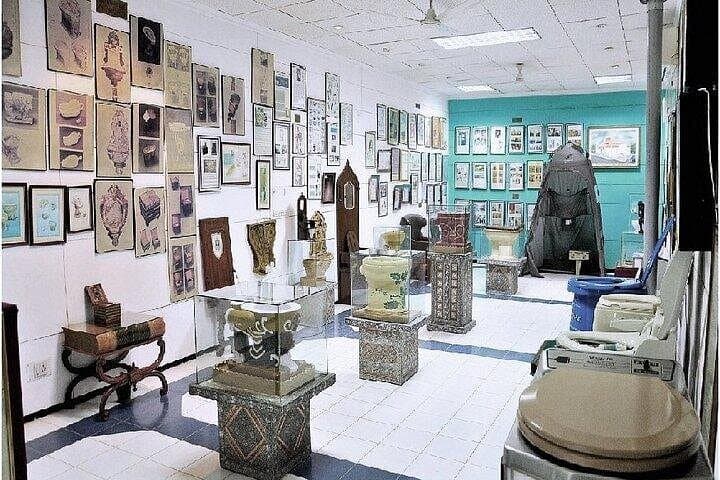
You step through a modest gate into a museum that reframes an everyday object as cultural evidence: toilets of clay, stone and brass line small rooms, each one a chapter in how societies managed waste and public life.
You step through a modest gate into a museum that reframes an everyday object as cultural evidence: toilets of clay, stone and brass line small rooms, each one a chapter in how societies managed waste and public life.
The Sulabh International Museum of Toilets breaks its exhibits into Ancient, Medieval and Modern sections—Harappan brick drains and private latrines give way to princely commodes and, finally, the quirky inventions and public sanitation campaigns of the 20th century. The collection reads like social history: plumbing and privacy, public health policy and the technology that enabled urban growth.
Culturally, the museum confronts a global problem—billions without safe sanitation—while showcasing local responses from India’s villages to urban complexes. Geology is subtle here: materials and construction techniques reflect available stone, brick and metalworking traditions across eras. Expect clear labels, cartoon panels in the modern gallery, and scale models that explain how sanitation infrastructure scales from homes to pilgrimage sites.
Practicalities: the visit is short—plan 60–90 minutes for exhibits plus time for questions. Most visitors arrive by hotel transfer; the tour includes two bottles of water, an English-speaking guide and lunch at a nearby restaurant (beverages extra). Mobility is generally accessible but some displays require standing and light walking; the operator advises moderate fitness.
Timing matters: morning visits avoid Delhi’s heat and the post-lunch crowds at central attractions. Bring a hat, comfortable shoes, and an open curiosity—this is a tour that mixes social history with public-health urgency, and leaves you with surprising details about a part of daily life many take for granted.