THE ADVENTURE COLLECTIVE® · Independent discovery and booking for outdoor travel

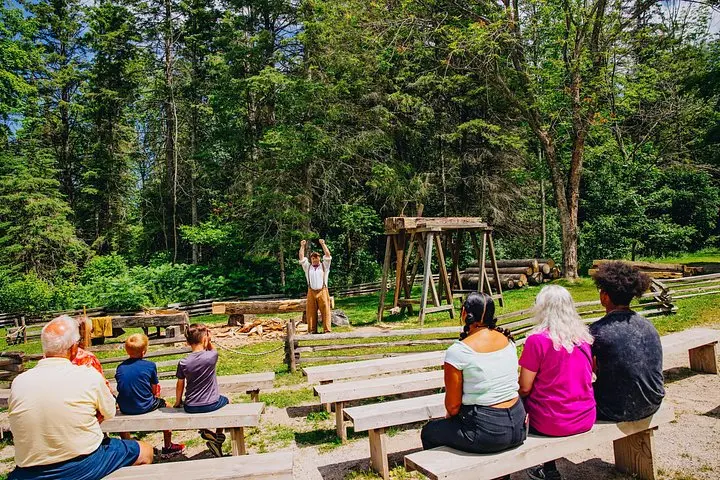
Step inside Dousman’s Mill and feel Mill Creek power a reconstructed sawmill while sawyers demonstrate historic pit-saw techniques. This short, accessible visit pairs living-history demos with easy trails and hands-on workshops that bring 19th-century lumber culture to life.
Step inside Dousman’s Mill and feel Mill Creek power a reconstructed sawmill while sawyers demonstrate historic pit-saw techniques. This short, accessible visit pairs living-history demos with easy trails and hands-on workshops that bring 19th-century lumber culture to life.
The air tastes faintly of iron and fresh-cut pine as Mill Creek nudges its way under the millrace, pushing the reconstructed sawblade to life. Sunlight finds the sawdust in the rafters; the creek dares you to stand close and feel the rhythm of water turned into work. A sawyer calls out a cut and the pit saw responds, teeth flashing like a clock that counts the region’s logging era.
Verified experiences and guided adventures in the surrounding area.
Operated by Fort Mackinac · Mackinaw City, Michigan
The air tastes faintly of iron and fresh-cut pine as Mill Creek nudges its way under the millrace, pushing the reconstructed sawblade to life. Sunlight finds the sawdust in the rafters; the creek dares you to stand close and feel the rhythm of water turned into work. A sawyer calls out a cut and the pit saw responds, teeth flashing like a clock that counts the region’s logging era.
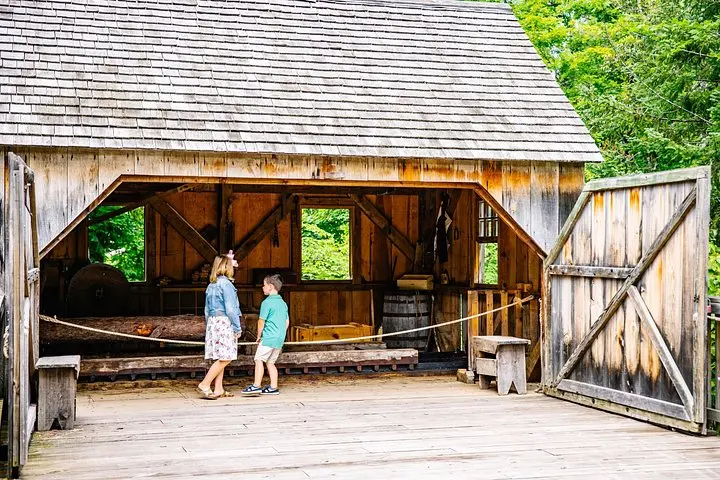
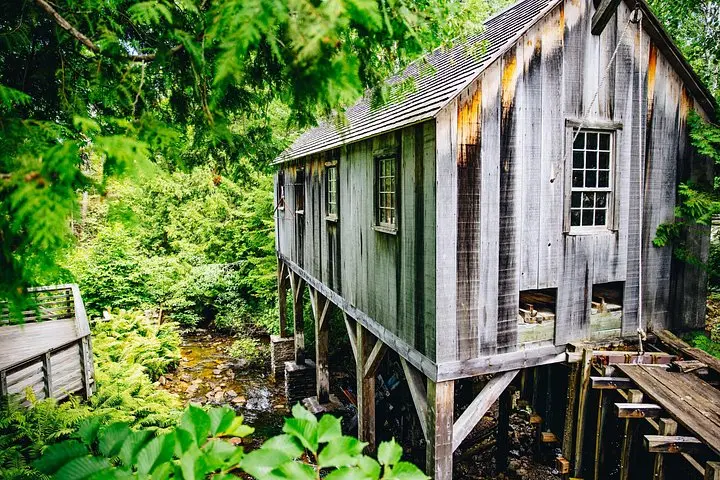
Dousman’s Mill sits where 19th-century timber and industry met the Great Lakes shoreline. The mill demonstrates pit-saw techniques and water-powered cutting that fueled local shipbuilding and frontier towns. Geologically, the site is shaped by glacial sculpting—low moraines and sandy soils channel Mill Creek toward the Straits of Mackinac, giving the mill its steady flow. Nearby workshops display period tools and daily-life artifacts that point to the hard, communal culture of the North Woods.
On the practical side, plan 1–4 hours: demonstrations run on a schedule and ranger-led programs deepen the story. Trails in Mill Creek State Park total roughly three miles of groomed routes with minimal elevation gain—good for families and accessible paths. Parking fees are listed as part of admission; the site is wheelchair- and stroller-accessible, and service animals are permitted. Wear sturdy shoes for the uneven boardwalks, bring a layered jacket for cool creek breezes, and pack water—there are photo opportunities at the wheelhouse and along shaded stream bends. Aim for morning programs for quieter trails and stronger light for photos.
The experience is short on strain and long on context: you leave with an understanding of how a small creek powered a region’s industry and the echo of sawdust in the air.
Plan 1–4 hours depending on whether you attend demonstrations and explore the three miles of groomed trails in Mill Creek State Park.
Demonstrations run on a set schedule; check the park’s daily program times and arrive early for the best viewing spots.
Yes—Dousman’s Mill is listed as wheelchair- and stroller-accessible, though some historic surfaces may be uneven.
Service animals are permitted; general pet policies follow park rules, so check locally if you plan to bring a pet.
Fort Mackinac operates guided outdoor trips and adventures with an emphasis on safety, stewardship, and memorable experiences.
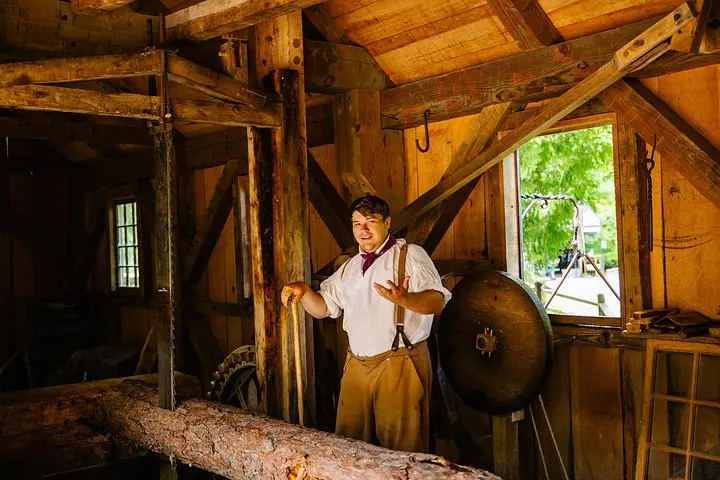
The air tastes faintly of iron and fresh-cut pine as Mill Creek nudges its way under the millrace, pushing the reconstructed sawblade to life. Sunlight finds the sawdust in the rafters; the creek dares you to stand close and feel the rhythm of water turned into work. A sawyer calls out a cut and the pit saw responds, teeth flashing like a clock that counts the region’s logging era.
The air tastes faintly of iron and fresh-cut pine as Mill Creek nudges its way under the millrace, pushing the reconstructed sawblade to life. Sunlight finds the sawdust in the rafters; the creek dares you to stand close and feel the rhythm of water turned into work. A sawyer calls out a cut and the pit saw responds, teeth flashing like a clock that counts the region’s logging era.
Dousman’s Mill sits where 19th-century timber and industry met the Great Lakes shoreline. The mill demonstrates pit-saw techniques and water-powered cutting that fueled local shipbuilding and frontier towns. Geologically, the site is shaped by glacial sculpting—low moraines and sandy soils channel Mill Creek toward the Straits of Mackinac, giving the mill its steady flow. Nearby workshops display period tools and daily-life artifacts that point to the hard, communal culture of the North Woods.
On the practical side, plan 1–4 hours: demonstrations run on a schedule and ranger-led programs deepen the story. Trails in Mill Creek State Park total roughly three miles of groomed routes with minimal elevation gain—good for families and accessible paths. Parking fees are listed as part of admission; the site is wheelchair- and stroller-accessible, and service animals are permitted. Wear sturdy shoes for the uneven boardwalks, bring a layered jacket for cool creek breezes, and pack water—there are photo opportunities at the wheelhouse and along shaded stream bends. Aim for morning programs for quieter trails and stronger light for photos.
The experience is short on strain and long on context: you leave with an understanding of how a small creek powered a region’s industry and the echo of sawdust in the air.