THE ADVENTURE COLLECTIVE® · Independent discovery and booking for outdoor travel

See how bold design and policy turned street space into a place for people on the Ghent Bike Tour. In a tight 1.5‑hour ride offered in Amsterdam, guides reveal the infrastructure and decisions that doubled cycling and reshaped daily life.
See how bold design and policy turned street space into a place for people on the Ghent Bike Tour. In a tight 1.5‑hour ride offered in Amsterdam, guides reveal the infrastructure and decisions that doubled cycling and reshaped daily life.
Book with Urban Cycling Institute
Verified experiences and guided adventures in the surrounding area.
Operated by Urban Cycling Institute · Amsterdam, Noord-Holland
On a compact 1.5‑hour loop, the Ghent Bike Tour unpacks one of Europe’s clearest urban reinventions: how a formerly car-first city parked its priorities and built a bicycle civilization. Although offered in Amsterdam, Noord‑Holland, Netherlands, this guided ride zooms through the ideas and infrastructure that reshaped Ghent— a city known for dense canals, narrow cobbled streets, and a human‑scaled center. You’ll trace separated bike lanes, raised crossings, widened sidewalks and converted car streets while guides explain the policies and technical fixes that doubled bike use and shifted daily life.
The route highlights key features of urban mobility: protected cycle tracks along main arterials, compact square networks that prioritize people, landmark streets redesigned with planters and curb extensions, and the interlaced canal network that once dictated vehicle routes. The city's stone and brick streets, frequent canal bridges, and tree‑lined embankments create a tactile, visual contrast between historic fabric and modern engineering. Riders get a close look at traffic‑calming geometry, signal timing for bikes, and creative parking solutions that free public space.
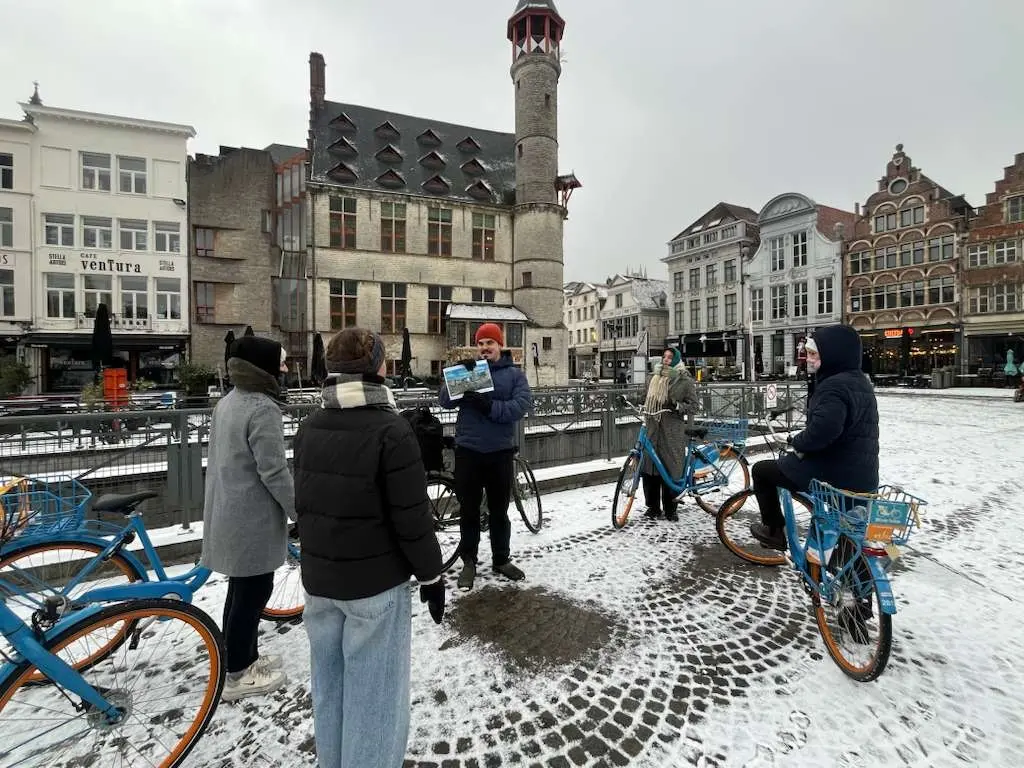
This tour is special because it blends infrastructure literacy with the texture of everyday life. Small groups (max five) keep the pace conversational: expect stops to inspect intersections, count cyclists, and discuss policy tradeoffs. Guides point out engineering details—cycle counters, two‑stage turn boxes, signage hierarchies—that aren’t visible from a car window, and they translate municipal strategy into practical takeaways for advocates, planners, and curious travelers.
Why book it? If you care about cities—designers, planners, bicycle advocates, or travelers who want to see how transportation choices alter streetscapes—this ride is an efficient field lesson. It’s also an accessible urban outing: short distance, low exertion, and a high concentration of insight per pedal stroke. The experience connects contemporary policy to daily rhythms: shopfronts, tram tracks, delivery logistics, and the canal ecology that shapes routing choices.
Practical notes: the tour runs spring through early autumn, accommodates standard city bikes, and requires basic handling in traffic. Expect mixed surfaces—asphalt, brick, occasional cobbles—and bring a helmet if you prefer one. The Ghent Bike Tour uses observation and conversation rather than fast group road riding, making it ideal for curious travelers who want to leave with concrete examples and new appreciation for cycling as civic design. Participants leave with concrete examples they can photograph, policy arguments to reference, and a checklist of small, scalable interventions—from curb radii to protected intersections—that make streets safer. The small-group format encourages questions and real-time comparisons between theory and practice. Riders with cameras can capture clear before-and-after contrasts where policy has reclaimed street space. For bookings and exact meeting details, use the referral link supplied with the tour listing; groups run March through September and fill quickly, especially on weekends regularly.
Exact meeting details are provided at booking via the referral link; confirm start time when you reserve.
No high-level skill is required, but riders should be comfortable riding in city traffic and handling occasional cobbles.
Groups are limited to a maximum of five riders for conversational pacing and better sightlines.
The tour accommodates helmets but guests are advised to bring their own for fit and comfort.
Yes—guides schedule stops at illustrative intersections and canal bridges ideal for photography.
Participants should be 18+ as noted in the listing; check booking restrictions for age policies.
Urban Cycling Institute is a Amsterdam-based organization that leads guided bike tours focused on urban cycling and sustainable mobility. Featured on The Adventure Collective, the Institute offers immersive experiences that combine on-bike exploration with expert insight into cycling infrastructure and city planning. Tours include an English-language Bike Tour that guides riders through Amsterdam’s innovative cycling landscape, and a Portuguese-language Tour guiado de bicicleta (em português) that runs approximately 2–2.5 hours and visits key locations from Nieuwmarkt to the Rijksmuseum. Both experiences include opportunities to engage with cycling experts and to learn about best practices and the future of mobility. The Institute designs routes to highlight practical examples of bike-friendly street design, separated bike lanes, and traffic-calming measures as implemented in Amsterdam. Guides focus on clear explanations, contextual history, and contemporary approaches to urban mobility, helping participants understand how infrastructure shapes daily life in dense cities. Practical details emphasized by the Institute include on-bike safety, route pacing appropriate for mixed groups, and inclusion of concise site-based discussions rather than technical lectures. This approach makes the tours suitable for planners, advocates, students, and curious visitors alike. Urban Cycling Institute’s public programs are centered in Amsterdam and prioritize factual explanation, local expertise, and accessible engagement. Prospective participants can expect guided, expert-led rides that showcase Amsterdam’s cycling systems and suggest ideas for sustainable change in other cities. Tours are ideal for curious minds eager to inspire change in their own cities. The experiences offer insights into best practices and the future of mobility in Amsterdam.
Book with Urban Cycling Institute