THE ADVENTURE COLLECTIVE® · Independent discovery and booking for outdoor travel

Experience Harbin’s Ice Festival over four days with private transfers, a local guide, and three nights at a 5-star hotel. This all-inclusive route pairs daytime snow sculpture parks with illuminated ice palaces and hands-on cultural stops.
Experience Harbin’s Ice Festival over four days with private transfers, a local guide, and three nights at a 5-star hotel. This all-inclusive route pairs daytime snow sculpture parks with illuminated ice palaces and hands-on cultural stops.
You arrive after dusk and the city has already flipped on its cold-stage lights: rows of color-washed ice towers along the Songhua River, lantern-glass streets in Zhongyang Pedestrian Street, and a ropeway that crosses a breath-steamed meander of water. The air is sharp; your breath fogs as sculptures grin and glow.
Verified experiences and guided adventures in the surrounding area.
Operated by Private Tour Guide · Harbin, Heilongjiang
You arrive after dusk and the city has already flipped on its cold-stage lights: rows of color-washed ice towers along the Songhua River, lantern-glass streets in Zhongyang Pedestrian Street, and a ropeway that crosses a breath-steamed meander of water. The air is sharp; your breath fogs as sculptures grin and glow.
Harbin grew as a rail and trade hub in the late 19th–early 20th century, when Russian engineers and merchants left a visible imprint — onion-dome roofs, brick façades, and an eclectic food culture. Geologically the region is part of the Heilongjiang plain; winter here is sculpted by Siberian high-pressure systems and consistently subzero temperatures that make massive ice architecture possible.
The festival itself—originating in organized form in the 1960s—combines public art, local craft, and tourism infrastructure; Sun Island’s snow fair and Zhaolin Park’s lanterns spotlight local carving traditions. Expect pockets of Russian-influenced cafés, small museums, and the odd winter-swimming spectacle where commitment meets river-edge cold.
Practical guidance: plan layered insulation (temperatures commonly plunge below −20°C), schedule ropeway and Ice World visits for both daylight and illuminated night sessions, and book tickets in advance—popular displays sell out for peak dates. Keep a copy of passport and hotel booking for transfers, carry spare batteries for cameras, and favor waterproof winter boots with good grip. The tour’s private transport and hotel nights simplify logistics; still allow time for slow walking on icy surfaces and for warming breaks in cafés between viewpoints.
Most international visitors require a Chinese visa—check your country’s requirements well before travel and carry passport copies for transfers.
Expect daytime highs below freezing and nighttime lows often between −10°C and −25°C; dress in insulating layers and protect extremities.
Many sites and the included private transfers note wheelchair access, but icy surfaces and some older buildings may limit access; confirm specific needs when booking.
The package includes breakfast; lunches and dinners are generally on your own except where noted—allow time to try local Russian-influenced cafés and hot-pot spots.
Private Tour Guide operates guided outdoor trips and adventures with an emphasis on safety, stewardship, and memorable experiences.
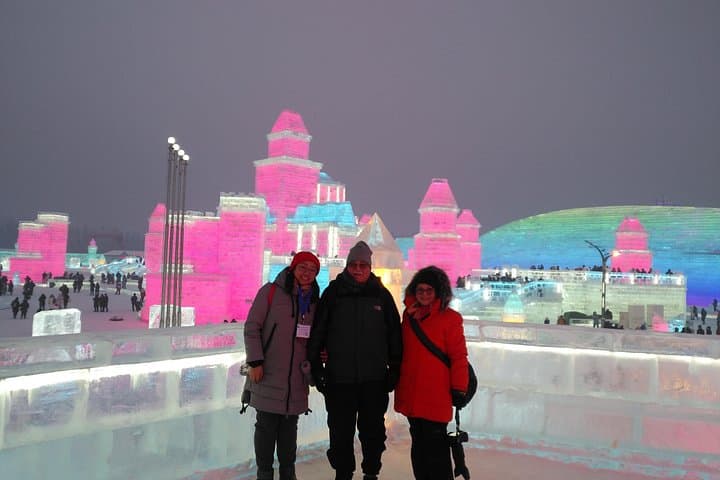
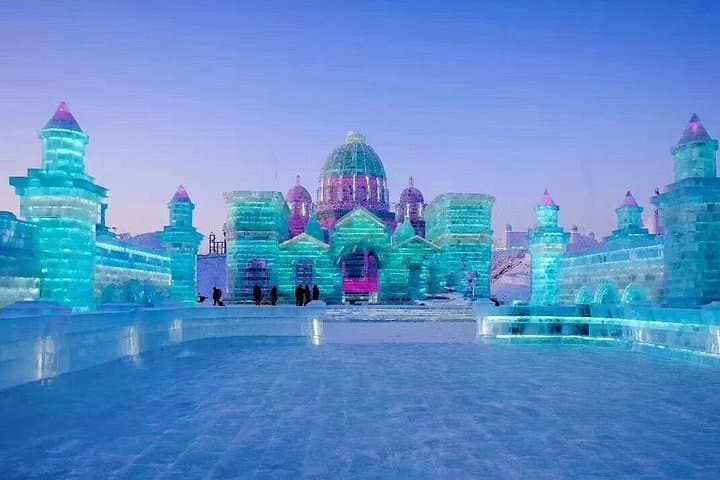
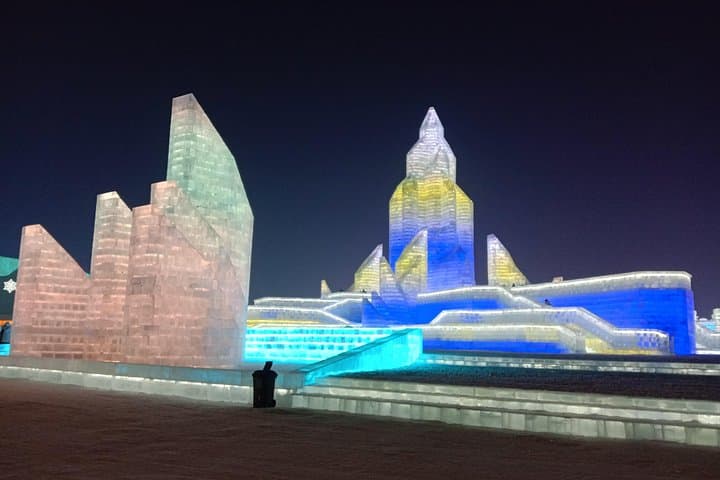
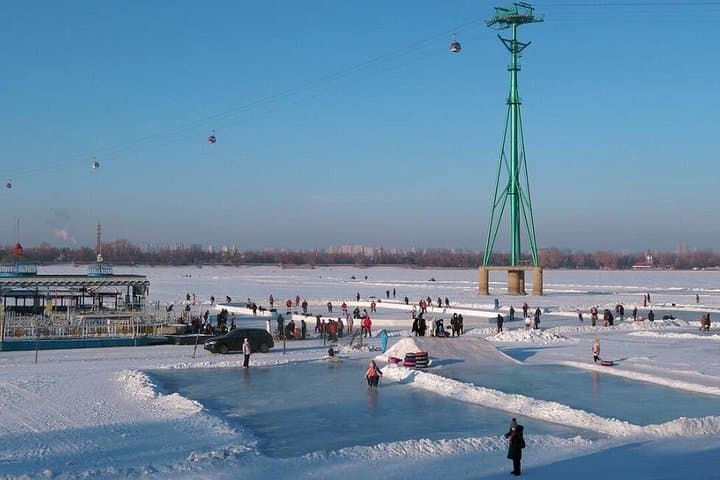
You arrive after dusk and the city has already flipped on its cold-stage lights: rows of color-washed ice towers along the Songhua River, lantern-glass streets in Zhongyang Pedestrian Street, and a ropeway that crosses a breath-steamed meander of water. The air is sharp; your breath fogs as sculptures grin and glow.
You arrive after dusk and the city has already flipped on its cold-stage lights: rows of color-washed ice towers along the Songhua River, lantern-glass streets in Zhongyang Pedestrian Street, and a ropeway that crosses a breath-steamed meander of water. The air is sharp; your breath fogs as sculptures grin and glow.
Harbin grew as a rail and trade hub in the late 19th–early 20th century, when Russian engineers and merchants left a visible imprint — onion-dome roofs, brick façades, and an eclectic food culture. Geologically the region is part of the Heilongjiang plain; winter here is sculpted by Siberian high-pressure systems and consistently subzero temperatures that make massive ice architecture possible.
The festival itself—originating in organized form in the 1960s—combines public art, local craft, and tourism infrastructure; Sun Island’s snow fair and Zhaolin Park’s lanterns spotlight local carving traditions. Expect pockets of Russian-influenced cafés, small museums, and the odd winter-swimming spectacle where commitment meets river-edge cold.
Practical guidance: plan layered insulation (temperatures commonly plunge below −20°C), schedule ropeway and Ice World visits for both daylight and illuminated night sessions, and book tickets in advance—popular displays sell out for peak dates. Keep a copy of passport and hotel booking for transfers, carry spare batteries for cameras, and favor waterproof winter boots with good grip. The tour’s private transport and hotel nights simplify logistics; still allow time for slow walking on icy surfaces and for warming breaks in cafés between viewpoints.