THE ADVENTURE COLLECTIVE® · Independent discovery and booking for outdoor travel

Ride a super jeep across glacial outwash, fit crampons, and enter a winter-formed blue ice cave near Jökulsárlón. This private 3-hour experience blends geology, safety, and striking ice for photographers and hikers who want a close-up of Vatnajökull's shifting beauty.
Ride a super jeep across glacial outwash, fit crampons, and enter a winter-formed blue ice cave near Jökulsárlón. This private 3-hour experience blends geology, safety, and striking ice for photographers and hikers who want a close-up of Vatnajökull's shifting beauty.
You step out of the super jeep into an Arctic wind that seems to test your purpose. The glacier ahead is not a static white field but a living skin, fissured and folded, each contour catching and scattering a cold, inner light. A guide clicks on crampons and invites you forward; the ice gives underfoot with a small, honest sigh.
Verified experiences and guided adventures in the surrounding area.
Operated by Marina Travel · Jokulsarlon, South Iceland
You step out of the super jeep into an Arctic wind that seems to test your purpose. The glacier ahead is not a static white field but a living skin, fissured and folded, each contour catching and scattering a cold, inner light. A guide clicks on crampons and invites you forward; the ice gives underfoot with a small, honest sigh.
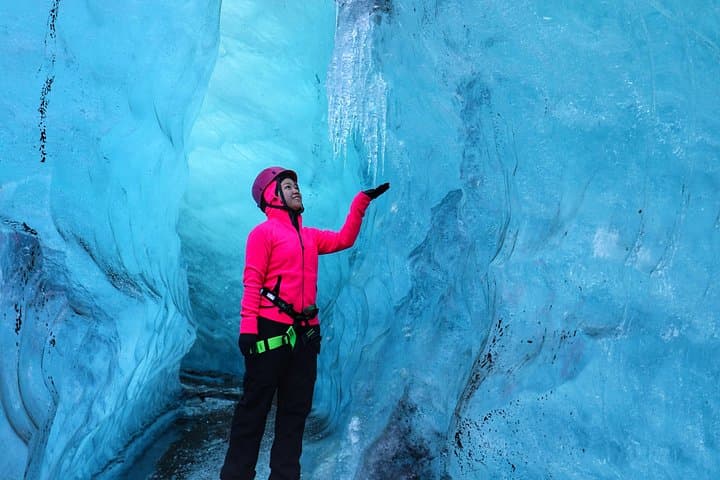
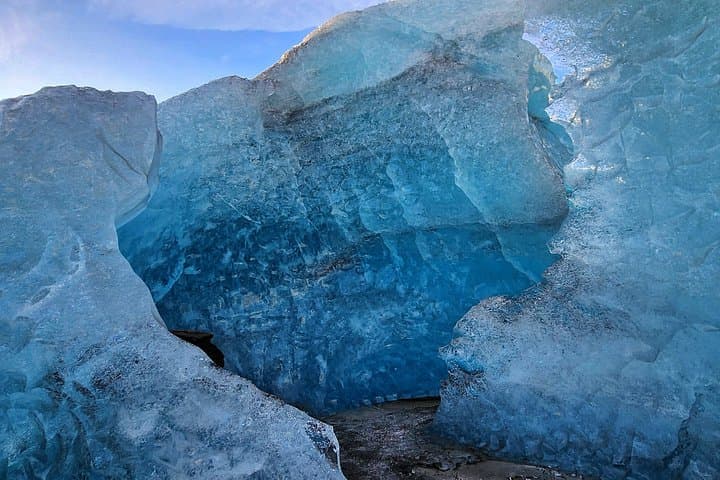
Blue ice caves form where glacier ice compacts, expels air, and filters light until it only lets the short blue wavelengths through. In Southeastern Iceland this process repeats every winter, so the caves you visit are temporary sculptures—moving, breathing features carved by melt, freeze, and gravity. Vatnajökull, Europe’s largest ice cap, feeds this system; the lagoon at Jökulsárlón is a quieter neighbor where bergs calve and seals appear like curious sentries.
Geology here reads like a slow-motion drama: volcanic ash layers trapped between ice strata, crevasses that map seasonal flows, and meltwater channels that carve underneath. The cultural history of the area is human-sized and practical—farmsteads pushed to the fringes, roads routed to respect outlet glaciers, and a growing tourism culture that balances access to wonder with the hard logistics of safety.
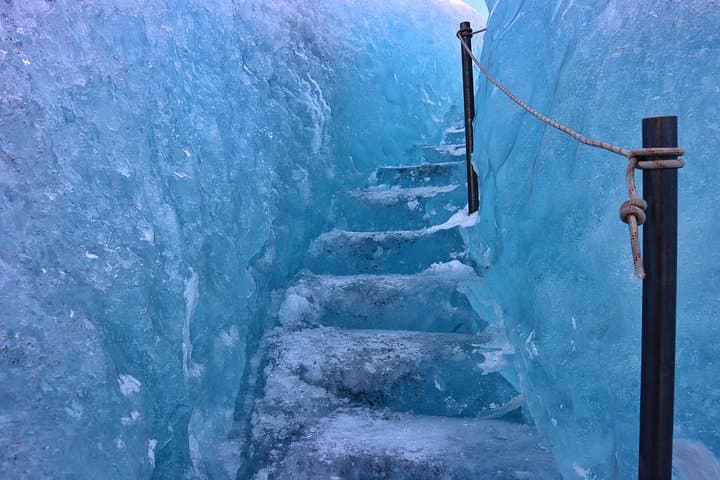
Practically, this is a guide-led experience designed for people comfortable on uneven ground. Tours run about three hours total: a super jeep transfer across glacial outwash, then roughly 1.5–3 km of glacier walking depending on the cave’s current location, with elevation change usually under 150 m. Helmets and crampons are provided; your guide will brief you on footing and rope etiquette.
Weather is the governor here—warm spells can collapse features, and storms obscure routes. Because caves change daily, photography expectations should be flexible: you might find cathedral-like archways or compact tunnels of deeply saturated blue.
What to know before you go: wear stiff-soled, waterproof boots; layer for wind and wet; bring a small daypack with spare gloves and a camera. Expect firm walking on ice and pockets of soft snow; poles are helpful but not always needed. Tours typically operate in winter months when caves exist—book early and allow for last-minute weather cancellations.
When the guide lifts a headlamp, the cave answers with a blue that feels almost electric. You move through a place that refuses to be pinned down—a seasonal, geological performance that rewards attention and respect. Leave no trace, listen to the guide, and you’ll come away with an account that reads like an adventure and a primer on how quickly landscapes can change.
Blue ice caves form naturally during the colder months; most tours operate in late autumn through early spring, but exact availability depends on ice conditions each year.
Minimum age varies by operator; children must be confident walkers and supervised—check with the provider about age limits for private tours.
Operators typically cancel for safety and weather; this listing offers a refund if canceled 24+ hours before departure and may issue refunds/alternatives for weather-related cancellations.
Yes, but keep equipment compact—guides may limit bulky gear for safety; use straps and protective covers against moisture.
No prior glacier experience is required; guides provide crampon instruction and route guidance for all fitness levels meeting the basic requirements.
Most travelers drive the Ring Road; the meeting point is the parking lot at Jökulsárlón Glacier Lagoon—confirm exact coordinates with your booking confirmation.
Marina Travel operates guided outdoor trips and adventures with an emphasis on safety, stewardship, and memorable experiences.

You step out of the super jeep into an Arctic wind that seems to test your purpose. The glacier ahead is not a static white field but a living skin, fissured and folded, each contour catching and scattering a cold, inner light. A guide clicks on crampons and invites you forward; the ice gives underfoot with a small, honest sigh.
You step out of the super jeep into an Arctic wind that seems to test your purpose. The glacier ahead is not a static white field but a living skin, fissured and folded, each contour catching and scattering a cold, inner light. A guide clicks on crampons and invites you forward; the ice gives underfoot with a small, honest sigh.
Blue ice caves form where glacier ice compacts, expels air, and filters light until it only lets the short blue wavelengths through. In Southeastern Iceland this process repeats every winter, so the caves you visit are temporary sculptures—moving, breathing features carved by melt, freeze, and gravity. Vatnajökull, Europe’s largest ice cap, feeds this system; the lagoon at Jökulsárlón is a quieter neighbor where bergs calve and seals appear like curious sentries.
Geology here reads like a slow-motion drama: volcanic ash layers trapped between ice strata, crevasses that map seasonal flows, and meltwater channels that carve underneath. The cultural history of the area is human-sized and practical—farmsteads pushed to the fringes, roads routed to respect outlet glaciers, and a growing tourism culture that balances access to wonder with the hard logistics of safety.
Practically, this is a guide-led experience designed for people comfortable on uneven ground. Tours run about three hours total: a super jeep transfer across glacial outwash, then roughly 1.5–3 km of glacier walking depending on the cave’s current location, with elevation change usually under 150 m. Helmets and crampons are provided; your guide will brief you on footing and rope etiquette.
Weather is the governor here—warm spells can collapse features, and storms obscure routes. Because caves change daily, photography expectations should be flexible: you might find cathedral-like archways or compact tunnels of deeply saturated blue.
What to know before you go: wear stiff-soled, waterproof boots; layer for wind and wet; bring a small daypack with spare gloves and a camera. Expect firm walking on ice and pockets of soft snow; poles are helpful but not always needed. Tours typically operate in winter months when caves exist—book early and allow for last-minute weather cancellations.
When the guide lifts a headlamp, the cave answers with a blue that feels almost electric. You move through a place that refuses to be pinned down—a seasonal, geological performance that rewards attention and respect. Leave no trace, listen to the guide, and you’ll come away with an account that reads like an adventure and a primer on how quickly landscapes can change.