THE ADVENTURE COLLECTIVE® · Independent discovery and booking for outdoor travel

Step into a working wildlife rescue near La Fortuna where rehabilitated toucans, monkeys and anteaters share a shaded network of enclosures. This two‑hour, family‑friendly tour combines close viewing with conservation education.
Step into a working wildlife rescue near La Fortuna where rehabilitated toucans, monkeys and anteaters share a shaded network of enclosures. This two‑hour, family‑friendly tour combines close viewing with conservation education.
You arrive under a humid canopy a few kilometers from La Fortuna, the volcano’s low hum at the edge of earshot. Dew beads on leaves and a chorus of birds punctuates the guide’s welcome as the center’s paths lead you between shaded enclosures and rehabilitation pools.
Verified experiences and guided adventures in the surrounding area.
Operated by Proyecto Asis · La Fortuna, Alajuela
You arrive under a humid canopy a few kilometers from La Fortuna, the volcano’s low hum at the edge of earshot. Dew beads on leaves and a chorus of birds punctuates the guide’s welcome as the center’s paths lead you between shaded enclosures and rehabilitation pools.
The center grew from grassroots rescue efforts responding to wildlife displaced by agricultural expansion and the tourist boom around Arenal. The soil here is young volcanic alluvium, quick-draining and rich, which supports the dense secondary forest that shelters injured mammals and birds. Local culture values wildlife rescue both as conservation and community education; many staff are local residents who grew up learning to live beside wild neighbors.
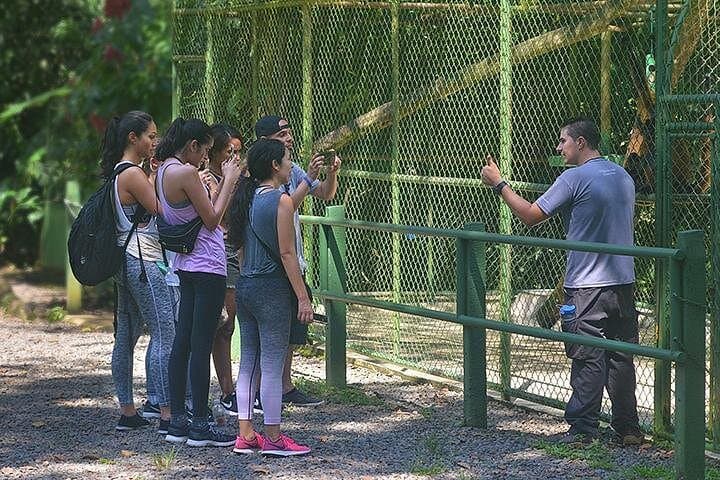
On the tour you’ll see anteaters, toucans, monkeys and reptiles, hear the practical logistics of veterinary triage, and learn about release criteria. Photographs are allowed, and guides explain how enclosure design simulates natural behavior while minimizing human imprint.
Practical guidance: the route is flat and accessible but can be muddy after rain—closed-toe shoes are required. Expect a two-hour visit with interpretive stops and a short Q&A. Bring sunscreen, insect repellent, and a refillable water bottle; the center offers light refreshments like coffee and cookies. Note that bookings are final; plan accordingly.
This visit is family-friendly and low-impact; act respectfully around enclosures, follow staff instructions, and opt for donations or purchases that directly support rehabilitation efforts. It’s an easy, intimate way to connect with Costa Rica’s wildlife conservation work without venturing far from La Fortuna.
Yes—the facility and main visitor paths are wheelchair accessible; staff can advise on specific mobility needs.
Photography is allowed from public viewing areas; avoid flash and always follow staff direction to limit stress to animals.
Yes—this is family-friendly; children should remain supervised and follow all enclosure rules.
All sales are final for this product—no refunds are available, so confirm plans before booking.
Proyecto Asis operates guided outdoor trips and adventures with an emphasis on safety, stewardship, and memorable experiences.


You arrive under a humid canopy a few kilometers from La Fortuna, the volcano’s low hum at the edge of earshot. Dew beads on leaves and a chorus of birds punctuates the guide’s welcome as the center’s paths lead you between shaded enclosures and rehabilitation pools.
You arrive under a humid canopy a few kilometers from La Fortuna, the volcano’s low hum at the edge of earshot. Dew beads on leaves and a chorus of birds punctuates the guide’s welcome as the center’s paths lead you between shaded enclosures and rehabilitation pools.
The center grew from grassroots rescue efforts responding to wildlife displaced by agricultural expansion and the tourist boom around Arenal. The soil here is young volcanic alluvium, quick-draining and rich, which supports the dense secondary forest that shelters injured mammals and birds. Local culture values wildlife rescue both as conservation and community education; many staff are local residents who grew up learning to live beside wild neighbors.
On the tour you’ll see anteaters, toucans, monkeys and reptiles, hear the practical logistics of veterinary triage, and learn about release criteria. Photographs are allowed, and guides explain how enclosure design simulates natural behavior while minimizing human imprint.
Practical guidance: the route is flat and accessible but can be muddy after rain—closed-toe shoes are required. Expect a two-hour visit with interpretive stops and a short Q&A. Bring sunscreen, insect repellent, and a refillable water bottle; the center offers light refreshments like coffee and cookies. Note that bookings are final; plan accordingly.
This visit is family-friendly and low-impact; act respectfully around enclosures, follow staff instructions, and opt for donations or purchases that directly support rehabilitation efforts. It’s an easy, intimate way to connect with Costa Rica’s wildlife conservation work without venturing far from La Fortuna.