THE ADVENTURE COLLECTIVE® · Independent discovery and booking for outdoor travel

A hands-on museum in central Ljubljana that turns perception into playground. Expect gravity-defying rooms, a Vortex tunnel and photo-ready optical tricks suitable for families and curious adults.
A hands-on museum in central Ljubljana that turns perception into playground. Expect gravity-defying rooms, a Vortex tunnel and photo-ready optical tricks suitable for families and curious adults.
A narrow city square opens into a room that refuses to behave: tables cling to the ceiling, heads sit on plates and angles lie to your eyes. The House of Illusions in central Ljubljana stages deliberate deception—light, perspective and simple physics become playful antagonists that invite you to test what you trust.
Verified experiences and guided adventures in the surrounding area.
Operated by DTG d.o.o. · Ljubljana, Central Slovenia
A narrow city square opens into a room that refuses to behave: tables cling to the ceiling, heads sit on plates and angles lie to your eyes. The House of Illusions in central Ljubljana stages deliberate deception—light, perspective and simple physics become playful antagonists that invite you to test what you trust.
Located on Congress Square, the attraction sits in the historic heart of Slovenia’s capital where Austro-Hungarian façades meet Jože Plečnik’s civic geometry. The exhibits borrow from classical visual puzzles—Ames rooms and vortex tunnels that exploit scale and motion—while packaging them for quick, social interaction. Perfect for families, couples and anyone curious about perception, the museum condenses scientific explanation into tactile experiences.
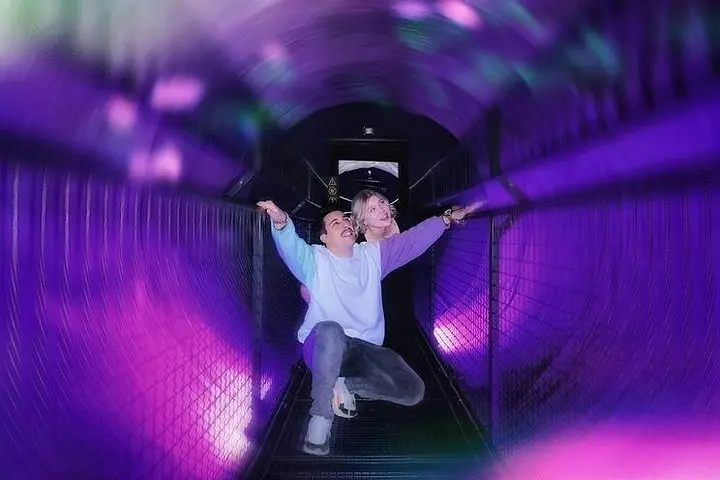
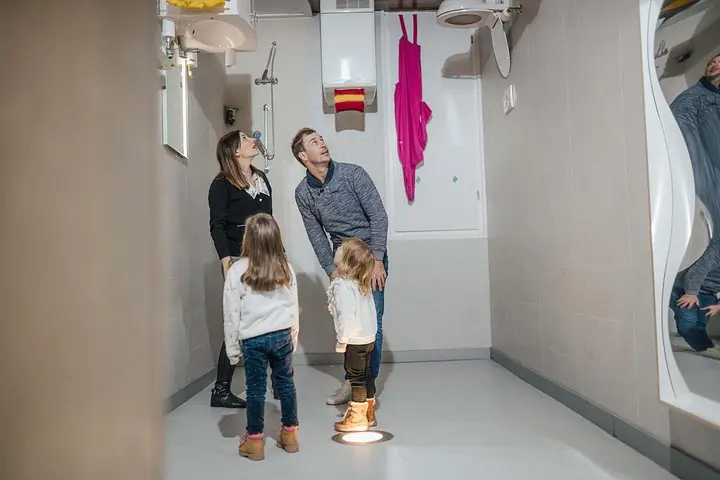
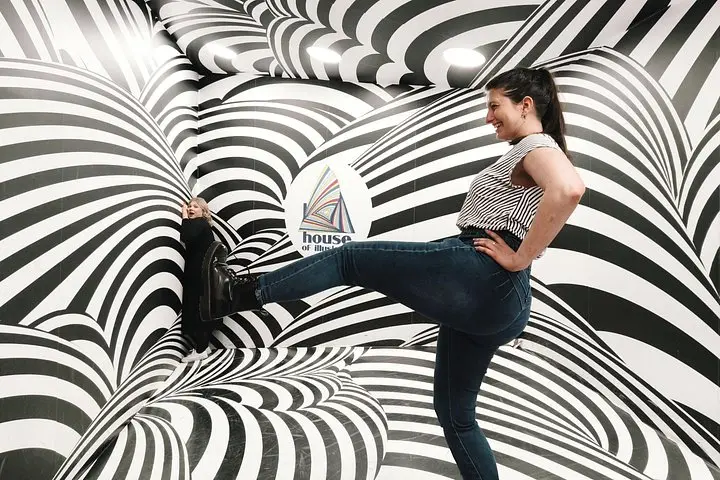
Expect roughly 60–120 minutes to move through 40–70 hands-on installations. The Vortex tunnel challenges balance, the Ames room rearranges body proportions, and upsidedown sets make for striking photographs. The layout is compact and brightly lit—designed for movement and for grabbing a photo that replays the trick back to the outside world.
Practically: arrive with a mobile or printed ticket and plan for a weekend crowd; weekday mornings are calmer. Wear comfortable shoes for standing and light layers—some rooms can feel disorienting and cooler. Children must be accompanied by an adult and those prone to vertigo should skip the Vortex tunnel. Public transport stops nearby and the site is stroller-accessible.
In short, the House of Illusions is less about passive viewing and more about being led astray—safely, briefly and memorably.
Most visitors spend 60–90 minutes exploring; families with small children may take up to two hours.
Yes—photography and smartphone use are encouraged throughout most exhibits for personal use.
The museum notes stroller access is possible; accessibility can vary by room—contact the venue for specific wheelchair access details.
Yes, children are welcome but must be accompanied by an adult at all times; some installations are better suited to older children.
DTG d.o.o. operates guided outdoor trips and adventures with an emphasis on safety, stewardship, and memorable experiences.
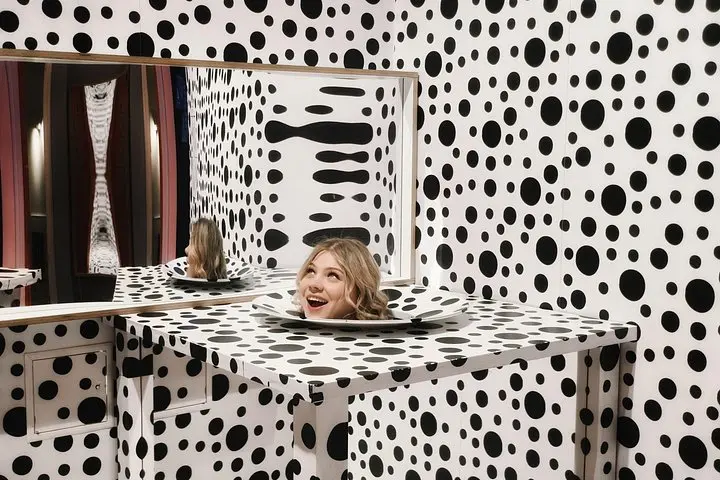
A narrow city square opens into a room that refuses to behave: tables cling to the ceiling, heads sit on plates and angles lie to your eyes. The House of Illusions in central Ljubljana stages deliberate deception—light, perspective and simple physics become playful antagonists that invite you to test what you trust.
A narrow city square opens into a room that refuses to behave: tables cling to the ceiling, heads sit on plates and angles lie to your eyes. The House of Illusions in central Ljubljana stages deliberate deception—light, perspective and simple physics become playful antagonists that invite you to test what you trust.
Located on Congress Square, the attraction sits in the historic heart of Slovenia’s capital where Austro-Hungarian façades meet Jože Plečnik’s civic geometry. The exhibits borrow from classical visual puzzles—Ames rooms and vortex tunnels that exploit scale and motion—while packaging them for quick, social interaction. Perfect for families, couples and anyone curious about perception, the museum condenses scientific explanation into tactile experiences.
Expect roughly 60–120 minutes to move through 40–70 hands-on installations. The Vortex tunnel challenges balance, the Ames room rearranges body proportions, and upsidedown sets make for striking photographs. The layout is compact and brightly lit—designed for movement and for grabbing a photo that replays the trick back to the outside world.
Practically: arrive with a mobile or printed ticket and plan for a weekend crowd; weekday mornings are calmer. Wear comfortable shoes for standing and light layers—some rooms can feel disorienting and cooler. Children must be accompanied by an adult and those prone to vertigo should skip the Vortex tunnel. Public transport stops nearby and the site is stroller-accessible.
In short, the House of Illusions is less about passive viewing and more about being led astray—safely, briefly and memorably.