THE ADVENTURE COLLECTIVE® · Independent discovery and booking for outdoor travel

Get behind the scenes at Maracanã with a private guide — explore locker rooms, press areas and the field edge while learning the stadium’s story from 1950 to the present.
Get behind the scenes at Maracanã with a private guide — explore locker rooms, press areas and the field edge while learning the stadium’s story from 1950 to the present.
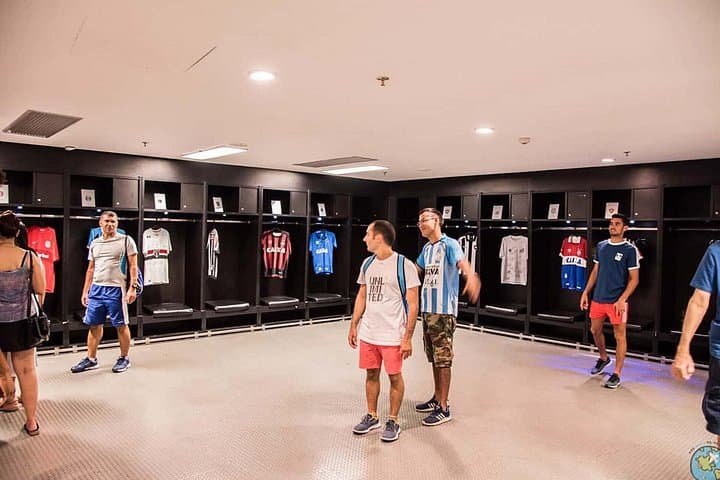
Stepping through the turnstiles, the roar of Rio seems to hang in the concrete ribs of Maracanã — a stadium that breathes history. Your private guide leads you down a cool tunnel of echoing corridors, past faded posters and worn tile, toward locker rooms where players once tightened cleats and a grass pitch that still holds the faint scent of packed crowds.
Verified experiences and guided adventures in the surrounding area.
Operated by RIO PASSEIOS EXPERIENCE · Rio de Janeiro, Rio de Janeiro
Stepping through the turnstiles, the roar of Rio seems to hang in the concrete ribs of Maracanã — a stadium that breathes history. Your private guide leads you down a cool tunnel of echoing corridors, past faded posters and worn tile, toward locker rooms where players once tightened cleats and a grass pitch that still holds the faint scent of packed crowds.
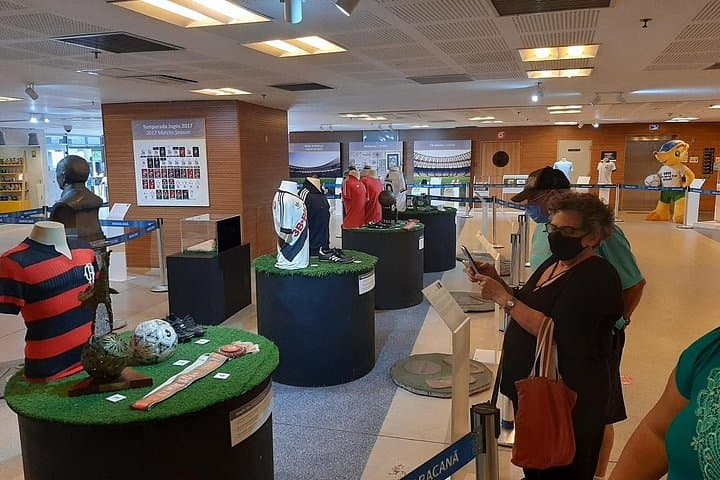
Opened for the 1950 World Cup, Maracanã has been a stage for historic finals, Olympic ceremonies and international concerts. Its bowl sits on a low plain in the northern zone of Rio de Janeiro, engineered to hold tens of thousands and reshaped several times — most recently for the 2014 World Cup and 2016 Olympics. The tour frames football as a cultural engine: jerseys, trophies and local storytelling turn sport into a shorthand for Brazilian identity.
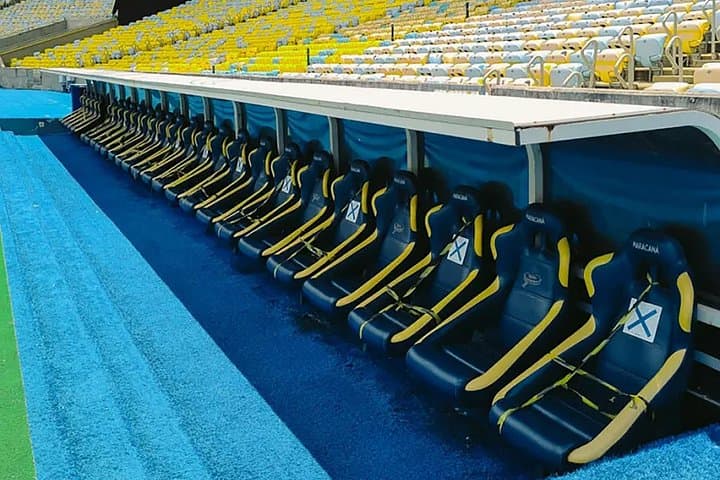
Visitors can expect behind-the-scenes access: changing rooms, the tunnel, press areas and a field edge vantage that lets the scale of the stadium register. Guides translate anecdotes into context, linking matches to moments in Brazil’s social history.
Practicalities are straightforward: the tour runs about two hours with minimal walking but periods of standing. The operator may reschedule around match days, so confirm timing in advance. Carry a government ID for transport and entry, wear comfortable shoes for steps and shallow ramps, and bring a lightweight rain layer — Rio’s weather can change fast. Photography is allowed in most areas, but follow your guide in restricted zones. This private visit is both a cultural primer and a tactile way to feel why football remains central to Rio’s public life.
The private tour lasts approximately two hours and covers locker rooms, press areas, stands and field-edge access.
Tours may be changed or rescheduled around matches and major events; the operator notifies guests at least 24 hours in advance when possible.
Maracanã has accessible routes and seating, but notify the operator of mobility needs at booking to arrange appropriate access.
Photography is generally permitted in public areas, but follow your guide’s instructions in restricted or sensitive spaces.
RIO PASSEIOS EXPERIENCE operates guided outdoor trips and adventures with an emphasis on safety, stewardship, and memorable experiences.

Stepping through the turnstiles, the roar of Rio seems to hang in the concrete ribs of Maracanã — a stadium that breathes history. Your private guide leads you down a cool tunnel of echoing corridors, past faded posters and worn tile, toward locker rooms where players once tightened cleats and a grass pitch that still holds the faint scent of packed crowds.
Stepping through the turnstiles, the roar of Rio seems to hang in the concrete ribs of Maracanã — a stadium that breathes history. Your private guide leads you down a cool tunnel of echoing corridors, past faded posters and worn tile, toward locker rooms where players once tightened cleats and a grass pitch that still holds the faint scent of packed crowds.
Opened for the 1950 World Cup, Maracanã has been a stage for historic finals, Olympic ceremonies and international concerts. Its bowl sits on a low plain in the northern zone of Rio de Janeiro, engineered to hold tens of thousands and reshaped several times — most recently for the 2014 World Cup and 2016 Olympics. The tour frames football as a cultural engine: jerseys, trophies and local storytelling turn sport into a shorthand for Brazilian identity.
Visitors can expect behind-the-scenes access: changing rooms, the tunnel, press areas and a field edge vantage that lets the scale of the stadium register. Guides translate anecdotes into context, linking matches to moments in Brazil’s social history.
Practicalities are straightforward: the tour runs about two hours with minimal walking but periods of standing. The operator may reschedule around match days, so confirm timing in advance. Carry a government ID for transport and entry, wear comfortable shoes for steps and shallow ramps, and bring a lightweight rain layer — Rio’s weather can change fast. Photography is allowed in most areas, but follow your guide in restricted zones. This private visit is both a cultural primer and a tactile way to feel why football remains central to Rio’s public life.