THE ADVENTURE COLLECTIVE® · Independent discovery and booking for outdoor travel

Experience Akshardham’s carved stone mandir, multimedia exhibitions, and evening musical fountain. This practical guide explains what to expect, how the site was created, and tips to make the most of a half-day visit.
Experience Akshardham’s carved stone mandir, multimedia exhibitions, and evening musical fountain. This practical guide explains what to expect, how the site was created, and tips to make the most of a half-day visit.
You step off the Metro into humid New Delhi and the temple complex rises ahead—sheer stone surfaces cut with thousands of hand-carved motifs, an ordered plaza that quiets the city's noise. The central mandir commands attention: pale marble and pink sandstone catch late-afternoon light, reliefs and pillars telling scenes that pull you close and then push your gaze outward to the formal gardens and the fountain pool.
Verified experiences and guided adventures in the surrounding area.
Operated by Travel Aide Tours · New Delhi, Delhi
You step off the Metro into humid New Delhi and the temple complex rises ahead—sheer stone surfaces cut with thousands of hand-carved motifs, an ordered plaza that quiets the city's noise. The central mandir commands attention: pale marble and pink sandstone catch late-afternoon light, reliefs and pillars telling scenes that pull you close and then push your gaze outward to the formal gardens and the fountain pool.
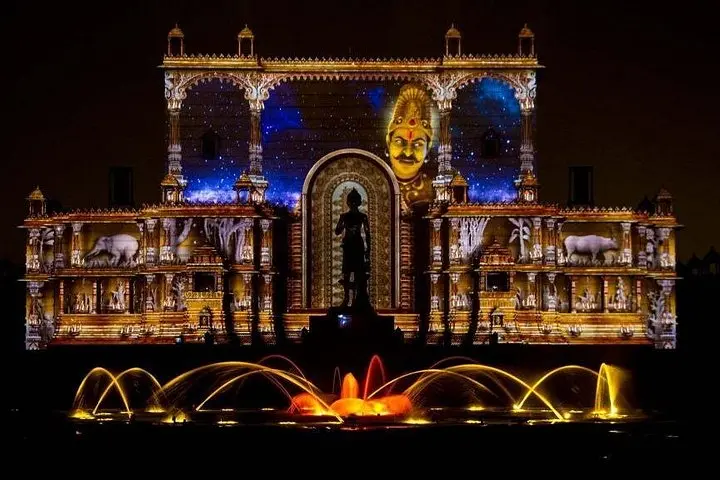
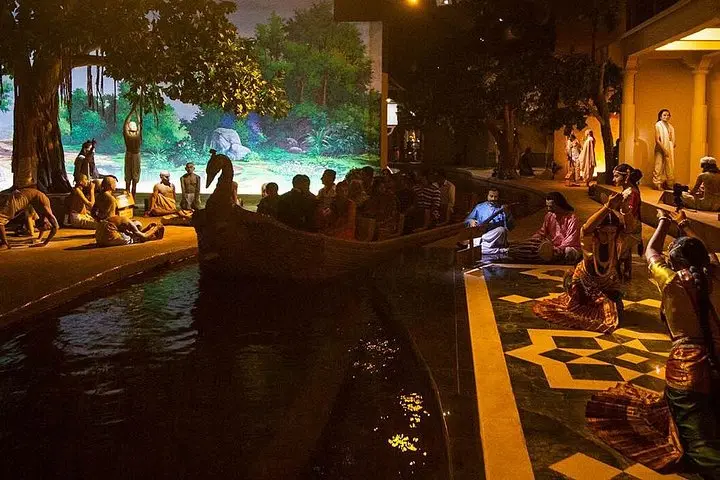
Akshardham is a modern cultural campus created by the BAPS Swaminarayan movement and opened in 2005. The architecture references older north Indian stone-carving traditions, using quarried sandstone and marble rather than concrete. Exhibitions and short films use multimedia to present stories of Swaminarayan, devotional practice and traditional arts; the musical fountain and laser presentation stage a choreographed water-and-light finale most evenings.
Culturally, the site functions as both a place of worship and a museum-like complex—expect respectful behavior, quiet in prayer areas, and active interpretation in gallery spaces. Geologically the stonework is noteworthy for its craftsmanship rather than rare minerals; it’s the carved surfaces and jointing that define the experience.
Practical guidance: arrive early or just before the fountain show, allow about four hours for a full visit, pass through mandatory security screening, and use on-site lockers for large bags and cameras if required. Dress smart-casual and plan for several flights of steps and walking between exhibits; hydration and modest attire keep the visit comfortable. For photographers, note restricted zones for cameras and phones inside some galleries.
Photography is restricted in certain areas and inside the central mandir and some exhibition halls; follow posted signs and use on-site lockers for larger cameras if required.
Plan about four hours to see the main temple, exhibitions, short films, the gardens and to attend the evening fountain show.
Yes—Akshardham is served by the Akshardham Metro Station on the Delhi Metro Blue Line and local buses/taxis connect the site to central New Delhi.
The complex has limited snack and beverage outlets; bottled water is commonly available, but full meals may require stepping outside to nearby eateries.
Travel Aide Tours operates guided outdoor trips and adventures with an emphasis on safety, stewardship, and memorable experiences.
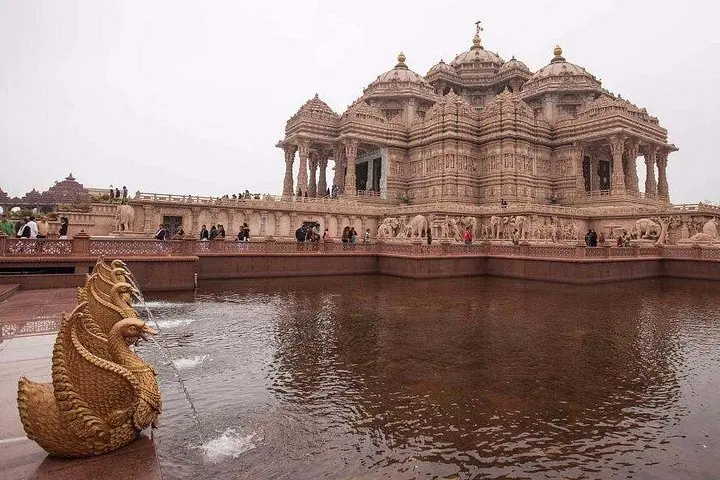
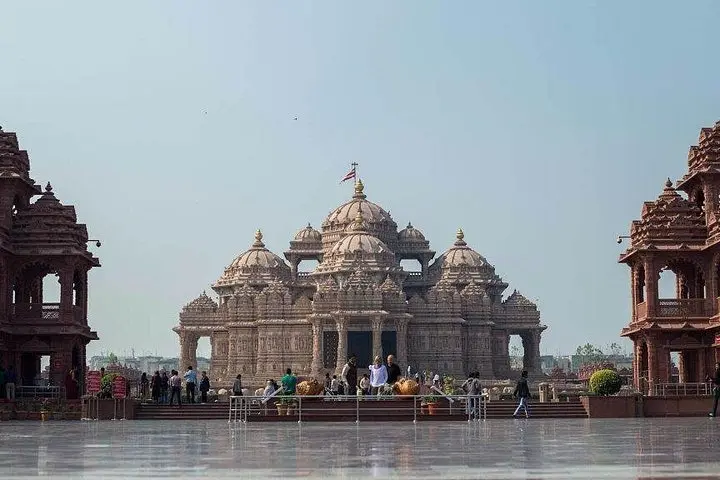
You step off the Metro into humid New Delhi and the temple complex rises ahead—sheer stone surfaces cut with thousands of hand-carved motifs, an ordered plaza that quiets the city's noise. The central mandir commands attention: pale marble and pink sandstone catch late-afternoon light, reliefs and pillars telling scenes that pull you close and then push your gaze outward to the formal gardens and the fountain pool.
You step off the Metro into humid New Delhi and the temple complex rises ahead—sheer stone surfaces cut with thousands of hand-carved motifs, an ordered plaza that quiets the city's noise. The central mandir commands attention: pale marble and pink sandstone catch late-afternoon light, reliefs and pillars telling scenes that pull you close and then push your gaze outward to the formal gardens and the fountain pool.
Akshardham is a modern cultural campus created by the BAPS Swaminarayan movement and opened in 2005. The architecture references older north Indian stone-carving traditions, using quarried sandstone and marble rather than concrete. Exhibitions and short films use multimedia to present stories of Swaminarayan, devotional practice and traditional arts; the musical fountain and laser presentation stage a choreographed water-and-light finale most evenings.
Culturally, the site functions as both a place of worship and a museum-like complex—expect respectful behavior, quiet in prayer areas, and active interpretation in gallery spaces. Geologically the stonework is noteworthy for its craftsmanship rather than rare minerals; it’s the carved surfaces and jointing that define the experience.
Practical guidance: arrive early or just before the fountain show, allow about four hours for a full visit, pass through mandatory security screening, and use on-site lockers for large bags and cameras if required. Dress smart-casual and plan for several flights of steps and walking between exhibits; hydration and modest attire keep the visit comfortable. For photographers, note restricted zones for cameras and phones inside some galleries.