THE ADVENTURE COLLECTIVE® · Independent discovery and booking for outdoor travel

Walk from the East Village into Little Italy with active and retired NYPD guides for firsthand stories, movie‑set stops, and two food tastings. This 3.5‑hour evening tour mixes true‑crime narrative with cultural history and local flavors.
Walk from the East Village into Little Italy with active and retired NYPD guides for firsthand stories, movie‑set stops, and two food tastings. This 3.5‑hour evening tour mixes true‑crime narrative with cultural history and local flavors.
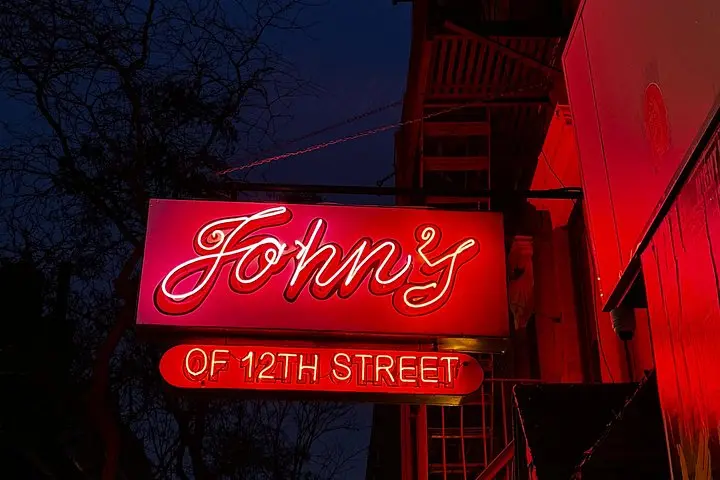
A humid late-afternoon light softens the brick facades as the group gathers at a well-worn Italian red-sauce joint on 12th Street. The pavement seems to hold conversations from another era; the guide—often an active or retired NYPD detective—opens with a voice that anchors the present to headlines and hidden alleys alike.
Verified experiences and guided adventures in the surrounding area.
Operated by NYPD Police Tours · New York, NY
A humid late-afternoon light softens the brick facades as the group gathers at a well-worn Italian red-sauce joint on 12th Street. The pavement seems to hold conversations from another era; the guide—often an active or retired NYPD detective—opens with a voice that anchors the present to headlines and hidden alleys alike.
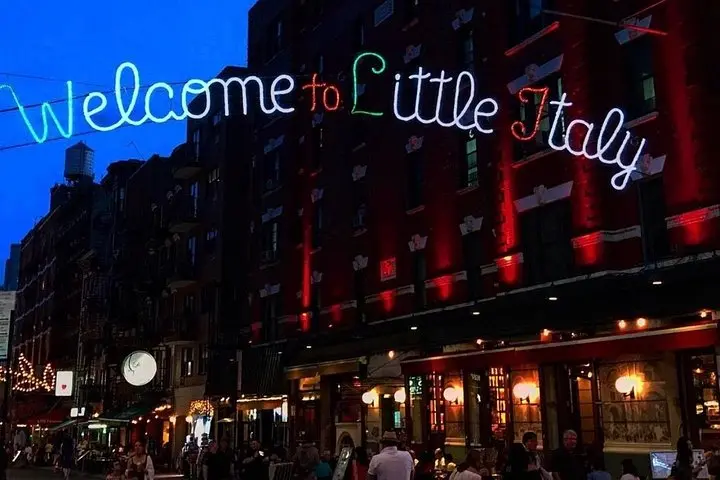
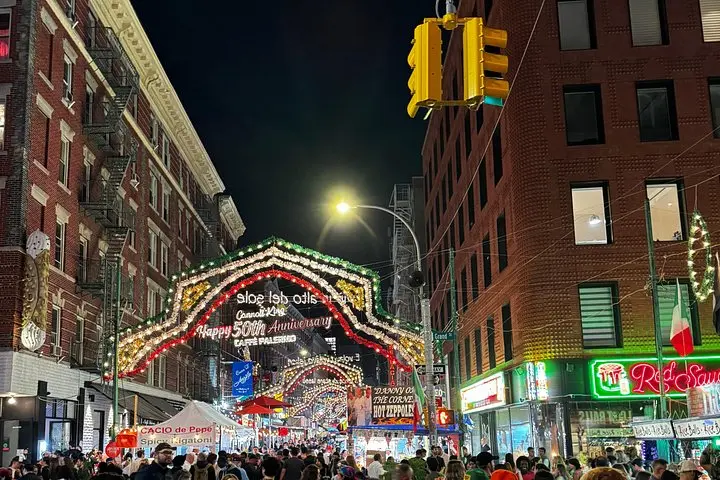
This walking tour threads the East Village and Little Italy, moving from storefronts that doubled as front rooms for illicit business to narrow lanes where enforcement and politics intertwined. The story begins in the early 20th century immigrant neighborhoods and pivots to 1931, when organized crime leaders formalized power structures that shaped neighborhoods, nightlife, and film lore—places later filmed in productions like The Sopranos and Get Gotti.
Geology here is urban: Manhattan’s bedrock and the grid gave way to human layers—tenements, social clubs, and community gardens like Liz Christy, all evidence of ongoing change. Culturally, the route spotlights Italian-American institutions—the old butcher shops, parish churches, and pastry makers—while the guides connect those places to police history and public policy.
Practical guidance: expect 3.5 hours of walking on mostly flat city sidewalks with several stops for storytelling and two food tastings (a full dinner portion and a large Sicilian cannoli included). Wear supportive walking shoes, carry a refillable water bottle, and arrive on time to the meeting point. The tour candidly covers crime and violence; it’s not recommended for those uncomfortable with graphic language. Bring a charged phone for navigation and contact, and plan onward transit—subway options are minutes away at several stops.
Meet inside the restaurant referred to as "John's of 12th Street" at the scheduled PM start (typically 4:30 or 5:15 PM); check your ticket for the exact time.
Yes—two food stops are included: a full portion of spaghetti with meatballs and a large Sicilian cannoli; vegetarian options are available with advance notice.
The tour notes wheelchair‑accessible transportation options and accessible meeting points, but it involves walking on city sidewalks and some areas may challenge mobility—contact the operator with specific needs.
Yes. Guides—often retired or active NYPD detectives—use frank language and may describe violent historical events; the tour cautions those sensitive to such material.
NYPD Police Tours operates guided outdoor trips and adventures with an emphasis on safety, stewardship, and memorable experiences.
A humid late-afternoon light softens the brick facades as the group gathers at a well-worn Italian red-sauce joint on 12th Street. The pavement seems to hold conversations from another era; the guide—often an active or retired NYPD detective—opens with a voice that anchors the present to headlines and hidden alleys alike.
A humid late-afternoon light softens the brick facades as the group gathers at a well-worn Italian red-sauce joint on 12th Street. The pavement seems to hold conversations from another era; the guide—often an active or retired NYPD detective—opens with a voice that anchors the present to headlines and hidden alleys alike.
This walking tour threads the East Village and Little Italy, moving from storefronts that doubled as front rooms for illicit business to narrow lanes where enforcement and politics intertwined. The story begins in the early 20th century immigrant neighborhoods and pivots to 1931, when organized crime leaders formalized power structures that shaped neighborhoods, nightlife, and film lore—places later filmed in productions like The Sopranos and Get Gotti.
Geology here is urban: Manhattan’s bedrock and the grid gave way to human layers—tenements, social clubs, and community gardens like Liz Christy, all evidence of ongoing change. Culturally, the route spotlights Italian-American institutions—the old butcher shops, parish churches, and pastry makers—while the guides connect those places to police history and public policy.
Practical guidance: expect 3.5 hours of walking on mostly flat city sidewalks with several stops for storytelling and two food tastings (a full dinner portion and a large Sicilian cannoli included). Wear supportive walking shoes, carry a refillable water bottle, and arrive on time to the meeting point. The tour candidly covers crime and violence; it’s not recommended for those uncomfortable with graphic language. Bring a charged phone for navigation and contact, and plan onward transit—subway options are minutes away at several stops.