THE ADVENTURE COLLECTIVE® · Independent discovery and booking for outdoor travel

Step into Qasr Al Watan and walk through grand halls, detailed craftsmanship, and exhibitions that map the UAE’s story. This guide covers what to expect on a 1–3 hour visit, plus practical tips for timing, dress, and the evening light show.
Step into Qasr Al Watan and walk through grand halls, detailed craftsmanship, and exhibitions that map the UAE’s story. This guide covers what to expect on a 1–3 hour visit, plus practical tips for timing, dress, and the evening light show.
The first steps into Qasr Al Watan feel deliberate: marble underfoot, rows of columns framing open courtyards, and sunlight angling across ornate mosaics. Visitors move from the hushed, cathedral-like Great Hall into exhibition spaces that stitch together the story of the UAE—its leadership, craft traditions, and modern ambition.
Verified experiences and guided adventures in the surrounding area.
The first steps into Qasr Al Watan feel deliberate: marble underfoot, rows of columns framing open courtyards, and sunlight angling across ornate mosaics. Visitors move from the hushed, cathedral-like Great Hall into exhibition spaces that stitch together the story of the UAE—its leadership, craft traditions, and modern ambition.
Opened to the public in 2019 as part of the larger Presidential Palace complex, Qasr Al Watan blends contemporary construction with references to regional craftsmanship: carved wooden doors, geometric inlays, and domes that echo local architectural languages. Geologically the site sits on low-lying coastal plain reclaimed and landscaped, the gardens relying on engineered irrigation to sustain palms and native planting in an arid climate.
Culturally, the palace is both a working state venue and a public museum: exhibits showcase governance, diplomatic gifts, and manuscripts that trace the nation’s recent history. Evenings bring a choreographed light-and-sound show that projects narrative onto the façade—an accessible way to absorb context after a daytime walkthrough.
Practical guidance: plan 60–180 minutes depending on exhibitions and the evening program. Expect mostly flat walking on polished surfaces; bring sun protection for the courtyards and modest clothing out of respect for a civic site. Photography is allowed in many spaces but check signage for restricted areas. Arrive early to avoid midday heat and to catch quieter moments in the Great Hall; stay for the lights if your schedule allows. The visit balances art, statecraft, and designed landscape—ideal for curious travelers wanting architectural detail paired with civic history.
Allocate 60–180 minutes depending on whether you view exhibitions in detail and attend the evening light show.
Yes—cover shoulders and knees out of respect for the cultural and governmental setting; avoid revealing clothing.
Photography is allowed in many public areas but look for posted restrictions in certain exhibits and staff instructions in ceremonial rooms.
Tickets are often available on arrival, but booking ahead secures entry for peak times and the evening show.
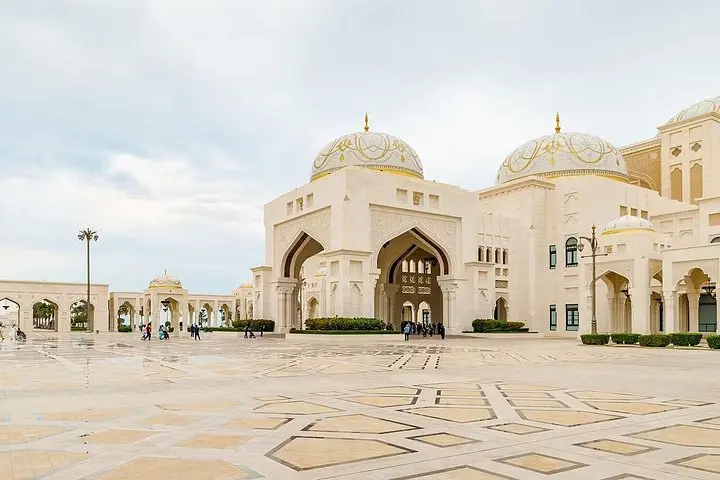
The first steps into Qasr Al Watan feel deliberate: marble underfoot, rows of columns framing open courtyards, and sunlight angling across ornate mosaics. Visitors move from the hushed, cathedral-like Great Hall into exhibition spaces that stitch together the story of the UAE—its leadership, craft traditions, and modern ambition.
The first steps into Qasr Al Watan feel deliberate: marble underfoot, rows of columns framing open courtyards, and sunlight angling across ornate mosaics. Visitors move from the hushed, cathedral-like Great Hall into exhibition spaces that stitch together the story of the UAE—its leadership, craft traditions, and modern ambition.
Opened to the public in 2019 as part of the larger Presidential Palace complex, Qasr Al Watan blends contemporary construction with references to regional craftsmanship: carved wooden doors, geometric inlays, and domes that echo local architectural languages. Geologically the site sits on low-lying coastal plain reclaimed and landscaped, the gardens relying on engineered irrigation to sustain palms and native planting in an arid climate.
Culturally, the palace is both a working state venue and a public museum: exhibits showcase governance, diplomatic gifts, and manuscripts that trace the nation’s recent history. Evenings bring a choreographed light-and-sound show that projects narrative onto the façade—an accessible way to absorb context after a daytime walkthrough.
Practical guidance: plan 60–180 minutes depending on exhibitions and the evening program. Expect mostly flat walking on polished surfaces; bring sun protection for the courtyards and modest clothing out of respect for a civic site. Photography is allowed in many spaces but check signage for restricted areas. Arrive early to avoid midday heat and to catch quieter moments in the Great Hall; stay for the lights if your schedule allows. The visit balances art, statecraft, and designed landscape—ideal for curious travelers wanting architectural detail paired with civic history.