THE ADVENTURE COLLECTIVE® · Independent discovery and booking for outdoor travel

Walk the cool nave of Salisbury Cathedral and listen as an audio guide traces 800 years of law, architecture, and repairs. See an original Magna Carta, the world’s oldest working clock, and the UK’s tallest spire on a focused, accessible visit.
Walk the cool nave of Salisbury Cathedral and listen as an audio guide traces 800 years of law, architecture, and repairs. See an original Magna Carta, the world’s oldest working clock, and the UK’s tallest spire on a focused, accessible visit.
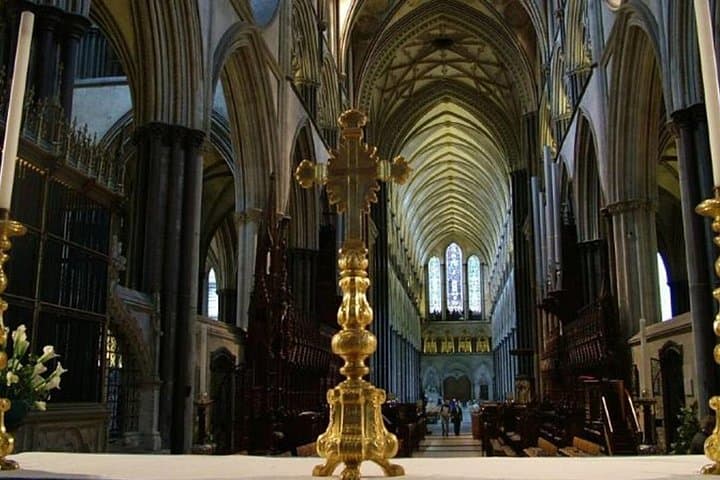
The cathedral’s stone seems to measure time itself: walk through a cool, arched nave and the air carries the hush of centuries.
Verified experiences and guided adventures in the surrounding area.
Operated by Vox City International Ltd · Salisbury, Wiltshire
The cathedral’s stone seems to measure time itself: walk through a cool, arched nave and the air carries the hush of centuries.
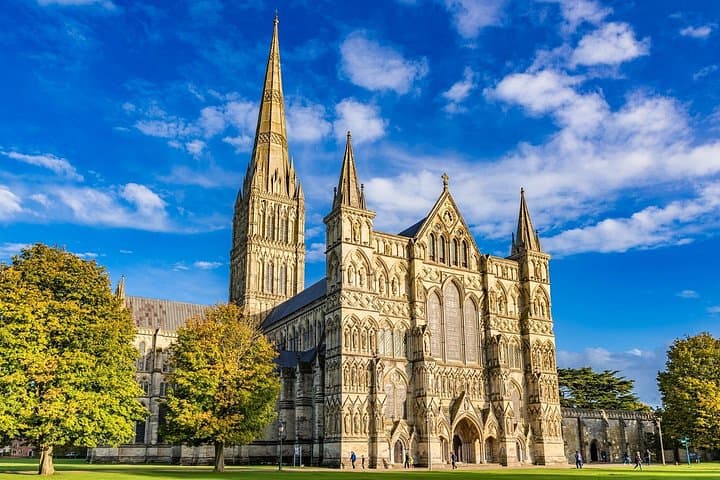
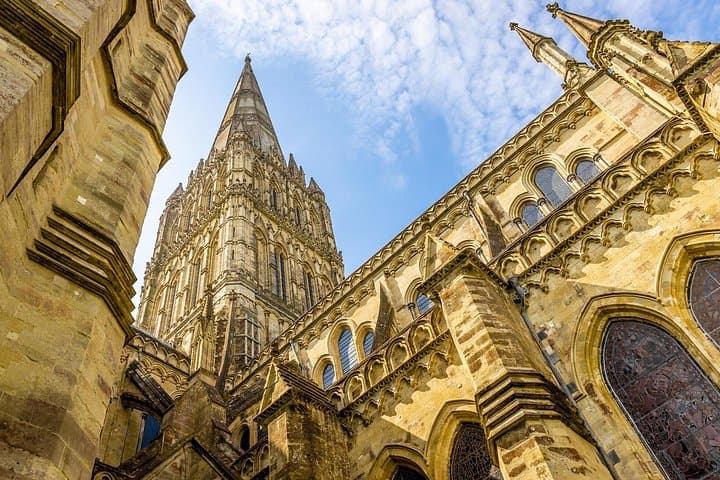
Begin in the vast Salisbury Cathedral Close where light pours through Early English Gothic windows and the spire reaches 123 m—the tallest in the United Kingdom—casting a long, precise shadow over the lawns. Inside, an audio guide leads you from the medieval Chapter House to the glass-fronted display holding one of the original Magna Carta copies, the parchment that helped shape constitutional law in 1215.
Salisbury’s fabric is layered: quick-draining chalk downland shaped the site, Norman building campaigns followed by 18th- and 19th-century restorations, and later repairs advised by Sir Christopher Wren. The cathedral’s working medieval clock and the carved misericords offer small, tactile chapters of daily life across ages.
Practicalities matter here: allow about an hour for the audio tour, bring headphones or use the provided digital guide, and plan arrivals early to avoid school groups. Photography is generally allowed in the nave but restricted near fragile displays—check signage. The site is wheelchair-accessible and has close public-transport links; peak season draws steady crowds so book in advance.
Respect the building’s role as a place of worship—keep voices low, and follow conservation notices. A visit balances focused curiosity with slow observation: read the script of law and architecture, then step back into the Close and let the stones keep talking.
The standard audio-guided visit is about 60 minutes, though you can stay longer to explore the Close and nearby museums.
Yes—one of the original Magna Carta manuscripts is on display in the Chapter House with interpretive panels and protective glazing.
Yes, the cathedral is wheelchair-accessible and allows strollers; check the visitor desk for ramps and assistance.
The digital audio guide offers multilingual commentary in English, French, German, Italian and Spanish.
Vox City International Ltd operates guided outdoor trips and adventures with an emphasis on safety, stewardship, and memorable experiences.

The cathedral’s stone seems to measure time itself: walk through a cool, arched nave and the air carries the hush of centuries.
The cathedral’s stone seems to measure time itself: walk through a cool, arched nave and the air carries the hush of centuries.
Begin in the vast Salisbury Cathedral Close where light pours through Early English Gothic windows and the spire reaches 123 m—the tallest in the United Kingdom—casting a long, precise shadow over the lawns. Inside, an audio guide leads you from the medieval Chapter House to the glass-fronted display holding one of the original Magna Carta copies, the parchment that helped shape constitutional law in 1215.
Salisbury’s fabric is layered: quick-draining chalk downland shaped the site, Norman building campaigns followed by 18th- and 19th-century restorations, and later repairs advised by Sir Christopher Wren. The cathedral’s working medieval clock and the carved misericords offer small, tactile chapters of daily life across ages.
Practicalities matter here: allow about an hour for the audio tour, bring headphones or use the provided digital guide, and plan arrivals early to avoid school groups. Photography is generally allowed in the nave but restricted near fragile displays—check signage. The site is wheelchair-accessible and has close public-transport links; peak season draws steady crowds so book in advance.
Respect the building’s role as a place of worship—keep voices low, and follow conservation notices. A visit balances focused curiosity with slow observation: read the script of law and architecture, then step back into the Close and let the stones keep talking.