THE ADVENTURE COLLECTIVE® · Independent discovery and booking for outdoor travel

Walk Santa Fe’s historic eastside with a guide who highlights Pueblo, Spanish Territorial, and Northern New Mexico styles across 2–2.5 miles. The three-hour tour ends with an optional Gruet tasting at Hotel St. Francis.
Walk Santa Fe’s historic eastside with a guide who highlights Pueblo, Spanish Territorial, and Northern New Mexico styles across 2–2.5 miles. The three-hour tour ends with an optional Gruet tasting at Hotel St. Francis.
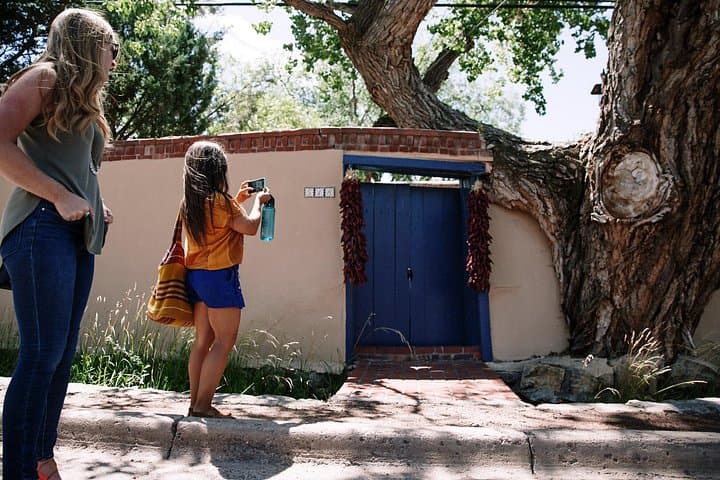
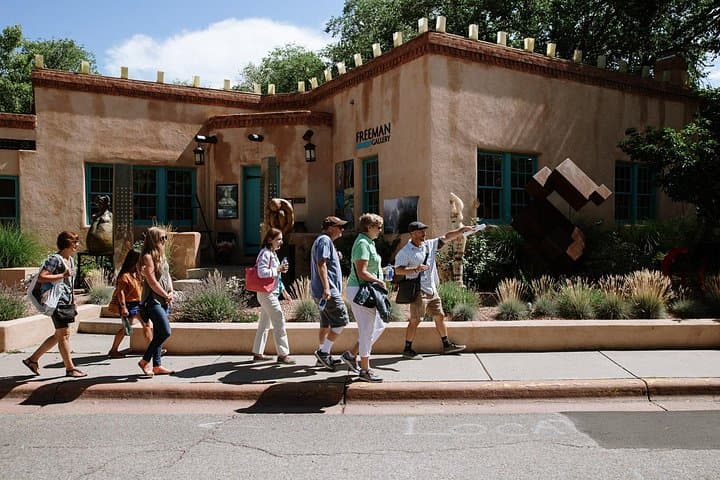
You step off Old Santa Fe Trail and the city recalibrates: sun-bleached stucco, low-slung roofs, and portals that frame courtyards like private stages. The guide leads a small group along narrow streets where adobe walls hold the chill of the night and interior plazas open like warm rooms. This is a walking tour focused on structure—the transitions from Pueblo forms to Spanish Territorial details and the later Northern New Mexico adaptations that borrowed locally fired brick and wrought iron.
Verified experiences and guided adventures in the surrounding area.
Operated by Heritage Inspirations · Santa Fe, New Mexico
You step off Old Santa Fe Trail and the city recalibrates: sun-bleached stucco, low-slung roofs, and portals that frame courtyards like private stages. The guide leads a small group along narrow streets where adobe walls hold the chill of the night and interior plazas open like warm rooms. This is a walking tour focused on structure—the transitions from Pueblo forms to Spanish Territorial details and the later Northern New Mexico adaptations that borrowed locally fired brick and wrought iron.
Santa Fe sits on the southern edge of the Sangre de Cristo foothills and the soil here has shaped the architecture—adobe made from local clay and straw, lime washes that reflect light, and flat roofs that shed rare desert rain. The city’s built language is a record of centuries: Pueblo communities, Spanish colonial missions, and 19th-century territorial buildings blending into a tightly gridded historic eastside.
Expect 2–2.5 miles over roughly three hours, with close observations of portals, nichos, carved vigas, and the famous Loretto spiral stair nearby. Your guide will explain local building techniques and point out how cultural practices—religious processions, artisan trades, and modern preservation efforts—shape façades.
Practical notes: the route has uneven sidewalks and short flights of steps; comfortable walking shoes, sun protection, and a refillable bottle are essential. The tour concludes at Gruet Tasting Room for an optional champagne tasting—bring ID (21+), and plan for a small-group pace that makes space for photos and questions. Morning departures avoid midday heat and give clearer light for architectural detail.
The tour covers about 2–2.5 miles over roughly three hours at a relaxed pace with frequent stops for interpretation and photos.
This tour is not wheelchair accessible due to historic sidewalks, steps, and uneven surfaces; travelers should be able to walk short distances unassisted.
Minimum age is 21 because the tour concludes with an optional alcoholic tasting; service animals are permitted.
A local guide and bottled water are included; the Gruet tasting at the end is optional and included as stated by the operator.
Heritage Inspirations operates guided outdoor trips and adventures with an emphasis on safety, stewardship, and memorable experiences.


You step off Old Santa Fe Trail and the city recalibrates: sun-bleached stucco, low-slung roofs, and portals that frame courtyards like private stages. The guide leads a small group along narrow streets where adobe walls hold the chill of the night and interior plazas open like warm rooms. This is a walking tour focused on structure—the transitions from Pueblo forms to Spanish Territorial details and the later Northern New Mexico adaptations that borrowed locally fired brick and wrought iron.
You step off Old Santa Fe Trail and the city recalibrates: sun-bleached stucco, low-slung roofs, and portals that frame courtyards like private stages. The guide leads a small group along narrow streets where adobe walls hold the chill of the night and interior plazas open like warm rooms. This is a walking tour focused on structure—the transitions from Pueblo forms to Spanish Territorial details and the later Northern New Mexico adaptations that borrowed locally fired brick and wrought iron.
Santa Fe sits on the southern edge of the Sangre de Cristo foothills and the soil here has shaped the architecture—adobe made from local clay and straw, lime washes that reflect light, and flat roofs that shed rare desert rain. The city’s built language is a record of centuries: Pueblo communities, Spanish colonial missions, and 19th-century territorial buildings blending into a tightly gridded historic eastside.
Expect 2–2.5 miles over roughly three hours, with close observations of portals, nichos, carved vigas, and the famous Loretto spiral stair nearby. Your guide will explain local building techniques and point out how cultural practices—religious processions, artisan trades, and modern preservation efforts—shape façades.
Practical notes: the route has uneven sidewalks and short flights of steps; comfortable walking shoes, sun protection, and a refillable bottle are essential. The tour concludes at Gruet Tasting Room for an optional champagne tasting—bring ID (21+), and plan for a small-group pace that makes space for photos and questions. Morning departures avoid midday heat and give clearer light for architectural detail.