THE ADVENTURE COLLECTIVE® · Independent discovery and booking for outdoor travel

Explore three hours of Sarajevo's Jewish history: synagogues, the Sarajevo Haggadah and one of Europe's largest Sephardic cemeteries. Expect cobbled streets, short indoor stops and a guide who threads religious, cultural and wartime stories into a single route.
Explore three hours of Sarajevo's Jewish history: synagogues, the Sarajevo Haggadah and one of Europe's largest Sephardic cemeteries. Expect cobbled streets, short indoor stops and a guide who threads religious, cultural and wartime stories into a single route.
You step off a narrow, cobbled lane and the city rearranges itself: the Miljacka River runs cool and insistent, the air carries spices from nearby stalls, and a guide leads you toward a low stone façade that holds centuries of memory.
Verified experiences and guided adventures in the surrounding area.
Operated by TT Tours · Sarajevo, Federation of Bosnia and Herzegovina
You step off a narrow, cobbled lane and the city rearranges itself: the Miljacka River runs cool and insistent, the air carries spices from nearby stalls, and a guide leads you toward a low stone façade that holds centuries of memory.
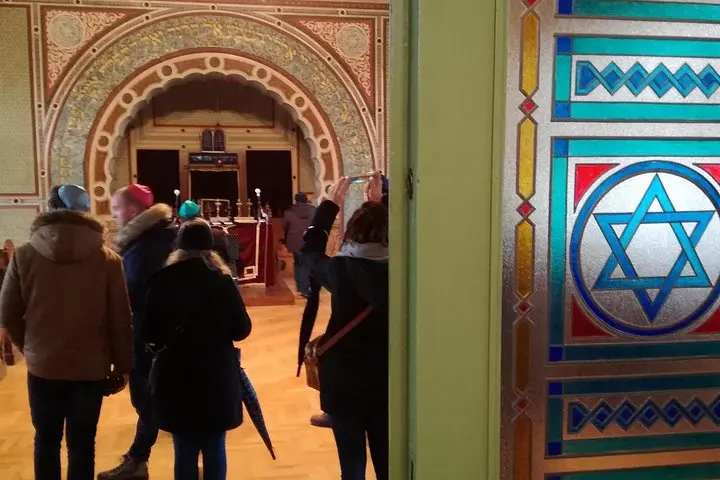
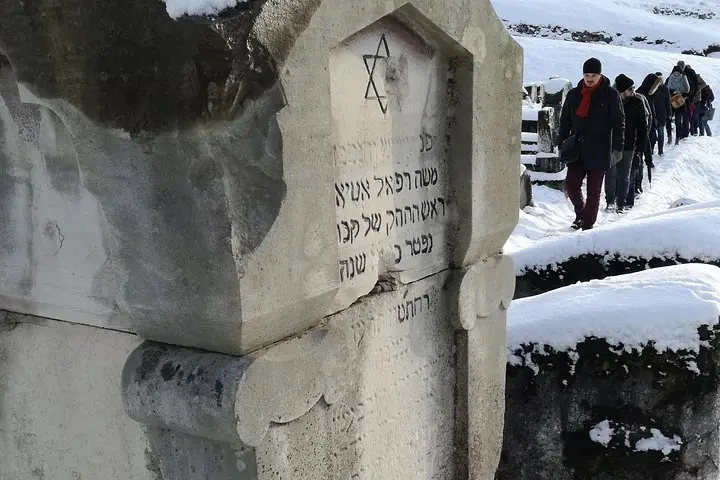
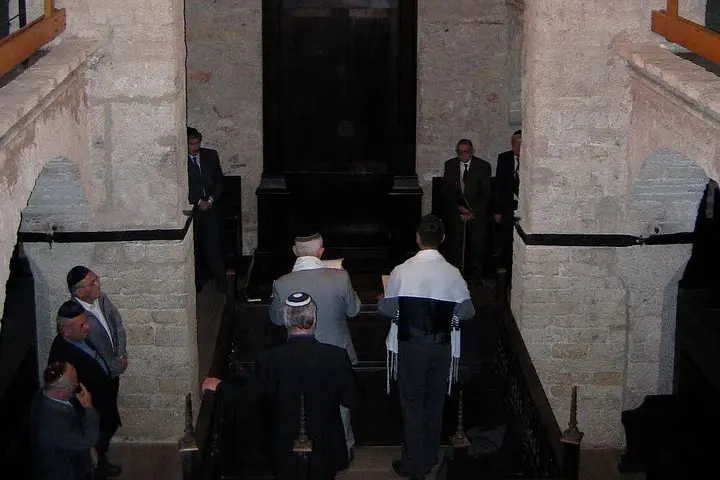
This three-hour walking tour threads Sarajevo's Jewish story through the Bosnian capital's layered history. Sephardic families fleeing Iberia arrived in the 15th–16th centuries and shaped the city's language, cuisine and religious life; the Sarajevo Haggadah—an illuminated manuscript smuggled and safeguarded through wars—anchors that narrative. The route commonly visits the Jewish Museum (Old Temple Sefardi Synagogue), the lone active Ashkenazi synagogue altered by time and community shifts, and the expansive Sephardic cemetery whose worn stones recall Ottoman-era ties and 20th-century survival.
Geologically, Sarajevo sits in a karst valley of the Dinaric Alps; the river slices the old town, and streets funnel sound and history alike. Cultural signals—Ottoman arches, Austro-Hungarian facades—make clear how different currents met here and kept moving.
Practical notes: expect three hours with mostly flat walking on cobbles and occasional steps, pauses for indoor exhibits and cemetery paths that can be uneven. Guides typically provide bottled water and may include hotel pickup by minivan; wear closed, grippy shoes, carry a light layer and be prepared to show respect in active religious spaces. Photography rules vary—ask before entering synagogues. The tour is accessible to most fitness levels and offers a concentrated, grounded window into Sarajevo's plural past.
The tour runs about three hours and involves mostly gentle walking across cobbled streets and cemetery paths—plan for roughly 1.5–3 miles total.
Most itineraries include admission to the Jewish Museum; check your booking confirmation for exact inclusions and any private transport options.
Children are welcome, but those with limited mobility may find cobbles and steps challenging—contact the operator about specific accessibility needs and possible vehicle support.
Photography rules vary: exterior sites are typically fine, but always ask before photographing inside active synagogues or restricted exhibit rooms.
TT Tours operates guided outdoor trips and adventures with an emphasis on safety, stewardship, and memorable experiences.
You step off a narrow, cobbled lane and the city rearranges itself: the Miljacka River runs cool and insistent, the air carries spices from nearby stalls, and a guide leads you toward a low stone façade that holds centuries of memory.
You step off a narrow, cobbled lane and the city rearranges itself: the Miljacka River runs cool and insistent, the air carries spices from nearby stalls, and a guide leads you toward a low stone façade that holds centuries of memory.
This three-hour walking tour threads Sarajevo's Jewish story through the Bosnian capital's layered history. Sephardic families fleeing Iberia arrived in the 15th–16th centuries and shaped the city's language, cuisine and religious life; the Sarajevo Haggadah—an illuminated manuscript smuggled and safeguarded through wars—anchors that narrative. The route commonly visits the Jewish Museum (Old Temple Sefardi Synagogue), the lone active Ashkenazi synagogue altered by time and community shifts, and the expansive Sephardic cemetery whose worn stones recall Ottoman-era ties and 20th-century survival.
Geologically, Sarajevo sits in a karst valley of the Dinaric Alps; the river slices the old town, and streets funnel sound and history alike. Cultural signals—Ottoman arches, Austro-Hungarian facades—make clear how different currents met here and kept moving.
Practical notes: expect three hours with mostly flat walking on cobbles and occasional steps, pauses for indoor exhibits and cemetery paths that can be uneven. Guides typically provide bottled water and may include hotel pickup by minivan; wear closed, grippy shoes, carry a light layer and be prepared to show respect in active religious spaces. Photography rules vary—ask before entering synagogues. The tour is accessible to most fitness levels and offers a concentrated, grounded window into Sarajevo's plural past.