THE ADVENTURE COLLECTIVE® · Independent discovery and booking for outdoor travel

Get up close with live hives and taste fresh Hawaiian honeys on a two-hour tour at Lydgate Farms. Learn beekeeping basics, hold a frame, and sample varietal honeys paired with local fruit.
Get up close with live hives and taste fresh Hawaiian honeys on a two-hour tour at Lydgate Farms. Learn beekeeping basics, hold a frame, and sample varietal honeys paired with local fruit.
You step into a bright corner of a working Kauai farm: the air electric with a soft, organized hum as thousands of bees move through sunlit frames. A farm beekeeper fits you into a white suit, the fabric rustling as the island breeze pulls at the edges, and you stand a safe few feet from a live hive while an expert lifts a honey-laden frame for you to inspect.
Verified experiences and guided adventures in the surrounding area.
Operated by Lydgate Farms Kauai Chocolate · Kapaa, HI
You step into a bright corner of a working Kauai farm: the air electric with a soft, organized hum as thousands of bees move through sunlit frames. A farm beekeeper fits you into a white suit, the fabric rustling as the island breeze pulls at the edges, and you stand a safe few feet from a live hive while an expert lifts a honey-laden frame for you to inspect.
Beekeeping in Hawaii is relatively recent compared with other agricultural practices — European honey bees (Apis mellifera) were introduced in the 19th century to pollinate crops and produce honey. On Kauai’s east side, farms like Lydgate have built small-scale apiaries that connect food production, education, and tasting: you’ll sample comb honey and flights of Hawaiian varietals while learning about hive behavior, seasonal nectar sources, and how honey is processed.
Geology and climate shape what bees gather here; Kauai’s rainy windward slopes feed a diversity of flowering plants and invasive guava or introduced macadamia groves that influence honey flavor. Cultural ties to land and aloha show up in the farm’s hospitality and the pairing of local fruits with varietal honeys.
Practical guidance: wear closed-toe shoes and calf-length socks, and plan for about two hours standing and walking short distances. Bring water, sunscreen, and a light layer — the bee suit goes over your clothes. Children under 7 are not permitted; tours require advance booking. Expect hands-on moments (holding a frame) in a controlled, guided setting and an inclusive tasting menu featuring honeycomb and seasonal pairings.
Children 7–12 are allowed; infants and children under 7 are not permitted due to safety and suit requirements.
Yes — full bee suits and gloves are provided and must be worn during hive interactions.
Yes — under beekeeper supervision guests may handle a hive frame during the demonstration.
The two-hour experience includes honeycomb sampling, a flight of Hawaiian honeys, seasonal honey pairings, and light snacks such as honey-roasted macadamia nuts.
Lydgate Farms Kauai Chocolate operates guided outdoor trips and adventures with an emphasis on safety, stewardship, and memorable experiences.
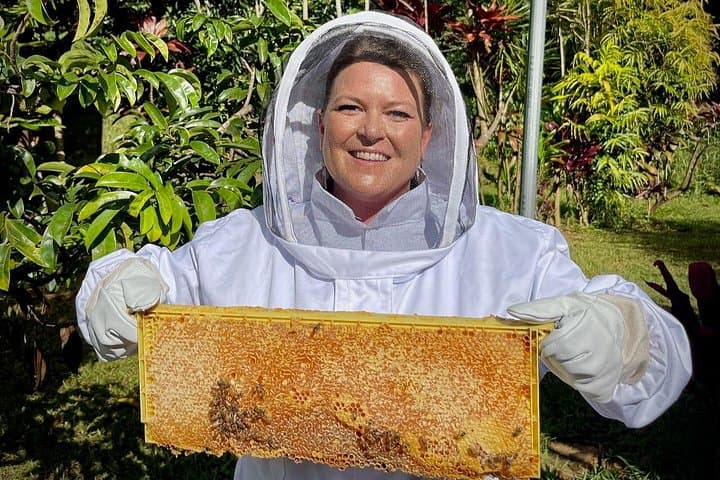
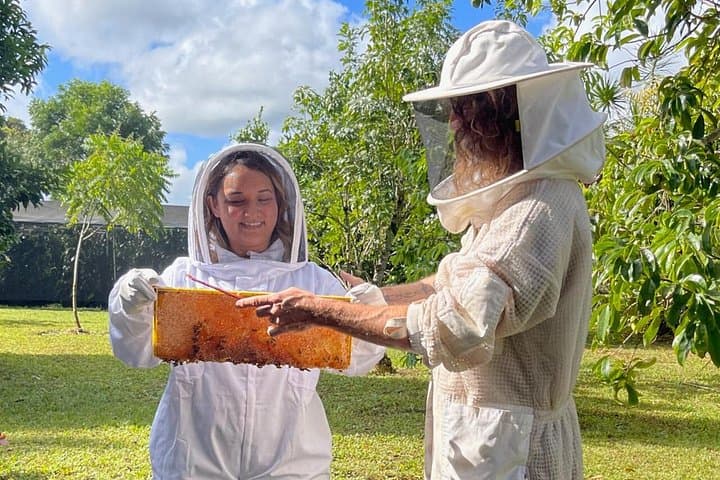
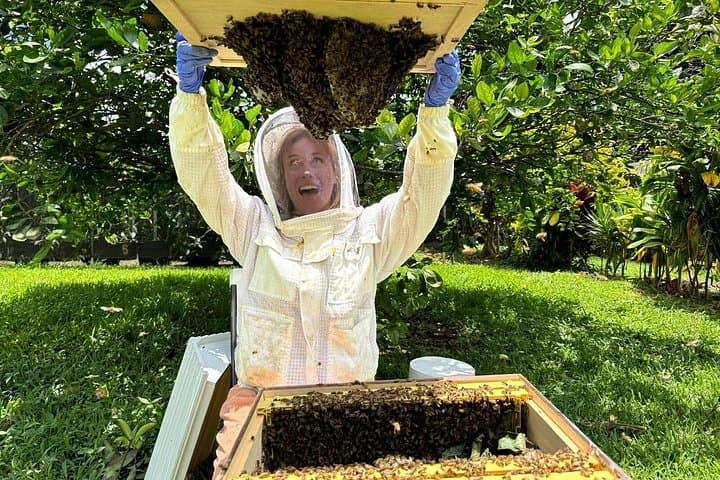
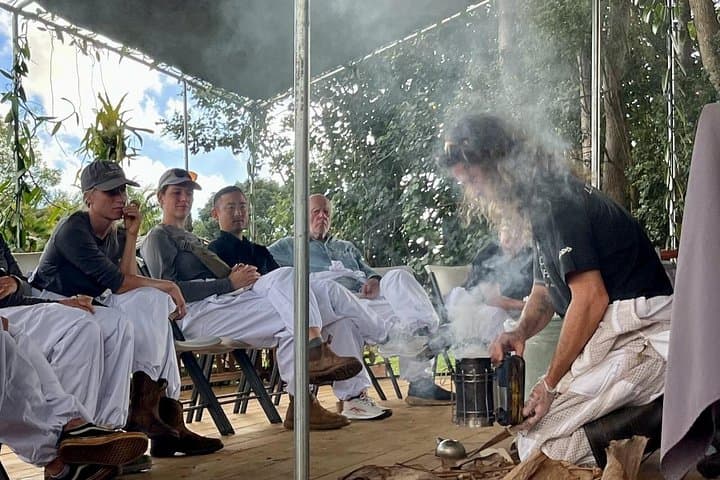
You step into a bright corner of a working Kauai farm: the air electric with a soft, organized hum as thousands of bees move through sunlit frames. A farm beekeeper fits you into a white suit, the fabric rustling as the island breeze pulls at the edges, and you stand a safe few feet from a live hive while an expert lifts a honey-laden frame for you to inspect.
You step into a bright corner of a working Kauai farm: the air electric with a soft, organized hum as thousands of bees move through sunlit frames. A farm beekeeper fits you into a white suit, the fabric rustling as the island breeze pulls at the edges, and you stand a safe few feet from a live hive while an expert lifts a honey-laden frame for you to inspect.
Beekeeping in Hawaii is relatively recent compared with other agricultural practices — European honey bees (Apis mellifera) were introduced in the 19th century to pollinate crops and produce honey. On Kauai’s east side, farms like Lydgate have built small-scale apiaries that connect food production, education, and tasting: you’ll sample comb honey and flights of Hawaiian varietals while learning about hive behavior, seasonal nectar sources, and how honey is processed.
Geology and climate shape what bees gather here; Kauai’s rainy windward slopes feed a diversity of flowering plants and invasive guava or introduced macadamia groves that influence honey flavor. Cultural ties to land and aloha show up in the farm’s hospitality and the pairing of local fruits with varietal honeys.
Practical guidance: wear closed-toe shoes and calf-length socks, and plan for about two hours standing and walking short distances. Bring water, sunscreen, and a light layer — the bee suit goes over your clothes. Children under 7 are not permitted; tours require advance booking. Expect hands-on moments (holding a frame) in a controlled, guided setting and an inclusive tasting menu featuring honeycomb and seasonal pairings.